


The Fall of a President: South Korea’s Historic Sentencing of Yoon Suk Yeol
A Democracy Under Siege
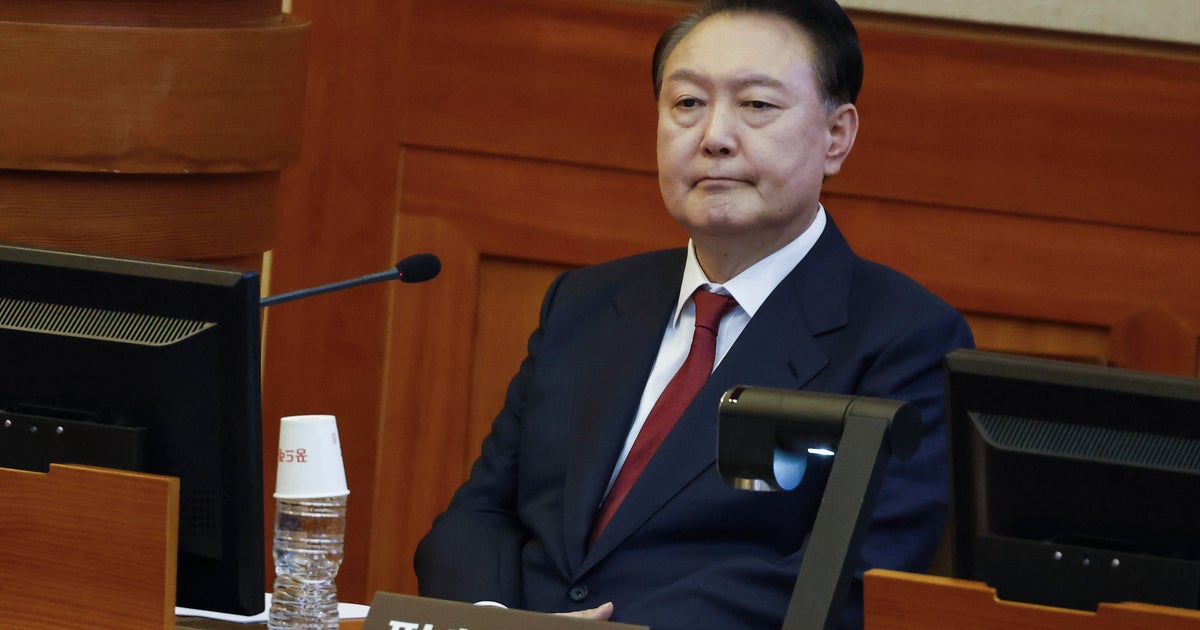
In what has become one of the most dramatic political upheavals in modern South Korean history, former President Yoon Suk Yeol has been sentenced to life imprisonment for his attempted power grab through martial law. The shocking events that unfolded on December 3, 2024, when Yoon declared martial law and deployed troops to surround the National Assembly, marked a dark chapter in the nation’s democratic journey. Judge Jee Kui-youn didn’t mince words in his verdict, finding Yoon guilty of rebellion for illegally mobilizing military and police forces in what appeared to be a calculated attempt to seize control of the liberal-led legislature, arrest political opponents, and establish what the court described as unchecked power for a “considerable” period. The severity of the sentence reflects the gravity of the threat posed to South Korea’s hard-won democracy, though Yoon is expected to appeal the decision. His legal team has already dismissed the ruling as predetermined, claiming it lacks evidentiary support—a defense that seems to ignore the overwhelming evidence of military deployment and legislative interference that played out in full public view.
The Six-Hour Crisis That Changed Everything
The events of that December night were both terrifying and ultimately reaffirming of democratic resilience. What Yoon likely envisioned as a decisive move to overcome political gridlock instead became a testament to the strength of South Korea’s democratic institutions. The martial law decree, born from Yoon’s frustration with an opposition-controlled legislature that repeatedly blocked his conservative agenda, lasted merely six hours before crumbling in spectacular fashion. In those tense hours, determined lawmakers navigated through military blockades, managing to gather the necessary quorum to vote unanimously against the measure. The image of elected representatives scaling walls and pushing past armed soldiers to reach the National Assembly building became symbolic of democracy’s determination to survive. Yoon, a staunch conservative who had characterized his political opponents as “anti-state” forces working to obstruct his governance, had badly miscalculated both the will of the legislature and the public’s commitment to democratic norms. The poorly-planned power grab, while deeply concerning, ultimately failed to result in casualties—a factor that likely spared Yoon from facing the death penalty that prosecutors had initially demanded.
Justice Served: The Courtroom and the Streets
The scene outside the Seoul Central District Court on sentencing day painted a vivid picture of a nation still deeply divided yet united in its demand for accountability. As Yoon’s prison bus approached the judicial complex, hundreds of police officers formed protective barriers while his supporters rallied passionately, their voices rising in protest at what they viewed as political persecution. Nearby, another group of citizens—those who saw Yoon’s actions as an unforgivable assault on democracy—gathered with their own demands, some calling for the ultimate punishment: the death penalty. This stark division in public opinion reflects the broader political polarization that has characterized South Korean politics in recent years, with conservatives and liberals viewing the events through vastly different lenses. The special prosecutor’s initial request for capital punishment, while ultimately not granted, underscored the seriousness with which the legal system viewed Yoon’s actions. However, practical considerations prevailed; South Korea hasn’t executed anyone since 1997, maintaining what most observers recognize as a de facto moratorium on capital punishment. The life sentence, while historic and severe, aligned with contemporary legal practice while still delivering a message about the inviolability of democratic institutions.
A Web of Complicity: Others Held Accountable
The court’s judgment extended beyond Yoon himself, recognizing that the attempted power grab required the cooperation and active participation of numerous government and military officials. Among those convicted, former Defense Minister Kim Yong Hyun received a particularly harsh 30-year sentence for his central role in both planning the martial law measure and mobilizing military forces to enforce it. The court evidently viewed Kim as a key architect of the scheme, someone whose position of trust and authority made his betrayal of democratic principles especially egregious. Prime Minister Han Duck-soo also faced the consequences of his involvement, receiving a 23-year prison sentence for his attempts to legitimize the decree through bureaucratic manipulation. The charges against Han painted a picture of systematic corruption: forcing the measure through a Cabinet Council meeting, falsifying official records, and committing perjury under oath. Han has appealed his conviction, maintaining his innocence, but the verdict stands as a reminder that enablers of antidemocratic actions bear significant responsibility alongside primary instigators. Two other Cabinet members also faced conviction in related cases, demonstrating the court’s determination to hold accountable everyone involved in the conspiracy, regardless of their rank or position.
The Path from Power to Prison
Yoon’s journey from the presidential office to a prison cell unfolded with remarkable speed by the standards of political accountability. Following the failed martial law attempt, lawmakers moved swiftly to impeach him on December 14, 2024, suspending him from office while the Constitutional Court deliberated. By April 2025, that court had made its decision final, formally removing Yoon from the presidency and clearing the way for criminal prosecution. Since July of last year, Yoon has remained under arrest while facing multiple criminal trials, each addressing different aspects of his abuse of power. Beyond the rebellion charge that resulted in his life sentence, Yoon was also convicted last month on several other serious offenses, receiving a five-year sentence for resisting arrest when authorities first attempted to detain him. Additional convictions addressed the fabrication of the martial law proclamation itself and his deliberate circumvention of legal requirements, specifically bypassing a mandated full Cabinet meeting before declaring such an extreme measure. Each of these convictions adds layers to the portrait of a leader who, when faced with political opposition, chose to abandon democratic norms rather than work within them—a choice that has now cost him everything.
Implications for Democracy’s Future
The sentencing of Yoon Suk Yeol represents more than just the punishment of one individual; it stands as a defining moment for South Korean democracy and sends reverberations throughout the international community. For a nation that transformed itself from authoritarian rule to vibrant democracy within living memory, the swift and decisive response to Yoon’s attempted power grab demonstrates how deeply democratic values have taken root. The institutions that Yoon sought to override—the legislature, the courts, and ultimately the rule of law itself—proved resilient enough not only to resist his machinations but to hold him fully accountable. This outcome offers reassurance to democracies worldwide that are grappling with leaders who test constitutional boundaries and flirt with authoritarian tactics. However, the divided public response visible outside the courthouse also serves as a reminder that democratic norms cannot be taken for granted; they require constant vigilance and renewal. The coming months will reveal whether this crisis ultimately strengthens South Korea’s democratic culture or whether the deep political divisions it exposed will continue to fester. For now, the life sentence stands as a clear statement: in South Korea’s democracy, no one—not even a president—is above the law, and attempts to subvert the will of the people through force will be met with the full weight of justice.