


French Naval Security Breach: When Fitness Apps Become Intelligence Risks
A Morning Jog Reveals Military Secrets
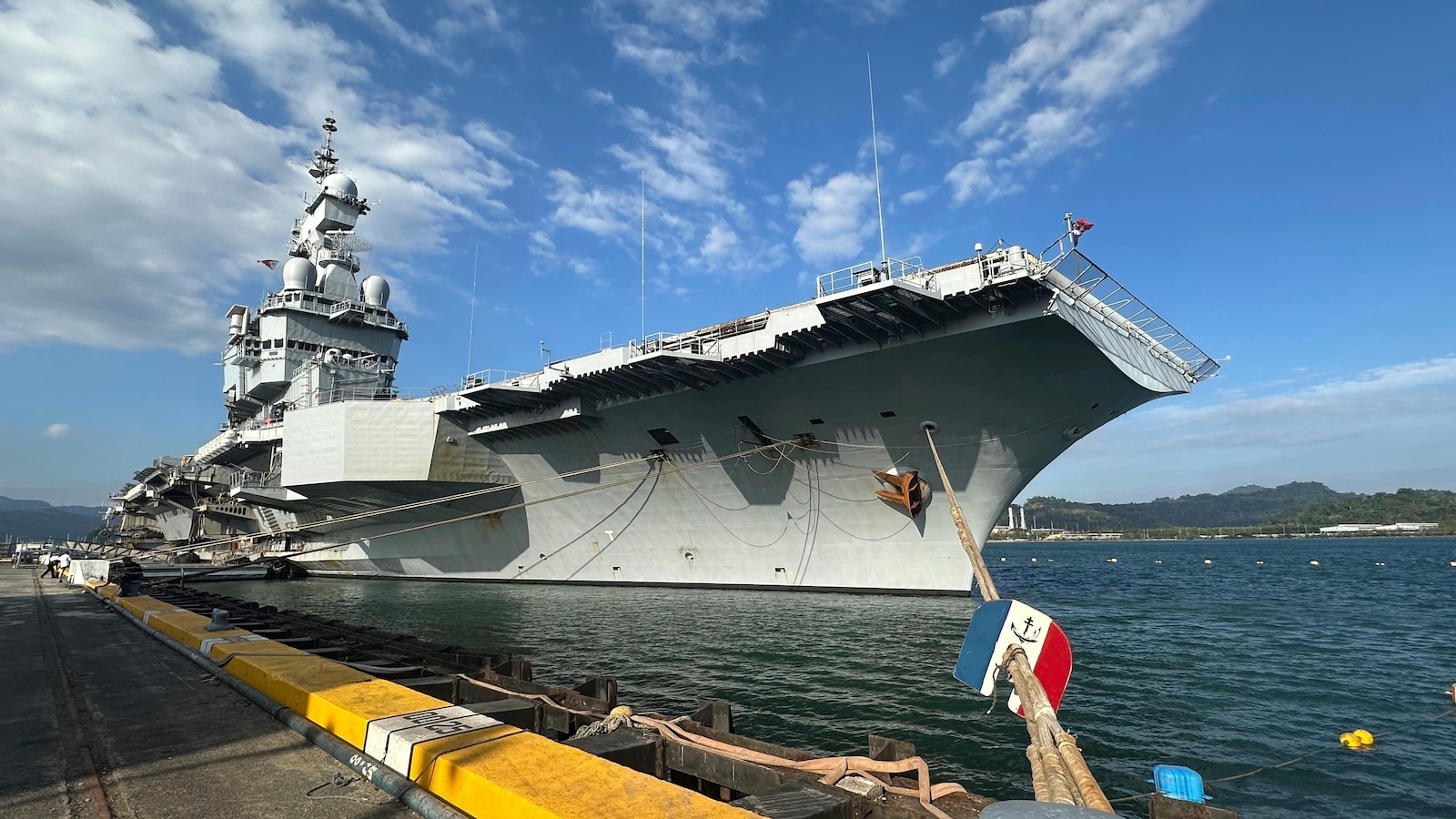
In an incident that highlights the unexpected dangers of modern technology in military operations, French authorities are scrambling to address a significant security lapse after a naval officer’s routine morning run inadvertently exposed the location of France’s flagship aircraft carrier. The Charles de Gaulle, a nuclear-powered carrier currently deployed in the Mediterranean Sea, was pinpointed by investigative journalists from Le Monde newspaper using nothing more than publicly available data from Strava, a popular fitness tracking application. This revelation has sparked concerns about operational security during a time of heightened tensions, with the carrier positioned to protect French and allied interests amid the ongoing Iran conflict. While the carrier’s general deployment in March wasn’t classified information—in fact, military commanders had even conducted press briefings from aboard the vessel—the ability to track its precise location in near real-time through a civilian fitness app has exposed a vulnerability that France’s defense establishment can no longer ignore. The incident serves as a wake-up call about how personal technology and social media habits can compromise military operations, even when service members believe they’re simply going about their private activities.
How a Fitness App Became an Intelligence Tool
The security breach unfolded when Le Monde journalists discovered they could track a naval officer who used the Strava performance app during a morning jog on March 13. Strava, which is enormously popular among fitness enthusiasts worldwide, automatically records and shares workout routes, distances, and locations unless users specifically disable these privacy settings. By identifying the officer’s workout on the platform, the journalists were able to cross-reference this data with satellite imagery taken on the same day, ultimately pinpointing the location of either the Charles de Gaulle itself or one of its escort vessels in the Mediterranean. This investigative work demonstrated just how vulnerable military operations can be to open-source intelligence gathering—a technique that relies on publicly available information rather than traditional espionage. The 42,000-ton nuclear-powered carrier, one of France’s most valuable military assets, was essentially broadcasting its location to anyone with internet access and basic investigative skills. The ease with which journalists accomplished this task raises troubling questions about who else might be monitoring French military movements through similar methods, from rival nations to terrorist organizations seeking to target Western military assets.
France’s Response and Current Security Guidelines
Following the Le Monde report published on Thursday, French military authorities moved quickly to address the situation, though their response suggests this wasn’t an isolated incident but rather a symptom of broader challenges in adapting military culture to the digital age. Colonel Guillaume Vernet, serving as the French military spokesman, confirmed that the Strava usage “does not comply with the current guidelines” and stated that “appropriate measures are being taken by the command.” His statement reveals that regulations regarding connected devices already exist within the French navy, but enforcement remains problematic. Vernet explained that sailors receive regular briefings about security risks associated with connected devices, including the dangers of social media use in their private lives and the potential for geolocation through digital applications. The French navy has implemented different levels of restrictions on connected device usage, with the specific limitations determined by commanding officers based on the assessed threat level at any given time. However, the fact that this incident occurred despite these existing protocols suggests either a failure in communication, inadequate enforcement, or perhaps service members not fully understanding how their personal digital footprints can compromise operational security. The challenge for military organizations worldwide is balancing legitimate concerns about service members’ privacy and morale—including their ability to maintain fitness routines and stay connected with loved ones—against the very real security vulnerabilities these technologies create.
The Timing and Strategic Context
The exposure of the Charles de Gaulle’s location is particularly concerning given the current geopolitical climate and the carrier’s mission in the Mediterranean. The vessel is currently deployed to help protect French and allied assets during the Iran war, a mission that places it in a potentially hostile environment where adversaries would greatly benefit from knowing its precise location. Just one day before the officer’s Strava-tracked jog, on March 12, a drone attack struck a Kurdish military base in the Erbil region, killing French soldier Chief Warrant Officer Arnaud Frion and wounding six others. This attack demonstrated that French forces in the region face active threats from sophisticated adversaries capable of conducting precision strikes. In this context, broadcasting the carrier’s location—even unintentionally—could provide hostile forces with targeting information that might enable attacks on the carrier group or the planning of operations to avoid its surveillance capabilities. Ironically, on the very same day as the security-compromising jog, Rear Admiral Thibault Haudos de Possesse, commander of the aircraft carrier group, was conducting a video briefing with journalists from aboard the Charles de Gaulle. During this authorized communication, he disclosed that the carrier was escorted by multiple warships, including French and allied-nation frigates, and was carrying 20 Rafale fighter jets, two Hawkeye surveillance planes, and three helicopters. While this official briefing was carefully managed to avoid compromising operational security, the simultaneous Strava tracking undermined these precautions by providing precise real-time location data.
A Pattern of Similar Incidents Worldwide
This incident with the Charles de Gaulle is far from unique and represents part of a troubling pattern that has affected military forces around the world in recent years. Strava and similar fitness apps have previously exposed the locations of secret military bases, revealed the movement patterns of security personnel, and even identified individual service members stationed at sensitive locations. In 2018, Strava’s global heat map—which shows popular exercise routes aggregated from all its users—inadvertently revealed the locations of secret U.S. military bases in conflict zones, including Afghanistan and Syria, where soldiers’ jogging routes literally outlined the perimeters of otherwise hidden installations. Similarly, security researchers have demonstrated how fitness app data could be used to identify intelligence officers, track their movements between home and classified facilities, and even infer operational information based on changes in their exercise patterns. The problem extends beyond just fitness apps to encompass social media platforms, dating apps, gaming services, and virtually any technology that collects and shares location data. Modern smartphones are essentially tracking devices that happen to make calls, and the countless apps installed on them create a complex web of data collection that few users fully understand. For military personnel operating in sensitive environments, each connected device represents a potential security vulnerability, yet banning all such technology is impractical and would create significant morale issues among service members who rely on these tools to maintain connections with family and friends during long deployments.
Looking Forward: France’s Naval Future and Security Challenges
Even as France grapples with this security lapse, the nation continues advancing its naval capabilities for the coming decades. President Emmanuel Macron recently announced that France’s next nuclear-powered aircraft carrier, scheduled to enter service in 2038, will be named France Libre (“Free France”) in honor of the resistance movement during World War II. This new vessel represents a massive investment of approximately 10 billion euros ($11.5 billion) and will dwarf the current Charles de Gaulle in virtually every measure. With a displacement of about 80,000 tons compared to the Charles de Gaulle’s 42,000 tons, and a length of 310 meters (1,017 feet) versus 261 meters (856 feet), the France Libre will accommodate 30 Rafale fighter jets and a crew of 2,000 sailors, significantly expanding France’s power projection capabilities. However, as impressive as these technological advances may be, the Strava incident demonstrates that even the most sophisticated military hardware remains vulnerable to simple security lapses rooted in human behavior and the ubiquitous technologies of daily life. The challenge for France and other military powers is developing security cultures that can adapt as quickly as consumer technology evolves, creating protocols that protect operational security without being so restrictive that they cannot be realistically enforced. This may require technological solutions such as signal-blocking systems on sensitive vessels, mandatory privacy settings on personal devices, or even providing service members with alternative fitness tracking options that don’t broadcast data publicly. Ultimately, the modern military must recognize that security is not just about protecting classified information through traditional means, but also about managing the countless small digital footprints that service members create every day, any one of which might provide adversaries with valuable intelligence about military operations, capabilities, and vulnerabilities.