
Understanding the Global Economic Crisis: An IMF Perspective on War, Energy, and the Future
The Unprecedented Energy Shock Hitting the World Economy
The world is facing what the International Monetary Fund calls the largest disruption to global energy markets in modern history. In a revealing interview, IMF Managing Director Kristalina Georgieva painted a sobering picture of how a Middle Eastern conflict has created economic shockwaves that will be felt for years to come. The crisis has already lasted five weeks, during which thirteen percent of the world’s oil and twenty percent of its natural gas have been blocked from reaching their destinations. This isn’t just a regional problem—it’s a global catastrophe affecting every person who uses energy, which means virtually everyone on the planet.
What makes this situation particularly challenging is its asymmetric nature. Countries are experiencing vastly different levels of pain depending on their geographic location, their energy import dependence, and their financial reserves. Nations closest to the conflict zone are suffering the most severe impacts, while oil-importing countries without substantial financial cushions find themselves in desperate situations. The IMF is running multiple scenarios based on how long the war continues, and while there are hopes for peace, the organization must also account for the extensive infrastructure damage that has already occurred. Seventy-two energy facilities have been hit, with one-third suffering severe damage that will take years to repair. The gas field in Qatar alone could take three to five years to return to full capacity, a delay with profound implications for global energy supplies.
Asia Bears the Brunt While the World Feels the Pain
While the economic shock is truly global, Asian nations have been hit especially hard by this crisis. South Korea has called upon its citizens to conserve energy, a significant challenge for a country with a massive computer chip industry that depends on stable power supplies. India has implemented energy rationing, while the Philippines declared a national energy emergency as citizens queue at gas stations in scenes reminiscent of the 1970s oil crisis in America. Australian fuel stations are running dry, leaving drivers stranded and businesses struggling to operate. These aren’t just statistics—they represent real people experiencing real hardship in their daily lives.
The ripple effects extend far beyond just filling gas tanks. Countries are facing shortages of helium, which comes primarily from Qatar and is essential for both semiconductor manufacturing and medical MRI machines. As planting season arrives, farmers cannot access fertilizers at reasonable prices, setting the stage for potential food price spikes in the coming months. Workers in Gulf countries can no longer send remittances back to their families in places like India and Bangladesh, cutting off vital financial lifelines. Tourism-dependent economies like Sri Lanka, which was just recovering from previous economic shocks, now faces a tourism collapse because a third of its flights typically route through the Gulf region. The interconnected nature of the global economy means that when one region suffers, the effects cascade across borders in ways that are difficult to predict and even harder to manage.
How Americans Are Experiencing This Global Crisis
While the United States is somewhat insulated from the worst effects—being an energy exporter rather than a major importer—Americans are still feeling significant pain at the pump and in their wallets. The fundamental economic problem is a negative supply shock: less energy is available while demand remains constant, which inevitably drives prices upward. Oil prices initially surged nearly fifty percent when the conflict began, and while they’ve stabilized somewhat, they remain elevated. For American families, this functions essentially as a tax on their income, with low-income households bearing the disproportionate burden of higher energy and food costs.
The IMF had been projecting that inflation would return to target levels by early 2027, but that timeline now appears optimistic. The energy crisis is delaying the return to price stability that Americans have been hoping for after years of elevated inflation. Even if a lasting ceasefire is achieved immediately, prices won’t simply snap back to where they were before the war began on February 27th. The impact is already “baked in,” as Georgieva explained, because the oil tankers that should have arrived in Asian ports never made it, refineries have shut down and will take time to restart, and damaged infrastructure will require months or years to repair. Americans booking airline tickets are experiencing this firsthand, as European airlines struggle with jet fuel access and ticket prices remain elevated. This is a crisis that will extend throughout 2026 and beyond, regardless of when peace arrives.
The Long Road to Recovery and Adaptation
One silver lining to energy shocks throughout history is that they force adaptation and innovation. Past energy crises have consistently led to two positive outcomes: improved energy efficiency and greater diversification of energy supplies. We’re already seeing increased investment in green energy alternatives as countries and businesses seek to reduce their vulnerability to supply disruptions. However, this transition takes time—typically a year and a half to two years before meaningful changes take effect. In the meantime, ordinary people and businesses continue to suffer from high prices and supply shortages.
The IMF is actively working to soften the blow for the hardest-hit countries by providing practical advice and financial support. At moments like this, governments often rush to implement policies that seem helpful but can actually make situations worse. The IMF counsels against imposing restrictions on petroleum product trade, which would only drive prices higher. When governments do provide assistance, they should target it carefully to the most vulnerable populations rather than implementing broad subsidies that strain already-stretched budgets. The global community has accumulated substantial debt dealing with previous shocks—COVID-19, the Ukraine war, and trade tensions—which has increased borrowing costs and reduced the fiscal space available for crisis response. Any support measures should be temporary and focused on those who need them most, particularly poor and vulnerable countries in Asia and Sub-Saharan Africa that lack the financial reserves to absorb these economic blows.
The Resilience of the Global Economy and Future Challenges
Despite facing an unprecedented series of shocks—a global pandemic, major military conflicts, trade wars, and now the largest energy disruption in modern history—the world has avoided falling into a global recession. This resilience stems from three key factors that have developed over recent decades. First, governments worldwide have increasingly stepped back from directly managing economies and companies, allowing the more agile and adaptable private sector to respond quickly and efficiently to crises. Second, many emerging market economies have strengthened their economic fundamentals through measures like establishing independent central banks and fiscal councils, which promote sound policies that protect countries during shocks. Third, technological innovation has transformed the global economy, creating new efficiencies and opportunities that buffer against economic downturns.
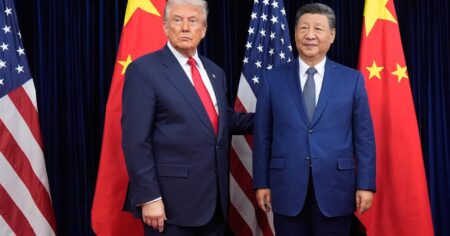
However, this resilience shouldn’t breed complacency. The world is not immune to recession, and maintaining economic stability requires continued adherence to good policies and keeping institutions healthy. The upcoming meeting between President Trump and President Xi in mid-May offers hope for reducing trade tensions between the world’s two largest economies. When the United States and China do well, positive effects spill over to benefit the rest of the world. While some economists believed they overestimated the negative impact of Trump’s tariffs—the IMF was among the few institutions that didn’t predict recession—the tariffs were nonetheless disruptive. The global economy adjusted through bilateral agreements that reduced tariff pressure and through a massive increase in regional trade agreements as countries sought alternative trading partners. In Georgieva’s words, trade is like water—when you put an obstacle in its path, it simply flows around it.
Technology, Artificial Intelligence, and the Future We Must Prepare For
Perhaps the most profound challenge facing the global economy isn’t any current crisis but rather the tsunami of change that artificial intelligence is bringing to labor markets. Georgieva’s warning is stark: we must digest this reality because AI is already here, transforming how everyone works. The troubling part is that we’re not ready. Already, one in ten jobs in the United States requires new skills and pays higher wages, which creates demand for low-skilled service jobs in restaurants and gyms. However, the middle tier—the routine entry-level jobs that traditionally served as launching pads for young people’s careers—is shrinking rapidly. Recent college graduates are finding their expected career paths disappearing, replaced by opportunities they never trained for or didn’t aspire to pursue.
This creates a dangerous dynamic where total employment might actually increase, but primarily in low-skilled positions. The ability of AI to dramatically increase inequality—both within countries and between them—is perhaps the most significant economic challenge of our time. Yet society suffers from what Georgieva calls “attention deficit disorder,” unable to focus on any single topic long enough to develop comprehensive solutions. We need fundamental changes in education systems to prepare people for constant learning and permanent change throughout their careers. We need to foster entrepreneurship and agility rather than training people for specific jobs that may not exist in five years. The risks extend beyond employment to financial stability and cybersecurity, as evidenced by urgent meetings between Treasury officials, Federal Reserve leadership, and Wall Street executives to discuss AI-related risks. The current lack of adequate guardrails to protect against massive cyber risks to the international monetary system represents an existential threat that requires immediate attention and international cooperation. In Georgieva’s assessment, time is not our friend on this issue—we must act now to ensure that AI’s transformative power creates broadly shared prosperity rather than a world of a few big winners and many, many losers.