
Tensions Escalate Over Iran’s Closure of the Strait of Hormuz
The Crisis at the World’s Most Critical Waterway
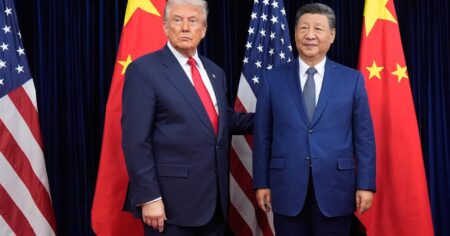
The fragile ceasefire between the United States and Iran is being tested as the Strait of Hormuz—a narrow passage responsible for transporting roughly 20 percent of the world’s oil and energy supplies—has become the center of an escalating international crisis. This past weekend, Iran reversed its decision to reopen the waterway, closing it to ships and even firing on vessels attempting to pass through. The move has created a potentially catastrophic situation for the global economy, with oil prices spiking and gas costs at American pumps reaching $4.05 per gallon, levels not seen since the Russian invasion of Ukraine. President Trump has responded with characteristic bluntness, warning Iran against what he calls “blackmail” and threatening devastating military strikes against Iranian infrastructure, including power plants and bridges, unless Tehran agrees to negotiate in good faith. Meanwhile, diplomatic efforts continue, with a new round of talks scheduled in Islamabad, Pakistan, led by Vice President Vance, special envoy Steve Witkoff, and Jared Kushner. The situation represents one of the most dangerous standoffs in recent memory, with the potential to either achieve a historic diplomatic breakthrough or plunge the region back into full-scale war.
Inside the Negotiations: Who’s in Charge and What’s at Stake
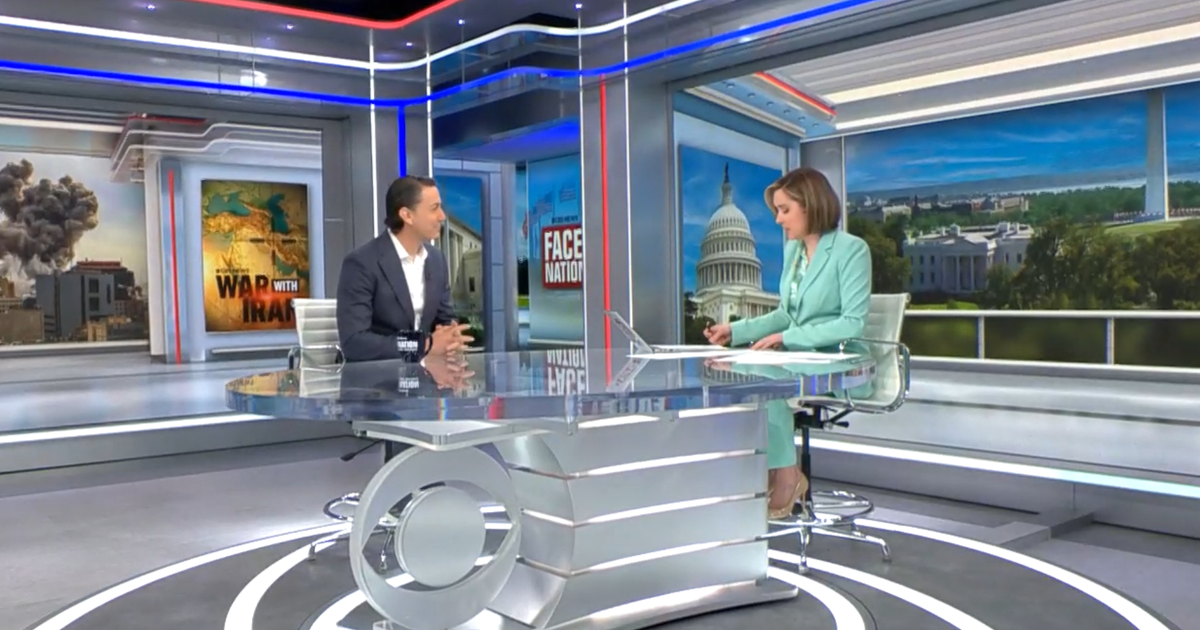
The diplomatic landscape surrounding the Iran crisis has become increasingly murky, with confusion about who actually controls decision-making in Tehran. U.S. Ambassador to the United Nations Mike Waltz acknowledged on Face the Nation that the Iranian side appears to be “in chaos,” with competing factions sending contradictory messages about whether the Strait of Hormuz would remain open and who has authority to negotiate on behalf of the regime. Reports suggest that IRGC Commander General Vahidi may have seized control over negotiations and military operations in recent days, potentially sidelining Foreign Minister Araghchi. This internal discord makes it difficult for American negotiators to know whether any agreement they reach will actually be honored. The stakes of these talks couldn’t be higher—they center on Iran’s nuclear program, which U.S. intelligence assessed was just weeks away from having enough material to build a weapon before President Trump ordered strikes last summer. Ambassador Waltz emphasized that any deal must be “verifiable and enforceable,” with the International Atomic Energy Agency playing a central role in monitoring compliance. He insisted that the United States would not operate on trust, but rather on strict verification protocols. President Trump has offered what he describes as a reasonable path forward, but has also made clear that all options remain on the table, including a return to military action if Iran refuses to abandon its nuclear ambitions.
The Economic Fallout: Energy Prices and Global Impact
The closure of the Strait of Hormuz is already creating severe economic consequences that extend far beyond gas prices at American pumps. Former Biden administration energy adviser Amos Hochstein warned that while the situation may seem manageable now, it’s “like falling off a cliff” once existing oil shipments run out. Currently, tankers that were already en route before the closure are still reaching their destinations, but no new vessels are making the journey from the Middle East to Asia and Europe. This means that within weeks, countries will begin running out of essential fuels, including jet fuel, which is already forcing some Asian nations to cancel flights. Hochstein explained that the crisis differs from the one triggered by Russia’s invasion of Ukraine—back then, prices spiked based on fears of potential disruption that never fully materialized, but this time there’s an actual, ongoing blockade. Treasury Secretary Bessent’s prediction that prices will drop sometime between June and September appears optimistic at best, and may simply be an attempt to calm markets through messaging rather than reflecting realistic expectations. The broader implications are staggering: Reuters analysis shows that $50 billion worth of oil has already been lost from global markets since the conflict began, and the longer the strait remains closed, the more severe the shortages will become for nations around the world.
Lebanon’s Precarious Peace and Regional Complexities
A ten-day pause in fighting between Israel and Hezbollah in Lebanon has added another layer of complexity to the Middle East situation. President Trump announced that Israel would be “prohibited” from bombing Lebanon, though the mechanics of how the United States would enforce such a prohibition remain unclear. The temporary ceasefire is directly linked to the larger Iran negotiations, with Tehran insisting on the halt to fighting in Lebanon as a precondition for showing up to talks in Pakistan. This linkage concerns former negotiators like Amos Hochstein, who brokered the 2024 Lebanon ceasefire, because it essentially gives Iran a veto over Lebanese affairs and reinforces Hezbollah’s image as an Iranian proxy rather than a Lebanese organization. Hochstein warned that Israel’s continued occupation of southern Lebanese territory and its seizure of Syrian land after Assad’s fall represent tactical victories that could become strategic disasters if they’re seen as overreach. The United States has contributed over $250 million to Lebanese armed forces to help the country’s legitimate military take control of areas previously dominated by Hezbollah, but questions remain about whether Lebanese forces can actually disarm the militant group without significant international support. The situation represents a genuine opportunity for Lebanon to reassert sovereignty, but only if all parties commit to a sustainable political solution rather than temporary military arrangements.
Health Policy Shifts and Vaccine Debates
Back in the United States, domestic policy controversies continue to swirl around health issues, particularly vaccines and experimental drug treatments. Former Surgeon General Jerome Adams expressed cautious optimism about President Trump’s nomination of Dr. Erica Schwartz to lead the CDC, calling her “a home run pick” with impressive credentials including an M.D., J.D., and MPH, along with decades of military and public health service. However, Adams also voiced concerns about whether Schwartz would face political interference, noting that her predecessor was fired just one month into her term and that the CDC recently held back a report showing COVID vaccines reduced emergency room visits. The vaccine debate has taken on renewed urgency as measles cases have exploded to over 1,700 infections in just the first four months of 2025—the worst outbreak in decades. Under oath before Congress, Secretary Kennedy appeared to soften his rhetoric somewhat, acknowledging that the MMR vaccine is “safe for most people” and that vaccination is safer than getting measles, though his qualified responses still worried public health experts. Adams noted that these statements, while representing Kennedy’s strongest endorsement to date, still risk sending mixed messages at a critical time. Meanwhile, President Trump signed an executive order directing $50 million toward research into psychedelic drugs like Ibogaine and Psilocybin for treating mental illness and PTSD in veterans, maintaining FDA oversight while easing some research barriers—though Adams suggested the rollout, featuring podcaster Joe Rogan in what resembled “a WWE promotion,” overshadowed the potentially reasonable substance of the policy.
Political Battles Over Redistricting and Democratic Institutions
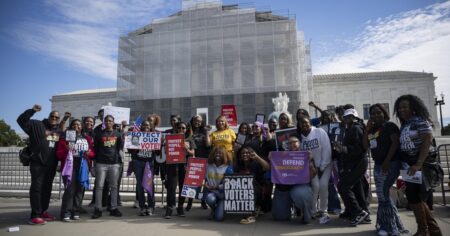
The program also addressed growing controversies over redistricting and what critics describe as partisan gerrymandering. Former Attorney General Eric Holder, now chairman of the National Democratic Redistricting Committee, defended efforts in Virginia and California to redraw congressional maps along lines that would favor Democrats, characterizing these moves as necessary responses to similar actions by Republicans in Texas, Missouri, and North Carolina. When challenged about whether this approach contradicts his previous statements against gerrymandering, Holder insisted these are temporary emergency measures needed to “save our democracy” from what he sees as Republican attempts to stack the deck. He argued that unlike Republican redistricting, which was imposed by state legislatures, the Democratic efforts in Virginia and California will be decided by voters through referendums. Critics, including leaders of Black political organizations, have raised concerns that the Virginia redistricting doesn’t adequately protect Black voting power despite African Americans being a critical Democratic constituency. The debate highlighted fundamental tensions about whether fighting partisan gerrymandering with more partisan gerrymandering can ever lead to fair outcomes, or whether it simply accelerates a cycle of political manipulation. Holder maintained that once the current crisis passes, Democrats can return to fighting for structural fairness, including federal legislation to ban partisan gerrymandering altogether. The segment concluded with Margaret Brennan addressing Secretary of Defense Pete Hegseth’s controversial comparison of journalists to Pharisees who opposed Jesus, emphasizing the constitutional role of a free press in serving “the governed, not the governors,” particularly crucial during wartime when government scrutiny matters most.