
Government Shutdown Continues as Immigration Enforcement Debate Paralyzes Washington
Homeland Security Remains Unfunded Amid Policy Disputes
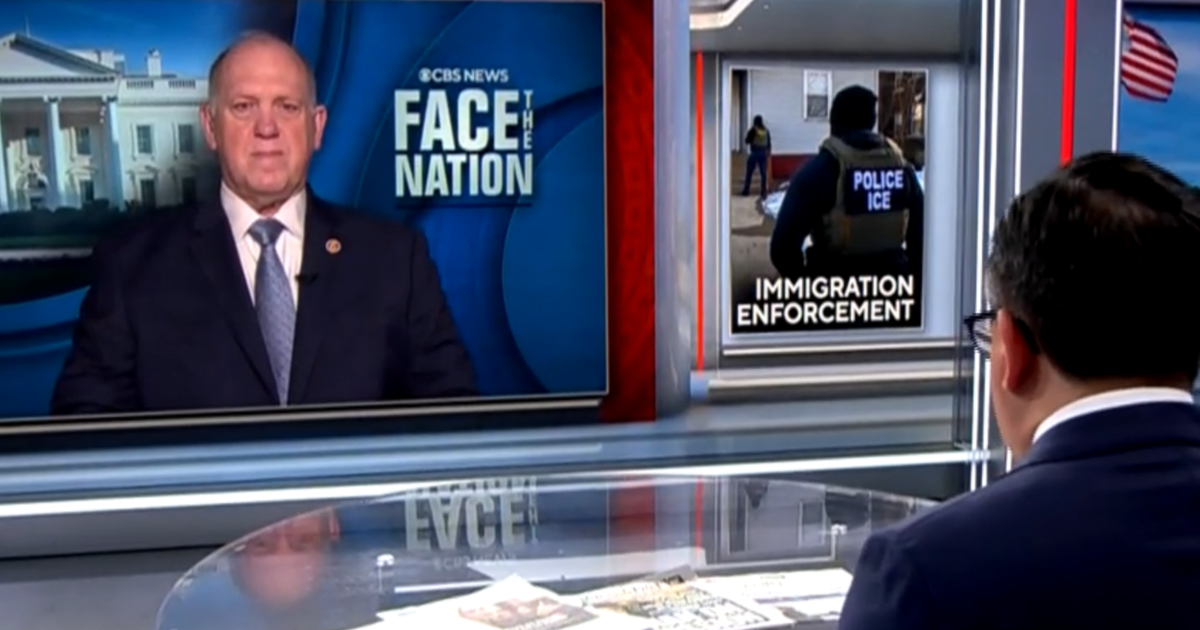
Two months into 2026, the federal government faces another partial shutdown as lawmakers remain deadlocked over funding the Department of Homeland Security. The impasse centers on how immigration enforcement should be conducted, leaving thousands of TSA agents, Coast Guard personnel, and FEMA employees working without pay or furloughed entirely. Ed O’Keefe stepped in to moderate this week’s “Face the Nation” broadcast, tackling the contentious issues surrounding border security, immigration tactics, and the broader political implications heading into the midterm elections.
At the heart of the funding standoff are specific policy reforms that Democrats are demanding before they’ll agree to reopen DHS. These include requiring immigration agents to wear visible identification, use body cameras, remove masks during operations, obtain judicial warrants before entering private property, and end what Democrats characterize as racial profiling. House Minority Leader Hakeem Jeffries made clear that his caucus views these as non-negotiable requirements, stating that “taxpayer dollars should be used to make life more affordable for the American people, not brutalize or kill them,” referencing recent deadly shootings involving ICE operations in Minneapolis. Republicans and the White House, however, have largely rejected these demands, with Border Czar Tom Homan defending current practices as both legally sound and necessary for officer safety.
The human cost of this political battle is substantial. With the Department of Homeland Security partially shuttered, essential services hang in the balance. The shutdown affects not just immigration enforcement but also disaster response capabilities through FEMA, maritime security via the Coast Guard, and aviation security with TSA. Despite the urgency, both sides appear dug in, with no clear resolution on the horizon. The situation has grown so concerning that questions are being raised about whether the upcoming State of the Union address should even proceed if this critical security agency remains unfunded. Democrats are demanding “dramatic, bold, meaningful and transformational” changes to how immigration enforcement operates, while the administration insists it’s operating within existing legal frameworks established by Congress itself.
Border Czar Defends ICE Tactics Amid Mounting Scrutiny
Tom Homan, serving as the Trump administration’s border czar, appeared on the broadcast to defend immigration enforcement operations that have drawn intense criticism. Homan acknowledged disagreements within the administration but maintained that results speak for themselves, claiming “the most secure border in the history of this nation” and record deportations of criminal immigrants. However, he pushed back firmly against Democratic demands for operational changes, particularly regarding the use of masks by ICE agents and the requirement for judicial warrants.
On the mask issue, Homan cited alarming statistics: threats against ICE officers have increased by 8,000 percent, with actual assaults up 1,500 percent compared to the previous year. He argued that while he personally doesn’t like the masks, officer safety must come first, especially when agents’ home addresses are being publicly released (doxxed) and their families are being filmed and threatened. Homan noted that even the ICE director’s wife was recently filmed walking to work and their children have been targeted, creating a security environment unlike any other law enforcement agency faces. While acknowledging that local police officers don’t typically wear masks, he insisted the unique threat level facing ICE justifies the different approach.
Regarding judicial warrants, Homan explained that ICE operates under administrative warrants as authorized by federal statute—the Immigration Nationality Act passed by Congress itself. He pointed out that the Justice Department has interpreted this law to allow administrative warrants in certain circumstances, particularly when targeting individuals who already have final removal orders and have been through due process before a federal judge. Homan deflected suggestions that he had changed his position on this issue, saying he wasn’t part of the DOJ discussions that led to the current interpretation. When pressed about various incidents where ICE agents’ accounts have been contradicted by video evidence—including a shooting in Minneapolis where agents now face investigation for potentially false testimony—Homan stated that all such cases are being turned over to internal affairs and the FBI, promising accountability where warranted.
Democrats Draw Hard Line on Immigration Enforcement Reforms
House Minority Leader Hakeem Jeffries delivered a forceful message during his appearance: there will be no funding for the Department of Homeland Security without significant reforms to how immigration enforcement is conducted. Jeffries characterized current ICE operations as “totally out of control,” pointing to the deaths of two U.S. citizens in Minneapolis—Renee Nicole Good and Alex Pretti—as evidence that the agency needs to be “reined in.” He insisted that the American people deserve “immigration enforcement that is fair, that is just, and that is humane.”
Jeffries specifically challenged several aspects of current enforcement practices. On masks, he questioned why ICE agents should be treated differently from police officers, county sheriffs, and state troopers who don’t hide their faces while doing their jobs. He characterized ICE agents as “untrained” and being “unleashed on American communities with lawlessness, violence and brutality.” On the warrant issue, Jeffries argued that judicial warrants should absolutely be required before agents can “storm private property or rip everyday Americans out of their homes,” framing this as a common-sense protection rather than an unreasonable demand.
Beyond these specific reforms, Jeffries called for independent investigations when state and local laws are violated, saying Democrats cannot trust DHS Secretary Kristi Noem or Attorney General Pam Bondi to conduct impartial reviews. He also demanded that “sensitive locations” like houses of worship, schools, hospitals, and polling places be off-limits to immigration enforcement. Fundamentally, Jeffries argued that ICE should focus on “violent felons who are here unlawfully” rather than “violently targeting law-abiding immigrant families”—a stark contrast to what he says President Trump promised voters. When asked if he’d compromise on any Democratic demands to reopen the government, Jeffries said his caucus is “willing to have a good faith conversation about everything” but that reforms must be “dramatic, bold, meaningful and transformational,” suggesting little flexibility in his position.
Epstein Files Investigation Intensifies as Cover-Up Allegations Surface
California Congressman Robert Garcia, the top Democrat on the House Oversight Committee, used his appearance to blast what he characterized as a “massive coverup” regarding the Jeffrey Epstein investigation files. Garcia revealed that half of the Epstein files—approximately 1.75 million documents—have not been released to the public or Congress, and those that have been released are “overly redacted.” He noted an disturbing irony: victim and survivor names often appear unredacted, while “the names of billionaires, the names of folks that could be coconspirators” who allegedly helped fund Epstein remain protected.
The Justice Department recently released a legally required list of more than 300 “government officials and politically exposed persons” mentioned in the Epstein files, including everyone from Beyoncé to multiple presidents, because they came up in some context within the documents. But Garcia insisted this doesn’t go far enough. His committee is conducting a comprehensive investigation that includes reviewing all available documents, interviewing survivors, talking to key witnesses, and planning future hearings. Garcia specifically mentioned that the committee will interview Les Wexner this week, who was likely Epstein’s single largest financial benefactor, to understand where Epstein got his money and what it was used for.
Garcia outlined several key questions his investigation seeks to answer: Who were the men who acted as coconspirators in terrorizing and brutalizing women and children? Who financed Jeffrey Epstein’s operation? Who was involved in trafficking girls and women beyond Ghislaine Maxwell? And why was Mar-a-Lago apparently a location where women “continued to be trafficked from?” Garcia also raised broader accountability questions about why the FBI and DOJ didn’t investigate more aggressively when accusations first emerged years ago—an issue he stressed spans both Republican and Democratic administrations. The committee has requested testimony from numerous individuals, including Prince Andrew (no response yet), Commerce Secretary Howard Lutnick (who Republicans haven’t agreed to question despite his documented contact with Epstein), and Bill and Hillary Clinton (who are scheduled for closed-door testimony later this month, though Garcia said he supports making those sessions public).
NATO Allies Rattled as U.S. Signals Changing Approach
Speaking from the Munich Security Conference, North Carolina Senator Thom Tillis offered a nuanced perspective on the Trump administration’s approach to NATO and European security. While acknowledging concerns about rhetoric coming from the White House, Tillis emphasized that the Article One branch of government—Congress—remains firmly committed to the NATO alliance and “has their back.” He described NATO as “the most important alliance in the history of mankind” and pushed back against suggestions that it might become a “second tier” alliance, calling such talk the product of people who “don’t really understand the brilliance and the power of the NATO alliance.”
However, Tillis also defended the administration’s frustration with European allies, pointing to what he called a “$2 trillion shortfall” in defense spending by NATO members over two decades. He argued this underinvestment has affected not just alliance readiness but also innovation and military industrial capacity that could have better served Ukraine and modernized weapons systems. Tillis suggested that while he might not have used the same language as administration officials who described U.S. support for NATO as continuing “in a more limited and focused fashion,” the fundamental concern about European defense spending is legitimate. He stressed that European nations need to ensure their increased contributions aren’t just episodic reactions to current tensions but sustained commitments to building up their own capabilities and interoperability with allies.
On specific issues like Greenland, Tillis characterized the recent inflammatory rhetoric as “irresponsible,” suggesting the administration should have focused from the start on modernizing the 1951 agreement that gives the U.S. access to Greenland for power projection in the Arctic. He advocated for working respectfully with Denmark and Greenland to upgrade the space base there and potentially develop additional facilities, while coordinating with Canada on ice-breaker capabilities to counter Chinese and Russian influence in the region. Tillis noted that the Greenland controversy, which seemed so consuming just three weeks prior, has already faded somewhat, suggesting that cooler heads may ultimately prevail. When asked about German Chancellor Olaf Scholz’s suggestion that the world order as we know it is ending, Tillis responded that such an outcome would only occur “if the chancellor allows it,” urging European leaders to acknowledge past defense spending shortfalls and redouble their efforts rather than succumb to alarmist thinking.
Political Implications Mount as Midterms Approach
The various crises and controversies are occurring against the backdrop of approaching midterm elections, with both parties jockeying for position. House Minority Leader Jeffries expressed strong confidence in Democratic prospects, stating flatly that “if the election were held today, we’re taking back control of the House of Representatives, and I’m not convinced that it would necessarily be close.” He pointed to recent Democratic victories in deep-red territory, including winning the Miami mayor’s race by 20 points, flipping a Texas State Senate seat in a district Trump won by 17 points (the Democrat won by 14, a 31-point swing), and taking a Louisiana House seat in a district Trump carried by 13 points (Democrats won by 24, a 37-point swing).
Democrats currently need to net just three seats to retake the House majority. The Democratic Congressional Campaign Committee now considers 44 of the 435 House seats in play, recently adding five new competitive districts in traditionally Republican areas including South Central Virginia, South Carolina, Southern Minnesota, Central Colorado, and Montana’s at-large seat. Jeffries attributed these opportunities to Democrats being “the only ones focused on driving down the high cost of living, fixing our broken health care system, and making sure that immigration enforcement is fair and just.” He characterized the party’s approach as ending “this national nightmare” rather than making specific seat predictions, though his confidence was evident throughout the interview.
Senator Tillis offered a more cautious Republican perspective, saying he believes the GOP will hold the Senate but has “questions about the House.” He cited concerns about potential overreach in redistricting and the historic challenge parties face in midterm elections following a presidential victory. More pointedly, Tillis criticized certain Trump administration advisers, specifically naming Stephen Miller and Kristi Noem as people who “don’t look around corners and are not taking care of this president’s legacy.” His willingness to speak bluntly about administration missteps—whether on tariffs, NATO engagement, or homeland security—suggests growing unease among some Senate Republicans about the political costs of various policy approaches. With the government partially shut down, immigration enforcement generating daily controversies, and allies questioning American reliability, the political landscape appears increasingly volatile as both parties prepare for what promises to be a consequential election that could reshape the balance of power in Washington.