
Face the Nation: America Grapples with Government Shutdown, Iran Conflict, and Public Health Crises
Historic Homeland Security Shutdown Creates Airport Chaos and Political Standoff
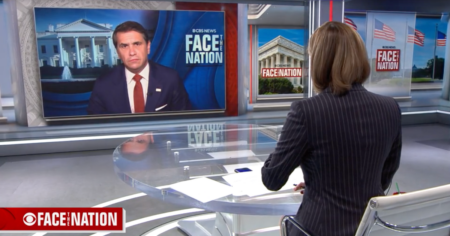
This week’s Face the Nation broadcast highlighted the deepening dysfunction in Washington as the partial Homeland Security Department shutdown entered its 44th day—now the longest in American history. The impasse has created cascading problems for ordinary Americans, most visibly at airports where more than 500 TSA officers have quit their jobs, leading to massive security lines at the nation’s busiest travel hubs. While Congress has fled Washington for a two-week spring recess, frustrated travelers face hours-long waits, and critical security personnel work without guaranteed paychecks. President Trump attempted to address the crisis by signing an executive order to pay TSA agents using emergency funds, with payments expected to begin shortly, though legal questions surround whether this violates Congress’s constitutional power of the purse.
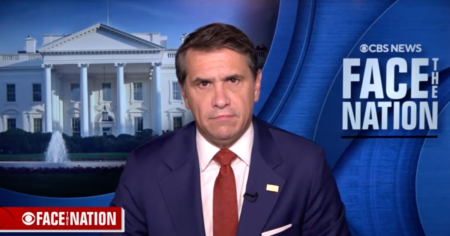
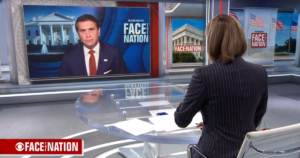
The political battle centers on fundamental disagreements about immigration enforcement. Democrats are refusing to fund the Department of Homeland Security unless Republicans agree to reforms limiting how Immigration and Customs Enforcement (ICE) operates, particularly following the fatal shootings of two Americans—Renee Good and Alex Pretti—during immigration enforcement actions in Minneapolis earlier this year. Border Czar Tom Homan defended the administration’s position, arguing that Democrats are holding the entire department hostage over policy disagreements with ICE. He pointed out the troubling contradiction: while debate rages in Washington, critical agencies like the Coast Guard, Secret Service, and cybersecurity infrastructure remain underfunded during a period of heightened threat. Homan emphasized that ICE has already implemented some requested changes, including expanded body camera use and limiting enforcement at sensitive locations like schools and hospitals, though he maintained these are operational adjustments rather than fundamental policy shifts that should be legislated.
The partisan finger-pointing reveals deeper coordination failures within the Republican Party itself. A bipartisan funding bill passed unanimously in the Republican-controlled Senate, which would have funded most DHS agencies while setting aside the contentious ICE issues for separate negotiation. However, House Speaker Mike Johnson rejected this compromise, calling it a “joke,” leaving the government partially shuttered. This Republican civil war—with Senate and House leadership unable to agree—undermines the administration’s argument that Democrats alone are responsible. Representative Jim Himes argued that the Democratic demands are hardly radical: requiring ICE agents to wear identification badges, obtain judicial warrants before entering homes, and avoid military-style raids that have resulted in mistaken arrests of American citizens. The fundamental question remains whether immigration enforcement agencies should operate under the same constitutional constraints as other law enforcement, or whether the urgency of immigration control justifies exceptional powers.
Iran War Escalates as Diplomatic Solutions Remain Elusive
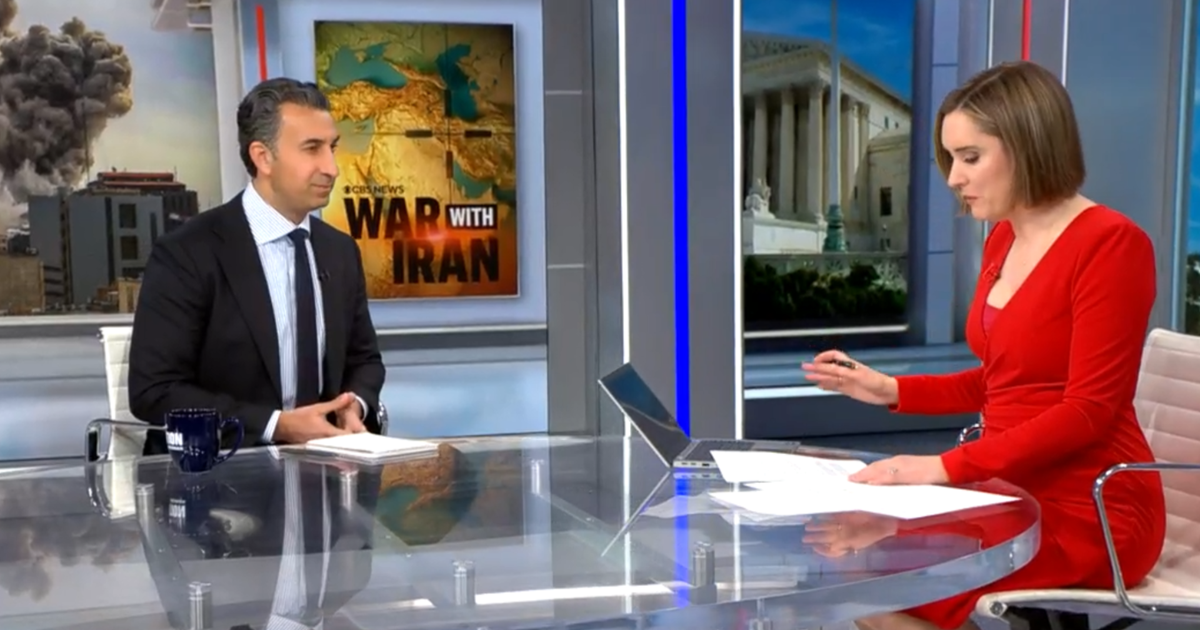
The second month of conflict with Iran has brought economic pain to American households through skyrocketing gas prices, now exceeding $112 per barrel for oil, while financial markets tumble and the specter of recession looms. President Trump has publicly claimed that Iran is “begging to make a deal” and has been “obliterated” by American military action, yet these statements contrast sharply with the reality on the ground. According to Representative Himes and Iran analyst Karim Sadjadpour, no meaningful negotiations are currently taking place, and Iran appears to believe it holds significant leverage by controlling the Strait of Hormuz, through which much of the world’s oil supply flows. The administration put forward a 15-point proposal, but Iran has not responded, and Secretary of State Rubio admitted uncertainty about who would even negotiate on behalf of the fragmented Iranian leadership, many of whom are in hiding or have been killed in recent strikes.
The military situation is complex and deteriorating. Retired General Frank McKenzie, former CENTCOM commander, explained that American forces are working methodically to reopen the Strait of Hormuz by establishing continuous air superiority over southern Iran, systematically destroying Iranian missile and drone capabilities that threaten commercial shipping. This is not improvisation—the military has simulated these scenarios for years and is actually ahead of projected timelines. However, the Houthi militias in Yemen, backed by Iran, have now entered the conflict, firing on Israel and threatening to close the Bab-el-Mandeb strait and Red Sea shipping lanes, which would create additional economic disruption. Meanwhile, intelligence suggests Russia is actively assisting Iran with satellite imagery of American military bases and electronic warfare capabilities, payback for years of American support for Ukraine’s resistance against Russian aggression.
The pathway to resolution remains murky. President Trump postponed his deadline for reopening the Strait of Hormuz to April 6th, suggesting some back-channel communication may be occurring, possibly through mediators gathering in Islamabad including Pakistan, Turkey, and Egypt. The administration has floated Vice President Vance as a potential negotiator, which Sadjadpour interprets as Iran seeking someone from the “anti-war wing” of the Republican Party who might be motivated to wrap up the conflict quickly. General McKenzie believes Iran will eventually negotiate when the pain becomes unbearable—they did so in the 1980s with Iraq in what Iranians call “drinking from the poison chalice”—but Sadjadpour is more pessimistic, arguing the regime’s identity is fundamentally built on opposition to America and Israel, making genuine rapprochement nearly impossible while the current government remains in power. The question of whether this ends through negotiation, grinding military pressure, or potential ground operations to seize Iranian islands remains open, with the administration clearly preparing for all contingencies while the economic costs mount for Americans at home.
Public Health Infrastructure Crumbles Amid Measles Outbreak and Leadership Vacuum
Former Surgeon General Jerome Adams sounded an alarm about America’s cascading public health crises, beginning with a stark observation: the nation’s most pressing health threat isn’t opioids or obesity—it’s mistrust. A devastating measles outbreak has seen more than 1,500 confirmed cases since January, already approaching the total for all of last year, with particularly severe outbreaks in Utah where vaccination rates have fallen below the critical 95% threshold needed for herd immunity. States including Colorado, Florida, Georgia, and Kentucky have similarly dangerous vaccination gaps. What would normally be contained quickly—one case turning into two or three before being stopped—now explodes into clusters of 20, 50, or 100 cases because the public health infrastructure has been gutted. Nearly 20,000 positions have been cut from the Department of Health and Human Services, eliminating the personnel and systems that would typically track, contain, and eliminate these outbreaks before they spiral out of control.
The leadership void compounds the crisis. There is currently no Senate-confirmed CDC director during this critical moment, and the administration’s nominee for Surgeon General, Dr. Casey Means, has sparked intense controversy. Adams, who served as Surgeon General during Trump’s first term, stated bluntly that Means lacks the basic qualifications for the position—she does not maintain an active medical license and would be the first Surgeon General in history without one. During her confirmation hearing, when pressed repeatedly about whether she would recommend a mother vaccinate her child against measles, Means equivocated, saying she’s “not an individual’s doctor” and that “every individual needs to talk to their doctor.” Adams finds this response disqualifying during a major measles outbreak, comparing it to if he had refused to recommend naloxone during the opioid crisis. Polling shows 68% of Americans say they would not trust health advice from Surgeon General Means, and similar majorities express distrust of health information from HHS Secretary Robert Kennedy Jr., whose vaccine skepticism is well documented.
The disconnect between political messaging and public health needs has created a dangerous moment. Republican pollster Tony Fabrizio warned in a memo that while the “Make America Healthy Again” (MAHA) message about addressing chronic disease and reforming healthcare resonates with voters, the vaccine skepticism threatens to hurt Republicans in upcoming elections. Adams argues the administration can and should do both—respect patient autonomy and address legitimate frustrations with a broken healthcare system while simultaneously being clear about what science demonstrates: childhood vaccinations are safe, effective, and represent one of the greatest public health achievements in human history. On social media’s impact on children’s mental health, Adams found common ground with Secretary Kennedy, endorsing recommendations that children not sleep with phones in their bedrooms, citing evidence linking social media exposure to increased anxiety, depression, and sleep disruption. Recent lawsuits against Meta platforms have alleged the company deliberately designed Facebook, Instagram, and WhatsApp to be addictive to children, drawing comparisons to tobacco industry tactics. As Australia bans social media for children under 16 and 25 American states consider similar legislation, the question is whether America can address these challenges when the basic trust between public health authorities and the public has eroded to historic lows.
Congressional Ethics and Political Accountability Come Under Scrutiny
The broadcast also touched on questions of political corruption and accountability within Congress itself. Representative Jim Himes, the top Democrat on the House Intelligence Committee, was asked about fellow Democrat Sheila Cherfilus-McCormick of Florida, who has been found guilty on 25 ethics charges related to stealing millions of dollars in COVID relief funds. When pressed on whether she should resign or be expelled, Himes diplomatically stated he hopes she would choose to resign to avoid forcing a floor vote, while acknowledging that members of both parties have historically found reasons to protect their own, citing Republicans’ initial reluctance to expel George Santos. Himes emphasized that at a time when the nation faces war and economic challenges, both parties must be consistent in punishing ethical lapses within their ranks, though he stopped short of calling for her immediate expulsion.
This ethical question arrives as Democrats have made anti-corruption a central theme of their efforts to win back control of the House in upcoming elections. The party’s ability to maintain credibility on this issue depends partly on how they handle misconduct within their own caucus. The case also highlights the broader challenge of maintaining institutional integrity when partisan loyalty often trumps accountability. The fact that Congress departed Washington for a two-week recess while leaving critical funding issues unresolved—including paying thousands of DHS employees and addressing the Iran conflict’s economic fallout—further erodes public confidence in the institution’s ability to function during crises.
Massive Democratic Protests Signal Potential Electoral Consequences
While much of the broadcast focused on immediate policy crises, Margaret Brennan noted that millions of Americans marched in cities and towns across the country on Saturday in a massive demonstration of Democratic unity. Though details of the protests were not extensively discussed, the clear implication is that this grassroots mobilization represents a potential threat to Republicans in the upcoming midterm elections. The combination of a prolonged government shutdown affecting airport security and federal workers’ paychecks, an escalating Middle Eastern war driving up gas prices and threatening recession, and controversial health policy decisions appears to be energizing Democratic voters and possibly alienating moderate independents who determine close elections.
The political landscape suggests a party struggling with internal divisions—between Senate and House Republicans on funding, between the MAHA health reform message and vaccine skepticism, and between the president’s claims of imminent victory in Iran and the reality of an expanding conflict with no clear resolution. Whether these tensions translate into electoral consequences will depend partly on whether Democrats can maintain message discipline, address ethical problems within their own ranks, and present a compelling alternative vision rather than simply running against Trump administration chaos.
Looking Ahead: Compounding Crises Without Clear Resolution
As Congress remains out of town for two weeks and critical decisions are postponed, the American public faces a perfect storm of challenges without clear leadership or solutions. Airport security remains compromised despite executive orders to pay TSA agents, with the fundamental funding dispute unresolved and 500 experienced officers already gone from the system. Major events like the World Cup in June loom, raising questions about whether the nation can adequately secure large-scale public gatherings. The Iran conflict continues escalating with preparations for potential ground operations even as the administration claims imminent diplomatic breakthrough, while gas prices punish American consumers and threaten broader economic stability. The measles outbreak spreads unchecked through states with falling vaccination rates while the public health infrastructure lacks both personnel and leadership with the credibility to address the crisis.
On a more optimistic note, the broadcast ended with a reminder that NASA’s Artemis II mission is scheduled to launch April 1st, carrying four astronauts—including the first woman, first person of color, and first Canadian—on a loop around the moon, marking the first crewed lunar mission in over 50 years. This achievement represents the kind of long-term planning, international cooperation, and technical excellence that stands in stark contrast to the short-term crisis management and political dysfunction dominating the rest of the news. Whether American governance can rise to meet its current challenges with similar competence and vision remains the critical question as spring arrives in a capital city that has rarely seemed more divided or less functional.