


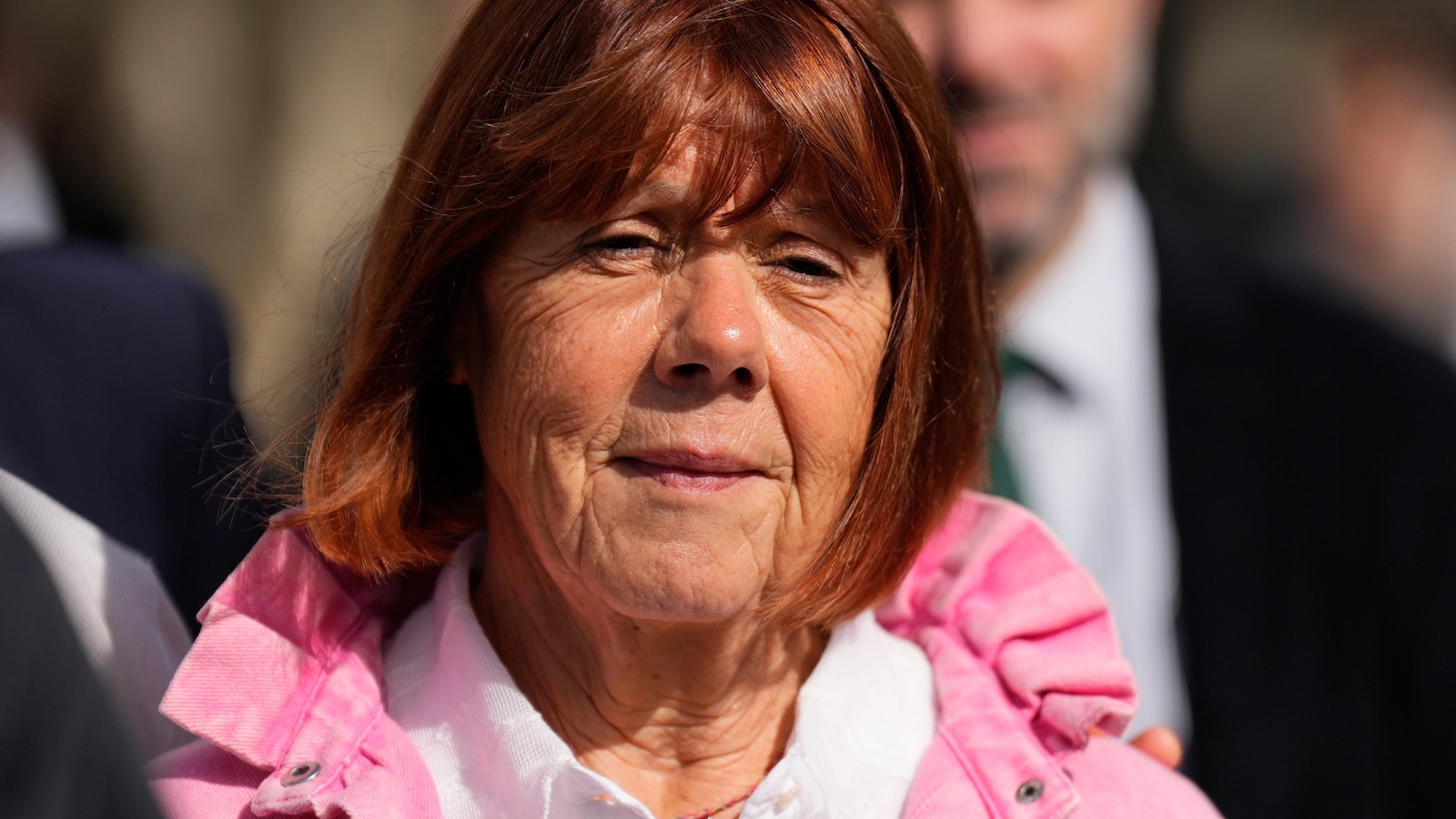

Gisèle Pelicot’s Courageous Story: Breaking the Silence on Sexual Violence
The Day Everything Changed
On November 2, 2020, Gisèle Pelicot’s world shattered in a French police station. What began as a routine visit—accompanying her husband Dominique to answer questions about a seemingly minor supermarket incident—transformed into a nightmare beyond imagination. Deputy Police Sergeant Laurent Perret carefully, compassionately, began revealing an unspeakable truth: the man she had loved and trusted, the man she called “a super guy,” had been systematically drugging and allowing strangers to rape her for years. As Perret warned her that he would show her photos and videos that wouldn’t “please her,” nothing could have prepared Gisèle for what came next. The images showed a woman lying unconscious, dressed in a suspender belt, being violated by men she’d never seen before. “That’s you in this photo,” the officer told her. She struggled to recognize herself in the pictures—the flabby cheek, the limp mouth, a body like a rag doll. In her newly published book, “A Hymn to Life, Shame Has to Change Sides,” she recalls how her brain simply stopped working in that moment. Fifty-three men had entered her home to rape her while she lay drugged and unconscious, completely unaware of the horror being inflicted upon her body while her husband documented it all on camera.
From Private Trauma to Public Symbol
Gisèle Pelicot’s story didn’t end with that devastating revelation in the police station. Instead, this 73-year-old woman made a decision that would transform her from a victim into a global icon for survivors of sexual violence. In her first series of interviews since the landmark 2024 trial and through excerpts from her book published in French newspaper Le Monde, she’s chosen to share her experience in her own words, on her own terms. The case that emerged was shocking in its scope and brutality: Dominique Pelicot had spent nearly a decade lacing his wife’s food and drink with drugs, rendering her unconscious so he could invite strangers to their home to assault her while he filmed the attacks. What makes Gisèle’s story particularly powerful is her deliberate choice to make the trial public rather than accepting the protection of a closed-door hearing. This decision required extraordinary courage, forcing her to relive her trauma in front of cameras, journalists, and a watching world. But it was a choice she made consciously, understanding that her visibility could help countless other women feel less alone in their own experiences with sexual violence.
A Trial That Shocked a Nation
The trial, which concluded in December 2024, became a watershed moment for France and sparked a national conversation about rape culture and the systems that enable sexual violence. All 51 defendants were found guilty, a nearly unprecedented outcome that validated Gisèle’s courage in bringing the case to public attention. Dominique Pelicot received the maximum possible sentence of 20 years in prison after being convicted on all charges. Forty-nine other men were convicted of rape and sexual assault committed over the course of nearly ten years, receiving sentences ranging from three to 15 years imprisonment. Additionally, one man was convicted of drugging and raping his own wife with Dominique Pelicot’s assistance, revealing how the network of abuse extended beyond Gisèle herself. The verdicts sent a clear message that such crimes would not be tolerated or minimized. Remarkably, only one defendant appealed his conviction, and rather than receiving leniency, his sentence was actually increased from nine to ten years—a powerful statement from the justice system that these crimes deserved serious consequences.
Why She Chose to Face the World
In the excerpts from her book published by Le Monde, Gisèle explains the reasoning behind her brave decision to refuse a private trial, a choice that may seem counterintuitive to those who haven’t experienced such trauma. She recognized that accepting a closed-door hearing would have meant facing her abusers alone, becoming “hostage to their looks, their lies, their cowardice and their scorn.” Without public scrutiny, these men’s crimes would have remained in shadow. “No one would know what they had done to me,” she writes. “Not a single journalist would be there to write their names next to their crimes.” But her thinking went beyond her own case. She understood the power of representation and visibility for other survivors: “Above all, not a single woman could walk in and sit in the courtroom to feel less alone.” This profound empathy—the ability to think beyond her own suffering to how her choices might help others—demonstrates the depth of her character and the transformative nature of her testimony. By refusing to hide, she created space for other women to recognize their own experiences and understand that the shame belongs not to victims but to perpetrators.
The Weight of Generational Expectations
Gisèle’s reflections reveal how age and experience shaped her ability to make such a courageous choice. At 73, she possesses a perspective that may not have been available to her younger self. She candidly admits that had she been twenty years younger, “I might not have dared to refuse a closed-door hearing.” The fear of judgment, the weight of societal expectations, and what she calls “those damned stares” might have kept her silent. She describes with painful familiarity the experiences of women of her generation—the constant awareness of being watched and evaluated, the morning decisions between trousers and a dress influenced by anticipated reactions, the looks that “follow you or ignore you, flatter you and embarrass you.” These stares, she writes, are supposed to tell women “who you are, what you’re worth,” before abandoning them as they age. There’s a bitter irony in her observation: the same society that spent decades judging women’s worth based on their appearance and desirability might have silenced her younger self, yet her age and the invisibility that comes with it in some ways freed her to speak truth without the same concerns about public perception. Her awareness of these dynamics adds another layer to her testimony—she’s not just speaking about sexual violence, but about the broader systems of gender and power that enable it.
A Hymn to Life: Reclaiming Her Story
The title of Gisèle Pelicot’s book—”A Hymn to Life, Shame Has to Change Sides”—encapsulates her revolutionary message. By publishing her story and speaking openly about what happened to her, she’s actively working to shift the burden of shame from victims to perpetrators, where it rightfully belongs. For too long, survivors of sexual violence have been expected to carry the weight of crimes committed against them, to hide their experiences, to protect the reputations of their abusers. Gisèle’s public testimony reverses this dynamic. She refuses to disappear, to minimize what happened, or to prioritize her abusers’ privacy over her own truth. Her book represents more than just a memoir; it’s a declaration of survival and an act of resistance against the cultural forces that would prefer victims to remain silent. By putting her name and face to her story, she’s created a touchstone for the global movement against sexual violence. Her courage has inspired countless others to reconsider how society approaches rape and assault, who bears responsibility, and what justice looks like. The hymn she sings is one of resilience, of the human capacity to endure unimaginable trauma and still choose to fight—not just for oneself, but for every person who might walk a similar path. In sharing her story so publicly, Gisèle Pelicot has transformed personal tragedy into collective healing, offering a roadmap for how survivors can reclaim their narratives and how society can better support them in that journey.