
Texas Congressman Faces Tough Primary Battle Amid Scandal and Political Scrutiny
A Contested Race Forcing a Runoff Election
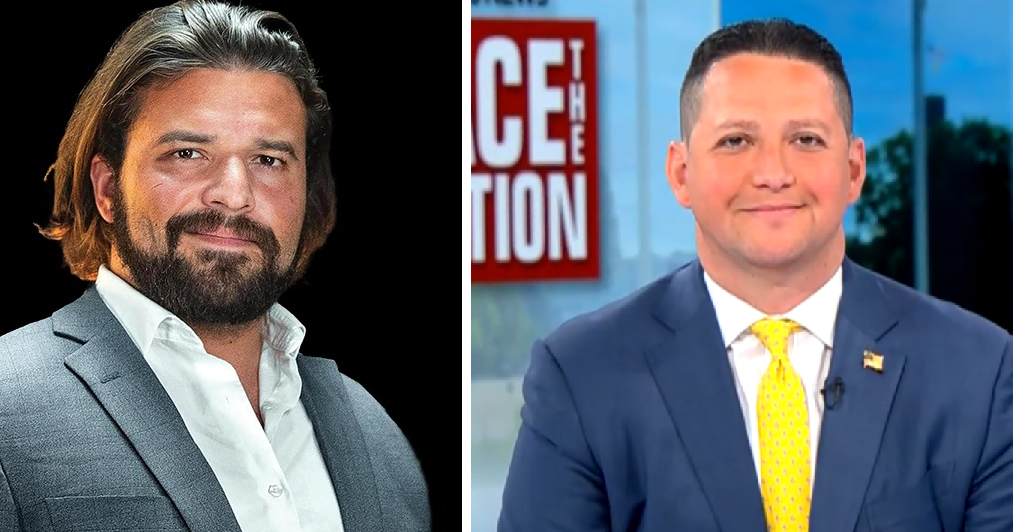
Republican Representative Tony Gonzales finds himself in a politically precarious position as he heads into a primary runoff election against far-right challenger Brandon Herrera. According to projections from CBS News, neither candidate managed to secure the necessary 50% of votes required to win outright in the initial primary, setting the stage for a decisive runoff on May 26. This development comes at a particularly challenging time for Gonzales, who is navigating both a competitive race and a personal scandal that has drawn criticism from across the political spectrum. The tight contest reflects deep divisions within the Republican Party and raises questions about Gonzales’s political future in a district that, despite recent redistricting efforts to make it more safely Republican, remains a focal point of political tension and scrutiny.
From Moderate Beginnings to a Rightward Shift
Tony Gonzales first entered Congress in 2020, initially positioning himself as a moderate voice within the Republican Party. This moderate stance made sense given the nature of his district—Texas’ 23rd Congressional District, which stretches across more than 800 miles of the U.S.-Mexico border and had historically been considered a swing district. However, Gonzales’s political journey has taken a notable turn in recent years. After facing a surprisingly close primary challenge from Brandon Herrera in 2024, where Gonzales prevailed by a razor-thin margin of just 400 votes, the congressman made a strategic decision to shift his positioning further to the right. In preparation for this current race, Gonzales worked to secure and prominently displayed his endorsement from President Trump, seeking to bolster his conservative credentials. However, in a potentially telling development, President Trump notably left Gonzales’s name off a list of endorsements released on Friday, raising questions about the strength of that support and potentially signaling trouble for the incumbent congressman.
The Scandal That Shook a Campaign
The congressman’s reelection effort has been dramatically overshadowed by revelations of inappropriate communications with a former aide, Regina Santos-Aviles, who tragically died by suicide in September. According to the Uvalde police, Santos-Aviles died after setting herself on fire, a devastating end to a life that would later become the subject of intense public scrutiny. Last month, text messages between Gonzales and Santos-Aviles were obtained and published by CBS News, revealing exchanges of a sexual nature that have sparked widespread condemnation. In these messages from May 2024, Gonzales requested a “sexy pic” from his aide. When Santos-Aviles expressed discomfort, explaining that she didn’t like taking photos of herself, the congressman responded by saying, “I’m just such a visual person,” followed by “Sorry.” The conversation escalated when Gonzales asked Santos-Aviles about her “favorite position,” to which she responded by asking him to answer first, which he did. The aide’s responses throughout the exchange repeatedly indicated her discomfort, with Santos-Aviles texting, “This is going too far boss. So how long have you thought I was this hot?” and later stating more directly, “This is too far, Tony.” These revelations have been particularly damaging given that both Gonzales and Santos-Aviles were married at the time of the exchanges—Gonzales to his wife with whom he has six children, and Santos-Aviles to her husband with whom she had an 8-year-old son.
Calls for Resignation and Political Fallout
The publication of these text messages has resulted in bipartisan calls for Gonzales to resign from his position. Members from both the Republican and Democratic parties have expressed concern not only about the appropriateness of the congressman’s conduct but also about the ethical implications of a member of Congress engaging in such communications with a staff member who was in a subordinate position. Despite the mounting pressure and the severity of the allegations, Gonzales has previously denied having an affair with Santos-Aviles, though the text messages appear to contradict his claims of entirely professional conduct. The timing of these revelations, coming just weeks before the primary election, has created a perfect storm of political vulnerability for the congressman. The scandal has forced voters in the district to weigh their political preferences against questions of personal character and professional ethics. For many voters, the issue goes beyond partisan politics to fundamental questions about the kind of representation they want and the standards to which they hold their elected officials. The tragic outcome of Santos-Aviles’s life has added an additional layer of gravity to the situation, as many wonder about the potential connection between the inappropriate workplace relationship and her mental state leading up to her death.
The District and Its Political Transformation
Texas’ 23rd Congressional District holds significant strategic importance in both state and national politics. Encompassing more than 800 miles along the U.S.-Mexico border, the district deals directly with issues of immigration, border security, and cross-border economic relations that are central to both Texas politics and national Republican messaging. Historically, this district was considered a genuine swing district, with competitive races between Republicans and Democrats. However, the 2021 redistricting process changed the district’s political makeup considerably, redrawing boundaries to create a more safely Republican seat. The impact of this redistricting was evident in the 2024 election when Gonzales won his general election contest by more than 20 percentage points, a commanding victory that reflected the district’s new partisan composition. Even after Texas underwent another round of redistricting in 2025, the district remains classified as safely Republican. This political reality creates an interesting dynamic in the current primary race—while Gonzales would likely be favored in a general election against a Democratic challenger, his greatest vulnerability comes from within his own party, where conservative voters have the opportunity to replace him with someone they perceive as more ideologically aligned with their values.
The Challenge from Brandon Herrera and What Lies Ahead
Brandon Herrera, Gonzales’s challenger, represents the far-right faction of the Republican Party and is known primarily as a gun rights activist. Herrera’s challenge to Gonzales isn’t new—he previously ran against the congressman in 2024, losing by only 400 votes in what should have been a more comfortable race for an incumbent. That near-miss apparently convinced Herrera that Gonzales was vulnerable and worth challenging again. Herrera’s campaign likely appeals to Republican primary voters who prioritize ideological purity and conservative credentials over the pragmatic moderation that Gonzales originally brought to the seat. The gun activist’s support base represents a segment of the Republican Party that has grown increasingly influential in primary elections, often favoring candidates who take the most conservative positions on issues ranging from gun rights to immigration to cultural issues. As these two candidates head into the May 26 runoff, Gonzales faces the dual challenge of defending his personal conduct while also trying to prove his conservative bona fides to skeptical voters. The removal of Trump’s explicit endorsement adds another complication, potentially signaling to voters that even the former and current president has concerns about the congressman. For Herrera, the strategy will likely involve emphasizing both his ideological consistency and Gonzales’s personal scandal, painting the incumbent as both insufficiently conservative and ethically compromised. The outcome of this runoff will not only determine who represents this crucial border district but will also send a message about what Republican primary voters prioritize when choosing their candidates—whether they’re willing to overlook personal scandals for political experience, or whether they’ll opt for ideological purity even if it means elevating a less experienced candidate. Regardless of the outcome, this race exemplifies the ongoing tensions within the Republican Party between its establishment and insurgent wings, played out in a district where border politics, personal ethics, and partisan identity all intersect.