


Hostage Crisis at Thai School Ends Peacefully After Tense Hours
Gunman Apprehended Following Afternoon Incident
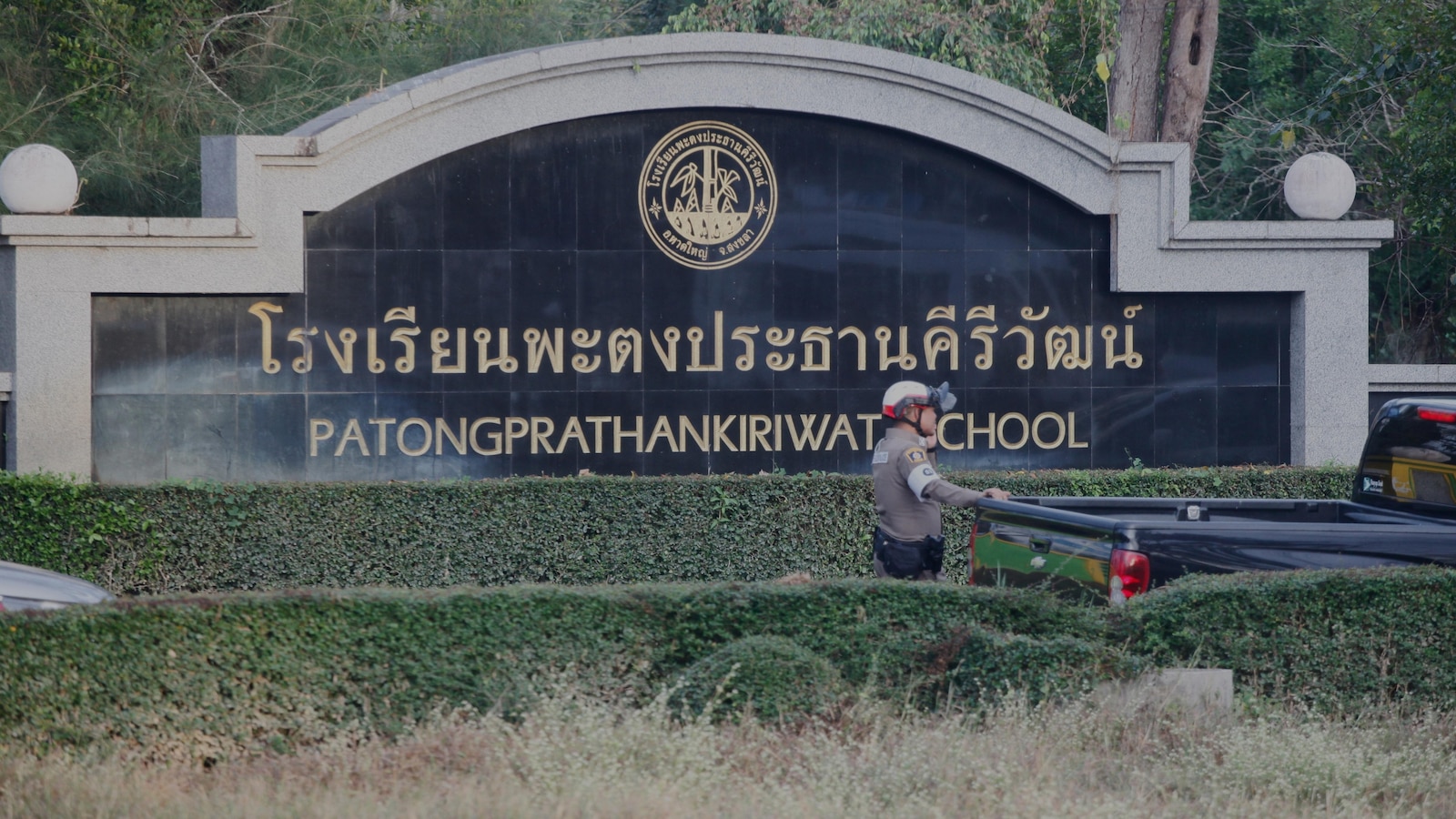
A tense hostage situation unfolded at a school in southern Thailand on Wednesday afternoon, sending shockwaves through the local community and raising fresh concerns about gun violence in the country. The incident occurred at Patongprathankiriwat School in Songkhla province, where an armed individual entered the premises shortly after classes had been dismissed for the day. According to Thailand’s Central Investigation Bureau, the gunman took several students and teachers hostage in what became a highly volatile situation. Fortunately, law enforcement was able to bring the crisis to a peaceful resolution within approximately two hours, successfully apprehending the suspect without further tragedy. While at least one student sustained injuries during the ordeal, the swift response from authorities prevented what could have become a far more devastating incident. The exact circumstances surrounding the gunman’s motivations remain unclear at this time, and investigators are working to piece together what led to this frightening episode.
Details of the Incident and Immediate Response
Witnesses and local officials reported that the gunman appeared visibly agitated as he entered the school compound in the late afternoon hours. The timing of the incident—just as students were being released from their classes—meant that many young people were still on the premises when the situation began to unfold. According to information released by Songkhla province’s Public Relations Department, several gunshots were heard shortly after the armed individual entered the school grounds, creating immediate panic among students, teachers, and staff members who were still present. Thai media outlets reported that multiple individuals may have been injured during the incident, though official confirmation of these reports has not yet been provided by authorities. The lack of immediate detailed information is not uncommon in developing situations like this, as law enforcement typically prioritizes securing the scene and ensuring everyone’s safety before releasing comprehensive statements to the public. What remains clear is that the quick action taken by responding officers helped prevent the situation from escalating into something far more catastrophic.
Thailand’s Complex Relationship with Gun Ownership
This latest incident serves as another sobering reminder of Thailand’s ongoing struggle with gun violence, a problem that sets the country apart from many of its regional neighbors. While mass shootings remain relatively uncommon in Thailand, the country has one of the highest rates of both gun ownership and gun-related deaths in all of Asia. These statistics paint a troubling picture of a society where firearms are far more prevalent than in comparable nations in the region. Data compiled in 2017 by respected research organizations Small Arms Survey and GunPolicy.org revealed some eye-opening numbers about the extent of gun ownership in the country. According to their findings, Thailand had approximately 10.3 legally registered firearms per 100 people. To put this in perspective, neighboring Malaysia had less than one gun per 100 people during the same period. Even more concerning is that when illegal firearms are factored into the equation, Thailand’s gun ownership rate jumps significantly to 15.1 guns per 100 people. This widespread availability of weapons, both legal and illegal, creates an environment where tragic incidents involving firearms occur with disturbing regularity, even if large-scale mass shootings remain relatively rare events.
Recent History of Mass Shootings in Thailand
The school hostage situation in Songkhla brings back painful memories of previous mass shooting incidents that have shocked Thailand in recent years. Perhaps the most horrific of these occurred in October 2022, when a former police sergeant who had been terminated from his position carried out an unspeakable attack on innocent children. The ex-officer entered a day care center in the small northeastern town of Uthai Sawan and proceeded to kill 36 people, including approximately two dozen toddlers, in an attack that involved both guns and knives. The sheer brutality of targeting defenseless young children sent shockwaves throughout Thailand and the international community, forcing the nation to confront the deadly consequences of easy access to firearms. In the aftermath of that tragedy, there were widespread calls from concerned citizens, advocacy groups, and some political leaders for the government to implement stricter gun control measures. However, despite the public outcry and the obvious need for reform, no major legislative changes have been enacted to meaningfully address the availability of weapons or improve screening processes for gun ownership.
Just over two years before that day care massacre, another devastating mass shooting demonstrated the potential for firearm-related violence in Thailand. In February 2020, a Thai soldier who had become disgruntled over a financial dispute with his commanding officer embarked on a deadly rampage in the northeastern city of Nakhon Ratchasima. The shooter’s anger over what he perceived as unfair treatment regarding money matters led him to take the lives of 29 innocent people while wounding dozens of others in a terrifying spree of violence. The incident culminated in a dramatic overnight siege at a major shopping mall in the city, where the gunman had barricaded himself as law enforcement surrounded the building. After hours of tense negotiations and tactical planning, police were ultimately forced to shoot and kill the perpetrator to end the standoff. These incidents, along with Wednesday’s school hostage situation, highlight a disturbing pattern of armed individuals taking out their grievances, frustrations, or mental health crises on innocent members of the public.
The Challenge of Gun Reform in Thai Society
The question that continues to haunt Thailand after each of these tragic incidents is why meaningful gun control reform remains so elusive despite the clear and present danger that widespread firearm availability poses to public safety. Several factors contribute to this legislative inaction, including cultural attitudes toward gun ownership, the influence of various interest groups, and the complexities of enforcing regulations in a country where illegal weapons circulate freely. Gun ownership in Thailand has historical roots in both self-defense traditions and the country’s military culture, making it a more politically sensitive issue than it might initially appear. Additionally, the significant number of illegal firearms already in circulation presents enforcement challenges that go beyond simply tightening regulations on legal gun sales. Critics of the current system argue that stronger background checks, mandatory safety training, secure storage requirements, and limitations on the types of weapons available to civilians could all help reduce the likelihood of future tragedies. However, implementing such measures requires political will and sustained public pressure, both of which have proven difficult to maintain once the immediate shock of a particular incident begins to fade from public consciousness.
Looking Forward: Community Safety and Prevention
As the community in Songkhla begins to process the trauma of Wednesday’s hostage situation, questions will inevitably arise about how such incidents can be prevented in the future. School security measures, early warning systems for identifying potentially dangerous individuals, and mental health resources all play crucial roles in creating safer environments for students and teachers. The fact that this particular incident was resolved without mass casualties speaks to the effectiveness of law enforcement’s response, but prevention is always preferable to even the most successful crisis management. Families across Thailand will likely be having difficult conversations with their children about what happened and how to stay safe in emergency situations, discussions that no parent should have to have but that have become increasingly necessary in today’s world. As investigators work to determine what motivated Wednesday’s gunman and how he obtained his weapon, the broader conversation about gun violence in Thailand will continue. Whether this latest incident will serve as a catalyst for meaningful reform or simply become another tragic footnote in the country’s ongoing struggle with gun violence remains to be seen. What is certain is that until substantive changes are made to address the root causes of these incidents and the easy availability of weapons, Thai communities will remain vulnerable to similar acts of violence.