
Congressional Hearing Addresses Immigration Enforcement After Tragic Officer Death
The Catalyst Behind the Hearing
The upcoming congressional testimony by leaders of Immigration and Customs Enforcement (ICE), Customs and Border Protection (CBP), and U.S. Citizenship and Immigration Services (USCIS) didn’t happen by chance. While the House committee had initially extended an invitation to these agency heads on January 15th, the tragic killing of an officer named Pretti on January 24th transformed what might have been a routine oversight hearing into an urgent matter of national concern. Following this devastating loss, Committee Chairman Representative Andrew Garbarino from New York took the step of formally memorializing the previous invitation, effectively making the testimony a priority rather than just another item on the legislative calendar. This shift underscores how real-world tragedies can rapidly reshape congressional priorities and bring critical issues to the forefront of national discourse.
Chairman Garbarino has been clear about his motivations and responsibilities in calling this hearing. In his statement, he emphasized that his foremost concern remains the safety of American citizens and ensuring that the Department of Homeland Security can effectively carry out its fundamental mission. He spoke with the gravity befitting someone who understands the weight of congressional oversight, acknowledging that Congress bears a significant responsibility not only to the agencies under its purview but to law enforcement officers who put their lives on the line daily and to the communities they’re sworn to protect. Garbarino also made it clear that he’s committed to ensuring that ICE, CBP, and USCIS are making effective use of the substantial resources they’ve received through reconciliation legislation to enhance public safety. His approach suggests a chairman who takes his oversight duties seriously while trying to balance accountability with support for the challenging work these agencies perform. The fact that all three agency leaders—Lyons, Scott, and Edlow—agreed to testify just three days after Garbarino’s formal request suggests the urgency everyone involved feels about addressing these critical issues.
Transparency and Accountability in Immigration Enforcement
When the three agency leaders confirmed their participation in the hearing, Chairman Garbarino welcomed the development with remarks that revealed his broader philosophy about how to handle contentious policy debates. He stated that “transparency and communication are needed to turn the temperature down,” a phrase that acknowledges the heated nature of immigration enforcement discussions in America today. By thanking Secretary Noem and the Department of Homeland Security for making these witnesses available, Garbarino demonstrated a collaborative approach rather than a confrontational one, even as he maintained Congress’s oversight authority. This hearing won’t be the only opportunity for congressional scrutiny, however. The same three leaders are scheduled to appear before the Senate Homeland Security Committee on Thursday, and Secretary Noem herself is expected to testify before Congress in March, creating multiple opportunities for lawmakers to examine how immigration enforcement is being conducted and what changes might be necessary.
The emphasis on transparency reflects a growing recognition across the political spectrum that Americans need to understand how their immigration enforcement agencies operate, particularly when operations result in community unrest or, tragically, loss of life. These hearings serve multiple purposes beyond just gathering information—they create a public record, establish accountability, and provide a forum where difficult questions can be asked and, hopefully, answered. For the American people watching from home, these testimonies offer a rare window into the inner workings of agencies that often operate far from public view. The willingness of agency leaders to participate suggests they understand the importance of explaining their actions and policies to the elected representatives of the people they serve, even when those explanations might be uncomfortable or lead to difficult follow-up questions.
Federal-Local Cooperation Takes Center Stage
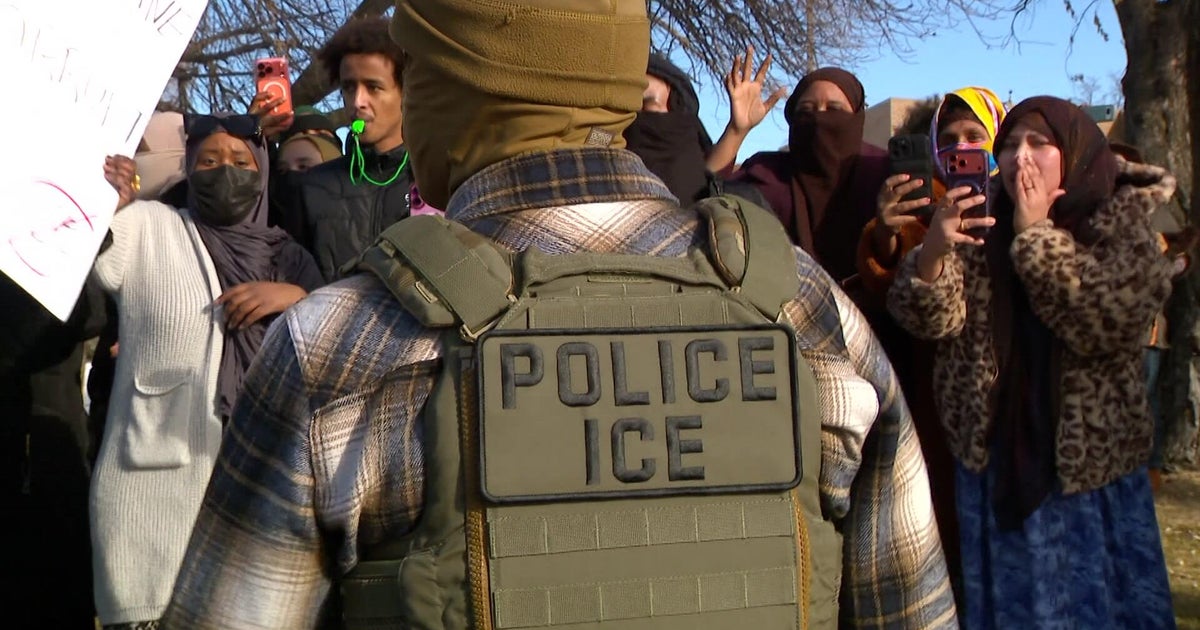
Representative Tony Gonzales, a Republican from Texas who serves on the committee, has already signaled what he plans to focus on during the hearing. Speaking on “Face the Nation with Margaret Brennan” over the weekend, Gonzales made clear that he wants to hear specifically about how the federal immigration enforcement agencies are working—or failing to work—with local and state officials. His reference to what happened in Minneapolis was pointed and deliberate: “Nobody in this country should want” what occurred there. For Gonzales, the situation in Minneapolis represents a cautionary tale about what happens when coordination breaks down, and he believes the nation should collectively strive to avoid repeating that scenario. His concern centers on ensuring that communities across America don’t become isolated battlegrounds where federal agents operate without local support or cooperation, a situation he believes creates danger for everyone involved.
The Texas congressman’s questions will likely probe into the practical details of how ICE agents coordinate with local police departments, sheriff’s offices, and state law enforcement agencies. He’s particularly concerned about what he describes as “ICE going it alone,” a situation he believes represents a failure of the system that should never occur. In his view, immigration enforcement should be a collaborative effort that brings together multiple levels of government, sharing information, resources, and strategic planning to ensure operations are conducted safely and effectively. Gonzales argues that when federal agents are forced to operate without local partnerships, everyone becomes less safe—the agents themselves, local law enforcement who might be caught unaware, and the communities where enforcement actions take place. His questions will likely seek specific examples of successful cooperation and probe into what barriers prevent better coordination in places where relationships have broken down.
While Gonzales acknowledged that the current administration has been making efforts to facilitate cooperation between federal immigration enforcement and local authorities, he placed the blame for ongoing problems squarely on local government officials who, in his view, refuse to work with federal partners. His statement was blunt and uncompromising: “The problem is, you’ve got so many local municipalities that don’t want to work together, and when that happens, your city burns.” This is strong language that reflects the depth of frustration some Republicans feel about what they see as obstruction by Democratic-led cities and counties that have adopted sanctuary policies or otherwise limited their cooperation with federal immigration authorities. Gonzales drew a direct line between the unwillingness of some local governments to collaborate with ICE and CBP and the civil unrest that has erupted in places like Minneapolis and Los Angeles, suggesting that lack of cooperation doesn’t just hamper enforcement but creates conditions for violence and destruction.
The Ongoing Battle Over Immigration Enforcement Funding
Tuesday’s hearing isn’t happening in a vacuum—it’s taking place against the backdrop of an intense congressional battle over how to fund the Department of Homeland Security going forward. Congress faces a Saturday deadline to fund DHS, and the path to an agreement has been rocky at best. Lawmakers recently approved a temporary funding measure that keeps the department operating for two weeks while funding the rest of the federal government through September. This two-tiered approach—a short-term patch for DHS while other agencies receive longer-term funding—reflects the political difficulty of reaching consensus on immigration enforcement in the current environment. Democrats, particularly in the aftermath of the events in Minneapolis, have expressed intense opposition to providing funding without significant reforms to how immigration enforcement agencies operate.
The two-week funding extension was designed to create space for negotiation on immigration enforcement reforms, giving both parties time to find common ground without the immediate pressure of a government shutdown. And there are areas where Democrats and Republicans have found agreement, at least in principle. Both parties have expressed support for requiring immigration enforcement agents to wear body cameras during operations, a reform that would create accountability and provide an objective record of encounters. Similarly, there’s bipartisan interest in ending what are called “roving patrols”—operations where immigration agents patrol communities looking for potential violations rather than pursuing specific leads or warrants. These areas of agreement suggest that compromise is possible, yet despite this common ground, a comprehensive funding agreement has remained frustratingly out of reach. The difficulty lies not in identifying what reforms might be beneficial but in balancing those reforms with ensuring agencies have the resources and authority they need to enforce immigration law.
Senate Democrats have taken the initiative by submitting draft legislation for a DHS funding measure to their Republican counterparts. This proposal reflects an outline they had shared the previous week and represents their vision for what immigration enforcement funding should look like going forward. However, the response from Democratic leaders to a counterproposal from the White House suggests the negotiations remain contentious. On Monday, Democratic leaders characterized the administration’s counterproposal as “incomplete and insufficient,” language that indicates significant gaps remain between what Democrats believe is necessary for reform and what the administration is willing to accept. This exchange illustrates the fundamental tension at the heart of immigration enforcement debates: how to balance public safety and border security with concerns about civil liberties, community relations, and the methods immigration agencies employ. With the Saturday deadline approaching rapidly, lawmakers have very little time to bridge these differences and reach an agreement that can pass both chambers of Congress and receive the president’s signature. The testimony from ICE, CBP, and USCIS leaders on Tuesday may provide crucial information that helps shape these negotiations, either by reassuring lawmakers that reforms are already underway or by revealing problems that demand legislative solutions. Whatever happens, the coming days will be critical in determining not just how DHS is funded but how immigration enforcement will be conducted in the months and years ahead.