



The Battle to Control Rising Gas Prices During the Iran Crisis
The Challenge of Keeping Fuel Affordable as Conflict Escalates
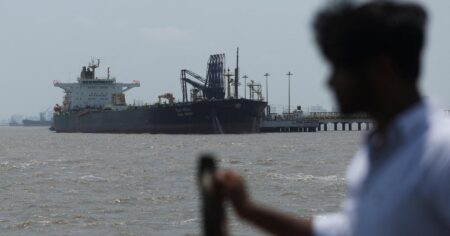
Americans are feeling the pinch at the pump as gasoline prices climb toward $4 per gallon, despite the Trump administration’s multi-pronged effort to ease the burden on consumers. The core issue stems from the ongoing conflict involving Iran, which has effectively shut down the Strait of Hormuz—a critical waterway responsible for transporting roughly one-fifth of the world’s oil and natural gas supplies. With Brent crude oil prices hovering around $108 per barrel, representing a dramatic 48% increase since hostilities began, the administration faces mounting pressure to find solutions. Experts agree that while various measures are being implemented, nothing will truly stabilize energy costs until safe passage through the strait is restored. The situation has become a high-stakes economic challenge, with the White House exploring everything from tapping emergency reserves to lifting certain regulatory restrictions. White House spokeswoman Taylor Rogers maintains optimism that once military objectives are achieved, oil and gas prices will not only drop rapidly but potentially fall below pre-war levels, ultimately benefiting American families in the long run. However, energy experts remain skeptical about whether current interventions can meaningfully offset the loss of such a significant portion of global oil supply.
Understanding the Strategic Petroleum Reserve Release
On March 11th, President Trump authorized the release of 172 million barrels of oil from the Strategic Petroleum Reserve (SPR), marking the second-largest withdrawal in the reserve’s history. Created in the 1970s as a safety net against energy disruptions—whether from natural disasters hitting refineries or geopolitical crises—the SPR has become a go-to tool for presidents facing oil shocks. The release, which began rolling out over a 120-day period, follows a similar move by former President Biden in 2022, when he withdrew 180 million barrels to counter the effects of Russia’s invasion of Ukraine combined with pandemic-related inflation that pushed gas prices above $5 per gallon. However, experts argue this massive release still falls short of what’s needed. Clayton Allen from the Eurasia Group points out that Gulf countries have cut oil production by approximately 10 million barrels per day due to supply constraints since the conflict began. Before the war, about 20 million barrels of oil traveled through the Strait of Hormuz daily, making the SPR release seem insufficient by comparison. Patrick De Haan, a petroleum analyst at GasBuddy, colorfully described the effort as “trying to replace a water main with a straw.” Beyond size, there are practical limitations—the fastest rate the U.S. has historically drawn down reserves is 1 million barrels daily, though the administration aims for 1.4 million. These physical constraints mean American oil won’t reach the market as quickly as consumers might hope, and expectations of returning to $3.50 gasoline simply aren’t realistic given current circumstances.
Additional Measures: Jones Act Waiver and Regulatory Changes
The administration has cast a wider net in search of relief, including a 60-day waiver of the Jones Act announced on Wednesday. This century-old maritime law requires goods shipped between American ports to travel on U.S.-built, U.S.-flagged, and U.S.-crewed vessels. By temporarily suspending this requirement, foreign ships can now move fuel between domestic ports, theoretically increasing local supply and reducing prices. According to analysis from the Center for American Progress, this waiver might reduce gas prices by about 3 cents per gallon—a modest improvement at best. Harvard Business School professor and energy expert Willy Shih dismissed the measure as “too little, too late,” characterizing it as a drop in the bucket when dealing with the loss of 20% of global oil supply. The administration is also considering waiving regulations that ban gas stations from selling E15 gasoline blend during summer months. This blend contains higher ethanol content, which evaporates more easily in hot weather and can contribute to air pollution, which is why it’s normally restricted from June through mid-September. Meanwhile, state-level initiatives are emerging, with Georgia’s House of Representatives approving a 60-day suspension of the state’s 33-cent per-gallon gas tax, and lawmakers in Connecticut, Maryland, and Pennsylvania considering similar approaches. These combined efforts reflect a kitchen-sink strategy—throwing everything at the wall to see what might stick—but the fundamental problem remains that no combination of these measures adequately compensates for the massive supply disruption caused by the closure of the Strait of Hormuz.
The Russian and Iranian Oil Equation
In a controversial move highlighting the desperation of the situation, the U.S. announced on March 12th that it would temporarily approve purchases of Russian oil already loaded on ships at sea. Treasury Secretary Scott Bessent attempted to frame this one-month waiver as having minimal financial benefit to the Russian government, but the optics of easing sanctions on Russia while engaged in a separate conflict raise questions about policy consistency. The practical impact may be limited anyway—there are only about 124 million barrels of Russian oil currently at sea globally, equivalent to roughly six days’ worth of normal Strait of Hormuz shipments or slightly more than one day’s worth of global consumption. The administration is also considering “unsanctioning” Iranian oil already on the water, which Bessent estimates at around 140 million barrels—representing 10 days to two weeks of supply that would primarily go to China. In a related effort, the U.S. has been allowing Iranian oil tankers to cross the Strait of Hormuz, with Bessent acknowledging that Iranian ships “have been getting out already, and we’ve let that happen to supply the rest of the world.” Since roughly 80% of Iran’s oil exports head to Asia, with China being the dominant customer, these moves essentially prioritize global supply stability over strict adherence to existing sanctions regimes. It’s a pragmatic approach born of necessity, but it also highlights the contradictions inherent in trying to manage a complex geopolitical situation while simultaneously fighting an economic battle on the energy front.
International Cooperation and the Path Forward
Recognizing that the United States cannot solve this crisis alone, President Trump has been pressuring allies to help reopen the Strait of Hormuz. Six major U.S. allies—the United Kingdom, France, Germany, Italy, the Netherlands, and Japan—voiced their “readiness to contribute to appropriate efforts to ensure safe passage” through the strategic waterway, though their statement offered no specific details about what form that contribution might take. This diplomatic push reflects the understanding among policymakers that international coordination will be essential to any lasting solution. David Victor, an energy expert and professor of public policy at the University of California San Diego, emphasized that the war doesn’t necessarily need to end completely for prices to stabilize—what’s needed is confidence in ships’ ability to move safely through Hormuz. He noted that beyond what’s already being done, there aren’t many additional short-term options available. However, he added that once the strait reopens, “there would be immediate effects in the market. There would be a big reduction in price and improvement in liquidity.” This observation gets to the heart of the matter: all the creative policy interventions and emergency measures being deployed are essentially Band-Aids on a wound that requires surgical intervention. The market is sophisticated enough to respond quickly to good news, meaning that establishing a credible pathway to safe shipping through the strait would likely trigger an immediate positive response in oil prices.
Assessing Success and Managing Expectations
So are these various measures working? The answer depends on how you define success. Clayton Allen from Eurasia Group suggests that the administration’s actions have prevented oil from surging even higher, noting that while crude has approached $120 per barrel several times this month, it has remained below that threshold. Whether preventing prices from going higher constitutes success when consumers are still paying nearly $4 per gallon is a matter of perspective. The White House maintains that once military objectives are achieved and shipping resumes through the strait, prices will fall dramatically and American families will benefit greatly. However, energy experts consistently emphasize the fundamental mathematical problem: no combination of Strategic Petroleum Reserve releases, regulatory waivers, sanctions adjustments, or state tax holidays can fully compensate for the loss of 20% of global oil supply. Harvard’s Willy Shih succinctly framed the dilemma when he noted that all these measures are attempting to counteract having taken such a massive portion of world supply off the market. The duration of the conflict will ultimately determine the severity of price impacts, making the timeline for resolution as important as any policy intervention. For now, Americans at the pump are left waiting—watching prices tick upward while hoping that diplomatic and military efforts can restore normal shipping lanes sooner rather than later. The situation serves as a stark reminder of how vulnerable global energy markets remain to geopolitical disruptions, and how limited even the world’s largest economy is in its ability to insulate consumers from those shocks without addressing their root causes.