
Hillary Clinton to Face House Oversight Committee on Epstein Questions
A High-Stakes Political Showdown in New York
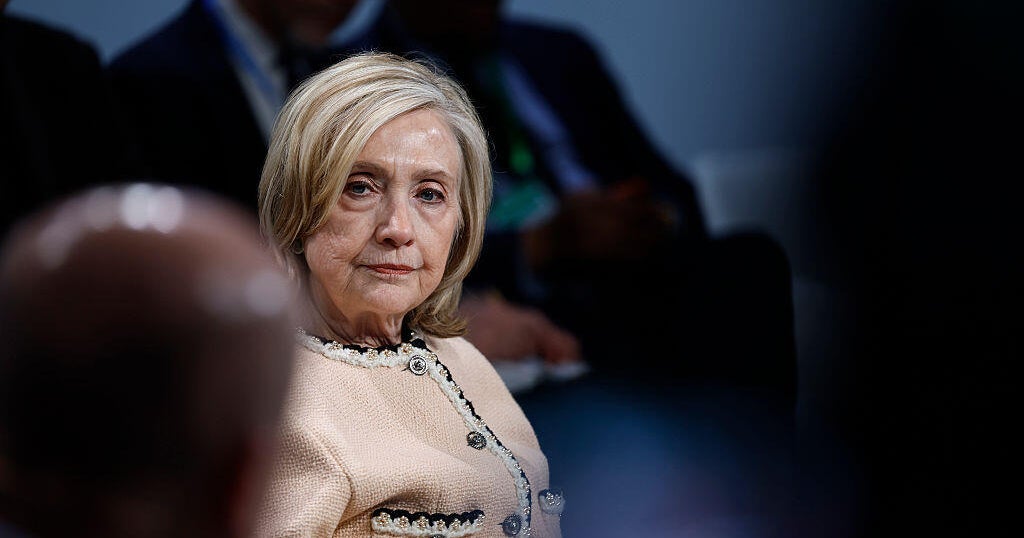
In what has become one of the most politically charged investigations in recent memory, former Secretary of State Hillary Clinton is preparing to sit down with the House Oversight Committee this Thursday in New York. The meeting comes after Clinton agreed to answer questions under oath about sex offender Jeffrey Epstein, a decision made to avoid a looming contempt of Congress vote that had garnered bipartisan support. What makes this situation particularly noteworthy is that both Hillary and former President Bill Clinton initially resisted appearing before the committee, leading to a standoff that nearly resulted in criminal contempt charges. The couple’s eventual agreement to testify represents a significant development in the ongoing efforts to uncover the full extent of Epstein’s criminal network and the powerful individuals who may have been connected to him. The depositions will take place in Chappaqua, New York, with Hillary Clinton appearing on Thursday and Bill Clinton scheduled for Friday, drawing considerable attention from both Republican and Democratic committee members who are traveling to conduct the questioning.
The Path to Testimony: From Resistance to Compliance
The journey to these depositions has been anything but smooth. After a prolonged back-and-forth between the Clintons and the Republican-led House Oversight Committee, tensions reached a breaking point when the committee voted on bipartisan lines to recommend that both Clintons be held in criminal contempt of Congress for failing to appear under subpoena. This wasn’t a partisan witch hunt—members from both parties agreed that the Clintons needed to comply with the committee’s demands. The House of Representatives was literally on the verge of holding a floor vote on the contempt measure, and all indications suggested it would pass with support from both Democrats and Republicans. Facing this political and legal pressure, the Clintons finally relented and agreed to the committee’s demands for in-person questioning. This represents a clear victory for Representative James Comer of Kentucky, the committee’s Republican chairman, who has been pushing for these depositions despite the Clintons’ attempts to negotiate different terms. The Clintons had requested that any questioning be held in public rather than behind closed doors, but Comer denied this request, though he has hinted that public hearings might follow the initial private depositions.
What the Clintons Are—and Aren’t—Being Accused Of
It’s crucial to understand that neither Hillary nor Bill Clinton has been accused of any wrongdoing in connection with Jeffrey Epstein’s crimes. Both have publicly called for the complete release of all Epstein-related files, positioning themselves as supporters of transparency in the investigation. In a sworn declaration submitted to the committee on January 13th, Hillary Clinton specifically stated that she had no “personal knowledge” of crimes committed by Epstein or his accomplice Ghislaine Maxwell. She further clarified that she “never had any responsibility for or involvement with” the Justice Department’s investigations into and prosecutions of Epstein and Maxwell, either during her two decades in public office or as a private citizen afterward. Regarding her personal interactions, Clinton stated, “I do not recall encountering Mr. Epstein, or any specific interactions with him.” She acknowledged that Maxwell had a “personal relationship with a mutual friend” but said she doesn’t “recall the specifics of my interactions with her.” In a recent BBC interview, Hillary Clinton elaborated that she met Maxwell—who is currently serving a prison sentence on sex trafficking charges—”on a few occasions” through the Clinton Foundation, the family’s charitable organization.
Political Motivations and Accusations of Distraction
The political dimensions of this investigation cannot be ignored, and Hillary Clinton has been vocal about what she perceives as the true motivations behind the committee’s insistence on in-person depositions. In her BBC interview last week, Clinton accused Chairman Comer of using the depositions to shift public attention away from President Trump’s own relationship with Epstein and his administration’s handling of Epstein-related files. “I have very strong opinions about what it is they’re hiding and who they are protecting,” Clinton stated bluntly. “Why do they want to pull us into this? To divert attention from President Trump. This is not complicated.” Clinton’s comments reflect the deeply partisan atmosphere surrounding the investigation, even though the contempt vote itself had bipartisan support. President Trump has consistently denied any wrongdoing related to Epstein, despite documented evidence of their past social connections. This political back-and-forth highlights how investigations into Epstein’s network have become entangled with broader partisan battles, potentially complicating efforts to uncover the full truth about his criminal activities and the powerful people who may have enabled them.
What Committee Members Hope to Learn
Despite the political tensions, there are legitimate investigative goals driving these depositions. Chairman Comer stated in a Monday press release that the Clintons’ testimony “is critical to understanding Epstein and Maxwell’s sex trafficking network and the ways they sought to curry favor and influence to shield themselves from scrutiny.” This statement reveals the committee’s focus: not necessarily on proving the Clintons committed crimes, but on understanding how Epstein and Maxwell operated, particularly how they may have cultivated relationships with powerful individuals to protect themselves from legal consequences. At least ten Republican members are expected to attend the depositions, along with nine Democrats, according to committee sources. Representative Robert Garcia of California, the top Democrat on the committee, has outlined his own priorities for the questioning, which differ somewhat from the Republican focus. Garcia told reporters Monday that he wants to explore Epstein’s potential connections to foreign governments. “There’s a lot of evidence that points in a certain direction around Jeffrey Epstein’s involvement with foreign governments. I think those are questions that I certainly have and that I’ll be asking,” Garcia explained. This suggests that the depositions may cover a wide range of topics, from domestic influence-peddling to potential international intelligence connections.
The Broader Implications and What Comes Next
These depositions represent more than just another chapter in the Jeffrey Epstein saga—they reflect the ongoing struggle to understand how a convicted sex offender maintained relationships with some of the world’s most powerful people for decades. The fact that both parties initially supported holding the Clintons in contempt suggests that there is genuine bipartisan interest in getting answers, even if members disagree about which answers are most important. The closed-door nature of Thursday and Friday’s sessions means that the public may not immediately learn what was discussed, though Chairman Comer has indicated that public hearings could follow. This staged approach—private depositions first, possibly public testimony later—is common in congressional investigations and allows committee members to explore sensitive topics without the immediate pressure of public scrutiny, while still preserving the possibility of transparency later. As the Clintons prepare to answer questions under oath, the nation watches to see whether these depositions will shed new light on Epstein’s network or simply become another flashpoint in America’s ongoing political battles. Whatever unfolds in Chappaqua this week, it’s clear that the Epstein case continues to raise uncomfortable questions about power, privilege, and accountability at the highest levels of American society.