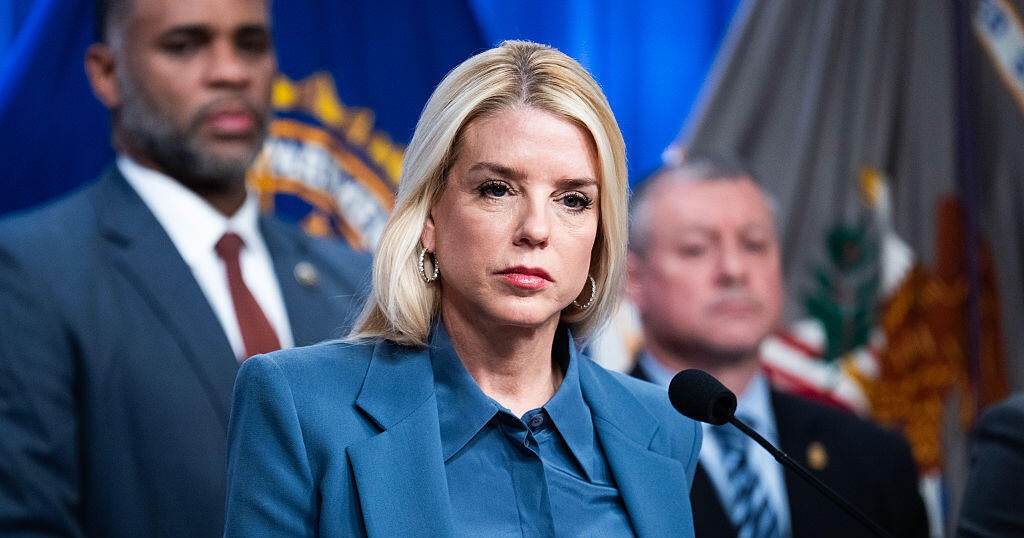

Congressional Panel Votes to Subpoena Attorney General in Epstein Investigation
Bipartisan Push for Transparency
In a remarkable display of bipartisan cooperation, the House Oversight and Government Reform Committee took a significant step this week by voting to subpoena Attorney General Pam Bondi. The goal is straightforward: get her to testify about how the federal government has handled the deeply troubling case of Jeffrey Epstein, the convicted sex offender whose crimes and connections have sparked public outrage and countless questions. What made this vote particularly noteworthy was the unusual alliance it created—five Republican committee members broke ranks with their party leadership to join Democrats in demanding answers. Representatives Nancy Mace of South Carolina, Lauren Boebert of Colorado, Tim Burchett of Tennessee, Michael Cloud of Texas, and Scott Perry of Pennsylvania all supported the subpoena motion, signaling that concerns about transparency in the Epstein case transcend typical partisan divisions.
This isn’t the first time the Oversight Committee has sought information about Epstein. Last August, they issued a subpoena to the Justice Department requesting documents related to the case. The pressure intensified when Congress passed the Epstein Files Transparency Act with support from both parties, legislation that President Trump signed into law last November. This law specifically required the Justice Department to disclose all materials from its investigation into Epstein’s criminal activities. As a result, millions of records were eventually released to the public, with the final batch of documents coming out in late January. Despite this massive document dump, many questions remain unanswered, and lawmakers from both sides of the aisle clearly believe that Attorney General Bondi needs to provide additional clarity and context that only direct testimony can offer.
The Attorney General’s Resistance and Alternative Offers
Before the committee voted to issue the subpoena, there was an attempt at compromise. Representative James Comer, the Kentucky Republican who chairs the Oversight Committee, revealed that Bondi had offered an alternative arrangement. Instead of appearing before the committee for public testimony, she suggested providing a private briefing to members at the Justice Department headquarters, where she could discuss the Epstein-related files and “anything else pertaining to that.” For committee members seeking public accountability, however, this offer fell short of what they believed the American people deserved. The Justice Department itself remained notably silent on the matter, not immediately responding to requests for comment about the subpoena vote or the attorney general’s potential testimony.
Representative Robert Garcia of California, the leading Democrat on the panel, articulated why a private briefing wouldn’t suffice. He pointed out that the public has “significant questions” about how the Justice Department handled the process of releasing materials from the Epstein investigation. Garcia noted that Bondi has already appeared before other congressional committees, making it reasonable to expect her to do the same for the Oversight Committee. “I think it’s important that she is in front of our committee,” Garcia explained. “She can directly answer questions about the release of the files, about transparency, about ensuring that victims and survivors are protected.” This last point—protecting survivors—has become a central concern in the controversy surrounding how the documents were released, with critics arguing that the Justice Department failed to adequately safeguard the identities and privacy of Epstein’s victims.
Accusations of Cover-Up and Mishandling
Attorney General Bondi isn’t a stranger to tough questioning about the Epstein files. Last month, she appeared before the House Judiciary Committee for a hearing focused on general oversight of the Justice Department, where she faced sharp and pointed questions from Democratic lawmakers about how her department handled the release of the Epstein documents. The criticism was severe—Democratic members accused Bondi of orchestrating what they called a “cover-up” that protected powerful individuals whose names appeared throughout the millions of pages of material, while simultaneously failing to properly redact the names of survivors who had suffered abuse at Epstein’s hands. This dual failure—protecting the powerful while exposing the vulnerable—struck many as exactly backward from what justice should look like.
The Justice Department has also faced intense criticism over the timeline and methodology of releasing the documents. The Epstein Files Transparency Act had established a clear deadline: all materials had to be made public by December 19, 2025. Rather than releasing everything at once or in a systematic, organized manner, the department chose to make the documents public in separate batches over time. This staggered approach raised suspicions among critics who wondered whether the department was strategically controlling what information became available and when. Particular controversy erupted over the first batch of released documents, which contained relatively few mentions of President Trump despite his well-documented social connections to Epstein in earlier years. However, the second wave of documents did include more references to the president, though Trump has never been accused of any wrongdoing in connection with Epstein’s crimes.
An independent analysis conducted by CBS News revealed additional concerns about how the document release was managed. Investigators found that the Justice Department had taken down tens of thousands of files after initially posting them. Some removals made perfect sense—files containing explicit images or information that could identify survivors clearly needed to be pulled to protect vulnerable individuals. However, other removals were far more puzzling and difficult to justify. For instance, a call log with redacted names was removed, and the Justice Department provided no clear explanation for why this particular document needed to be taken down. These unexplained actions have fueled suspicions that the department’s handling of the Epstein files has been less than transparent, potentially concealing information that the public has a legitimate right to see.
Expanding Investigation Beyond Bondi
Attorney General Bondi isn’t the only member of President Trump’s Cabinet who will face questions from the Oversight Committee about connections to Jeffrey Epstein. This week, Chairman Comer announced that Commerce Secretary Howard Lutnick has agreed to an interview with the panel, though a specific date for his testimony hasn’t been set yet. Lutnick has come under particular scrutiny because of his ties to the disgraced financier, ties that appear to have been more extensive and long-lasting than he initially acknowledged. When the Justice Department released its massive trove of Epstein-related records, Lutnick was among numerous powerful and prominent individuals revealed to have been in communication with Epstein.
The timeline of Lutnick’s relationship with Epstein is especially troubling. Lutnick had publicly claimed that he cut off all contact with Epstein back in 2005, well before the financier’s criminal activities became public knowledge. However, the newly released documents told a different story. They showed that Lutnick and Epstein actually communicated during the years between 2008—when Epstein pleaded guilty to state prostitution charges in Florida—and 2019, when Epstein died by suicide in jail after being indicted on federal sex-trafficking charges. This discrepancy between Lutnick’s public statements and the documentary evidence raises obvious questions about why he minimized the duration and extent of his relationship with a known sex offender, and what the nature of their communications during those years might have been.
Investigating the Past and Seeking Accountability
The Oversight Committee’s investigation has cast a wide net in seeking to understand the full scope of Epstein’s connections to powerful individuals and how the government handled his case over the years. As part of this comprehensive investigation, the committee has sought testimony from several former officials and others who had close associations with Epstein, while also requesting documents from Epstein’s estate. Among the most high-profile witnesses who have appeared before investigators are former President Bill Clinton and former Secretary of State Hillary Clinton, both of whom sat for closed-door depositions last month. Videos of these depositions were released to the public earlier this week, providing a window into what these prominent figures knew about Epstein and his activities.
Former President Clinton’s testimony attempted to distance himself from any knowledge of Epstein’s crimes. “There’s nothing that I saw when I was around him that made me realize he was trafficking women,” Clinton told investigators. His statement was carefully worded—acknowledging that he had been “around” Epstein while denying that he witnessed or recognized the criminal activity that was allegedly happening. Hillary Clinton’s testimony was even more categorical in its denial, stating simply that she knew “nothing about him.” These statements from the Clintons reflect a broader pattern among many powerful individuals who had contact with Epstein: acknowledging some level of social or professional connection while firmly denying any awareness of or participation in his crimes. Whether these denials will satisfy public curiosity and demands for accountability remains an open question, particularly as more documents continue to be analyzed and more witnesses are called to testify.
The investigation continues to unfold as lawmakers seek to piece together not just what happened in Epstein’s case, but how government institutions at various levels either failed to stop him or potentially protected him and his associates. The bipartisan nature of the push to subpoena Attorney General Bondi suggests that this issue has resonated beyond typical political calculations, touching on fundamental questions about justice, transparency, and whether powerful people are held to the same standards as everyone else.