
House Republicans Break Ranks to Block Trump Tariff Protection Measure
Leadership’s Plan Fails Despite Intense Pressure Campaign
In a surprising turn of events that highlights growing tensions within the Republican Party, three GOP lawmakers joined forces with Democrats on Tuesday to defeat a procedural measure that would have prevented Congress from challenging President Trump’s expansive tariff policies. The vote represented a significant embarrassment for House Republican leadership, which had delayed the vote for seven hours while frantically working alongside White House officials to convince rebellious members to fall in line. The defeat underscores the challenges facing party leaders who are working with an extremely narrow majority in the House, where even a handful of defections can derail their agenda.
The contentious measure had been approved along party lines just a day earlier by the House Rules Committee. It would have barred any member of Congress from introducing resolutions to overturn Trump’s global tariffs through the end of July. Rather than bringing this restriction to the floor as standalone legislation, Republican leadership chose to attach it to a procedural resolution—commonly called a “rule”—that was connected to completely unrelated legislation. This procedural maneuver raised eyebrows even among some Republicans who felt it represented an abuse of the normal legislative process. In typical circumstances, these procedural votes are routine formalities that the majority party passes without much drama. However, with Republicans holding only a razor-thin majority in the House, they can afford only one defection during floor votes, making every dissenting voice potentially decisive.
Rebels Cite Principle Over Procedural Manipulation
The three Republicans who voted against their own leadership—Representatives Kevin Kiley of California, Thomas Massie of Kentucky, and Don Bacon of Nebraska—argued that the tactic represented a dangerous expansion of leadership power at the expense of individual members’ rights. Speaking before the vote, Congressman Kiley articulated the core concern driving the rebellion: “This isn’t what rules are for. The rule is to bring bills to the floor and set the parameters for debate. The purpose is not to sneak in unrelated language that expands the power of leadership at the expense of our members.” His objection highlighted a growing frustration among some lawmakers about procedural tactics that bypass normal debate and deliberation on important policy matters.
The timing of this legislative maneuver was particularly significant. An earlier prohibition on tariff-related resolutions had expired in January, and Democrats were preparing to force a vote this week specifically targeting Trump’s tariffs on Canadian goods. By attempting to extend the ban through July, Republican leadership was essentially trying to shield the president from politically uncomfortable votes that would force GOP members to either support tariffs that may be unpopular in their districts or break with their party’s standard-bearer. The failed vote means that Democrats can now proceed with their plans to bring these resolutions to the floor, potentially putting Republicans in difficult political positions as they head toward the next election cycle.
Trump’s Tariff Strategy and International Tensions
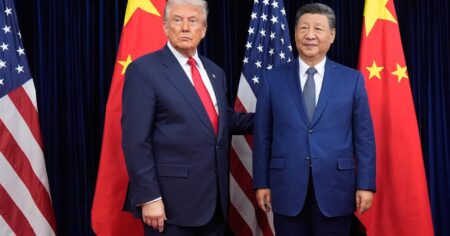
The controversy centers on President Trump’s aggressive use of emergency powers early last year to impose significant tariffs on imports from Canada, Mexico, and China. The president justified these extraordinary measures by claiming that these countries were not doing enough to prevent the flow of fentanyl and undocumented migrants across America’s borders. While Canadian goods that comply with the United States-Mexico-Canada free trade agreement are technically exempt from these tariffs, Trump has repeatedly threatened to impose additional levies as diplomatic relations between the United States and Canada have deteriorated. Beyond North America, the president has also threatened to impose higher tariffs on dozens of other nations to address what his administration characterizes as unfair trade practices that disadvantage American workers and businesses.
This tariff policy has created economic uncertainty and strained relationships with key trading partners and allies. Critics argue that the tariffs function as taxes on American consumers and businesses, raising prices on everyday goods and disrupting supply chains that companies have built over decades. Supporters counter that the tariffs are necessary tools to protect American manufacturing, address trade imbalances, and leverage economic power to achieve important policy goals related to border security and drug trafficking. The debate has divided not just Democrats and Republicans, but has also created fault lines within the Republican Party itself, as Tuesday’s vote demonstrated.
Congressional Pushback and Constitutional Questions
The Senate has already voted twice to block Trump’s Canadian tariffs, with four Republican senators crossing party lines to join Democrats in those symbolic rebukes. However, these congressional votes carry limited practical weight because the president can veto any such disapproval resolution. To override a presidential veto, both the House and Senate would need to muster two-thirds majorities—a threshold that appears virtually impossible given current partisan alignments. Nevertheless, these votes serve an important function in allowing members of Congress to go on record regarding policies that may be controversial in their home states or districts, and they represent rare instances of Republicans willing to publicly challenge their party’s leader.
Beyond the political maneuvering in Congress, the Supreme Court is currently weighing the fundamental constitutional question of whether President Trump has the legal authority to unilaterally impose these sweeping tariffs. During oral arguments held in November, the justices appeared skeptical of the broad executive authority the president was claiming. A decision in this case could arrive at any time before the Court begins its summer recess in late June or early July. House Speaker Mike Johnson, a Louisiana Republican, cited this pending Supreme Court decision when explaining the rationale for trying to extend the congressional ban on tariff resolutions through July: “The rationale for this, for just extending this for a little bit longer to July, is to allow the Supreme Court to rule on this case that everybody’s watching and waiting for. That process has been playing out. I think it’s logical to allow that to continue.”
What Comes Next for Leadership and Tariff Policy
Despite Tuesday’s setback, House Majority Leader Steve Scalise, also from Louisiana, indicated that Republican leadership and the White House would continue applying pressure on members to support the president’s tariff agenda. Speaker Johnson expressed optimism that they would eventually succeed in protecting Trump’s tariffs from congressional challenges, even as the failed vote suggested that optimism might be misplaced. The defeat raises questions about leadership’s ability to maintain party discipline on other controversial issues that may arise, and it may embolden other members to break ranks when they disagree with the direction leadership is taking.
The broader implications of this failed vote extend beyond the immediate question of tariffs. It reflects ongoing tensions within the Republican Party between members who believe in strong executive authority and those who are concerned about protecting congressional prerogatives and individual member rights. It also demonstrates that even with unified control of the White House and Congress, governing with narrow majorities requires constant negotiation and accommodation of different viewpoints within the coalition. As Democrats prepare to move forward with their planned votes on Trump’s tariffs, Republicans will face difficult choices about whether to defend policies that may be economically harmful to their constituents or risk appearing disloyal to their party’s president. The coming weeks will test whether leadership can repair the fractures exposed by Tuesday’s vote or whether this rebellion signals deeper problems for the Republican governing agenda.