
House Takes Stand Against Trump’s Deportation Policy for Haitians
A Rare Moment of Bipartisan Pushback
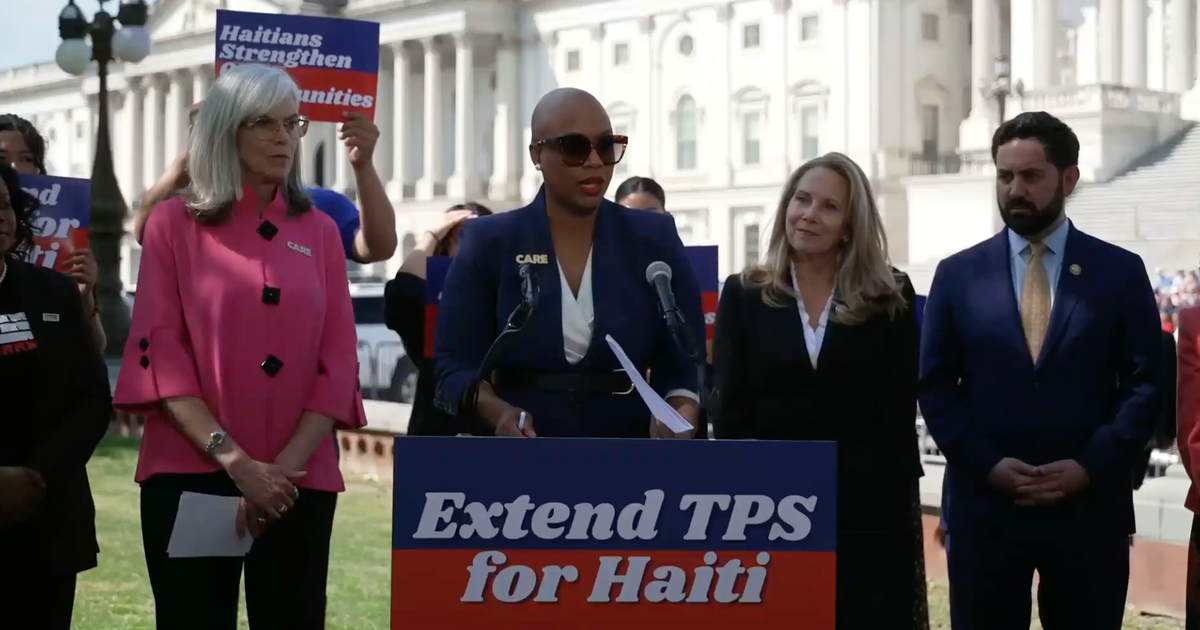
In an unusual display of congressional resistance to President Trump’s immigration agenda, the House of Representatives is preparing to vote on legislation that would protect hundreds of thousands of Haitian nationals from deportation. This Thursday vote represents a significant moment in American politics, where members of Congress from both parties are joining forces to challenge the administration’s decision to end temporary protected status (TPS) for Haitians living in the United States. The effort, led by Democratic Representative Ayanna Pressley of Massachusetts, successfully navigated complex parliamentary procedures to reach the House floor, despite opposition from Republican leadership. Using a legislative tool called a discharge petition—a rarely successful mechanism that allows lawmakers to bypass leadership and force a vote—Pressley and her colleagues gathered the 218 signatures needed to bring this critical issue before the full House. What makes this particularly noteworthy is that four Republicans broke ranks with their party leadership to support the measure, signaling that concern for Haiti’s humanitarian crisis transcends partisan divides.
The Road to Thursday’s Vote
The journey to this vote demonstrates both the determination of advocates and the fractures within the Republican majority. Representative Laura Gillen, a Democrat from New York, originally introduced the underlying bill last year, with Republican Representative Mike Lawler of New York signing on as a cosponsor. The discharge petition strategy gained momentum when Representatives Maria Elvira Salazar of Florida, Brian Fitzpatrick of Pennsylvania, Lawler, and Don Bacon of Nebraska joined all Democrats in supporting it. By late March, the petition had crossed the crucial 218-signature threshold, guaranteeing a floor vote regardless of leadership preferences. The measure gained additional Republican support during a procedural vote on Wednesday, with Representatives Nicole Malliotakis of New York, Carlos Gimenez of Florida, and Kevin Kiley of California also backing it. The bill itself would require the Department of Homeland Security to extend Haiti’s temporary protected status until 2029, providing certainty and security for more than 330,000 Haitian nationals currently living and working in America under this program. Interestingly, the legislation mirrors a 2019 bill introduced by current Secretary of State Marco Rubio when he served as Florida’s senator, highlighting how perspectives on immigration policy can evolve with political circumstances.
Understanding Haiti’s Humanitarian Crisis
To understand why this vote matters so deeply, we need to look at Haiti’s devastating recent history and current conditions. The temporary protected status system, created by Congress in 1990, allows immigrants to live and work in the United States without fear of deportation when their home countries face armed conflict, environmental disasters, or other extraordinary circumstances that make return dangerous or impossible. Haiti first received this designation after the catastrophic 2010 earthquake that killed more than 300,000 people and left the nation’s infrastructure in ruins. Since then, the designation has been extended multiple times by both Republican and Democratic administrations as Haiti has faced a compounding series of crises. Most recently, in August 2024, the Biden administration extended Haiti’s TPS for 18 months, citing the severe economic instability, security breakdowns, political chaos, and health emergencies plaguing the Caribbean nation. The State Department currently warns Americans against traveling to Haiti, classifying it as too dangerous for U.S. citizens—a fact that opponents of deportation point to as a glaring contradiction in the Trump administration’s position that it’s safe enough for Haitian nationals to return.
The Trump Administration’s Controversial Position
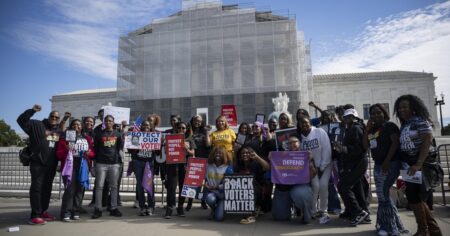
The Trump administration’s decision to terminate Haiti’s protected status has sparked fierce debate about the intersection of immigration policy, foreign policy, and basic humanitarian concerns. In a termination notice issued in November, the administration argued that continuing Haiti’s TPS designation “is contrary to the U.S. national interest.” The notice stated that “The United States cannot call for bold change on the ground while signaling doubt from afar. Our immigration policy must align with our foreign policy vision of a secure, sovereign, and self-reliant Haiti and not a country that Haitian citizens continue to leave in large numbers to seek opportunities in the United States.” While acknowledging that “the current situation in Haiti is concerning,” the administration maintains that ending protected status somehow supports Haiti’s path toward stability and self-reliance. Critics find this reasoning deeply flawed, arguing that forcing people to return to documented dangerous conditions serves neither American interests nor humanitarian values. The administration’s push to wind down protections for Haiti and several other countries has triggered legal challenges, with a federal judge blocking the revocation of Haiti’s protections in February—just one day before they were scheduled to expire. The case has now reached the Supreme Court, which is preparing to weigh in on whether the administration has the authority to unilaterally end these protections or whether Congressional action is required.
Why Lawmakers Are Fighting Back
Members of Congress supporting the bill have made impassioned arguments about what’s at stake for both Haitian nationals and American communities. Representative Pressley called the administration’s decision “a death sentence” and emphasized that “the stakes could not be higher.” Representative Gillen characterized forcing Haitians to return as “cruel” given the “deadly, dangerous conditions” they would face. Representative Lawler argued that “sending people back to Haiti to unsafe conditions when they are currently here lawfully, is unjust and unwise,” pointing out the contradiction between the State Department warning Americans not to travel to Haiti while the Department of Homeland Security claims it’s safe for deportations. Beyond the humanitarian arguments, supporters have highlighted the practical consequences for American communities and the economy. Pressley, who co-chairs the House Haiti Caucus, has spent months building support by emphasizing the economic impact of losing more than 300,000 workers, particularly in the caregiving sector where many Haitian TPS holders work as nurses, home health aides, and childcare providers. These workers have built lives in America—many for over a decade—establishing businesses, buying homes, raising children who were born here, and contributing to their communities through taxes and civic participation. The senior aide to Pressley noted that some Republicans who didn’t sign the discharge petition had expressed private interest but weren’t willing to publicly oppose their leadership, suggesting the actual support for protecting Haitians may be broader than the vote count indicates.
What Happens Next and the Difficult Road Ahead
While Thursday’s House vote represents meaningful progress for advocates, the path forward remains challenging and uncertain. If the bill passes the House as expected, it must then move to the Senate, where its prospects are unclear. The upper chamber’s willingness to act quickly on the measure remains unknown, and the legislative calendar is crowded with other pressing issues. Even if both chambers pass the legislation, President Trump has made clear his opposition and would almost certainly veto it. Overriding a presidential veto requires a two-thirds majority in both the House and Senate—a significantly higher bar than the simple majority needed for passage. The political reality makes this extremely difficult; earlier this year, the House proved unwilling to override two presidential vetoes on legislation that had initially passed unanimously, demonstrating how rare successful veto overrides have become in our polarized political environment. Nevertheless, supporters view Thursday’s vote as critically important, both for the immediate message it sends and for the pressure it applies to the administration and the courts. As the Supreme Court prepares to rule on the legality of ending Haiti’s protected status, Congressional action supporting its continuation could influence the justices’ interpretation of legislative intent. For the more than 330,000 Haitian nationals watching anxiously, this vote represents hope that their adopted country recognizes their contributions, values their lives, and refuses to send them back to circumstances that everyone acknowledges are dangerous. Regardless of the ultimate outcome, this rare moment of bipartisan cooperation on immigration policy offers a glimpse of what’s possible when lawmakers focus on humanitarian concerns and practical consequences rather than partisan positioning.