
The SAVE America Act: A Battle Over Voting Requirements Divides Washington
A New Voting Bill Takes Center Stage
The halls of Congress are once again echoing with heated debate as the House prepares to vote on the SAVE America Act, a piece of legislation that has become the latest flashpoint in America’s ongoing conversation about election security and voting rights. This isn’t just another bill working its way through the legislative process—it’s a measure that could fundamentally change how Americans register to vote and cast their ballots. At its core, the SAVE America Act would require all voters to show documentary proof of citizenship, such as a passport or birth certificate, when registering to vote in federal elections. Additionally, it would mandate photo identification at the polls when people actually vote. For Republicans, this represents common-sense safeguards; for Democrats, it’s a dangerous barrier that could prevent millions of Americans from exercising their constitutional right to vote. The controversy surrounding this bill reflects deeper divisions in American politics about who should vote, how they should prove their eligibility, and what constitutes a fair election system.
The Republican Argument: Protecting Electoral Integrity
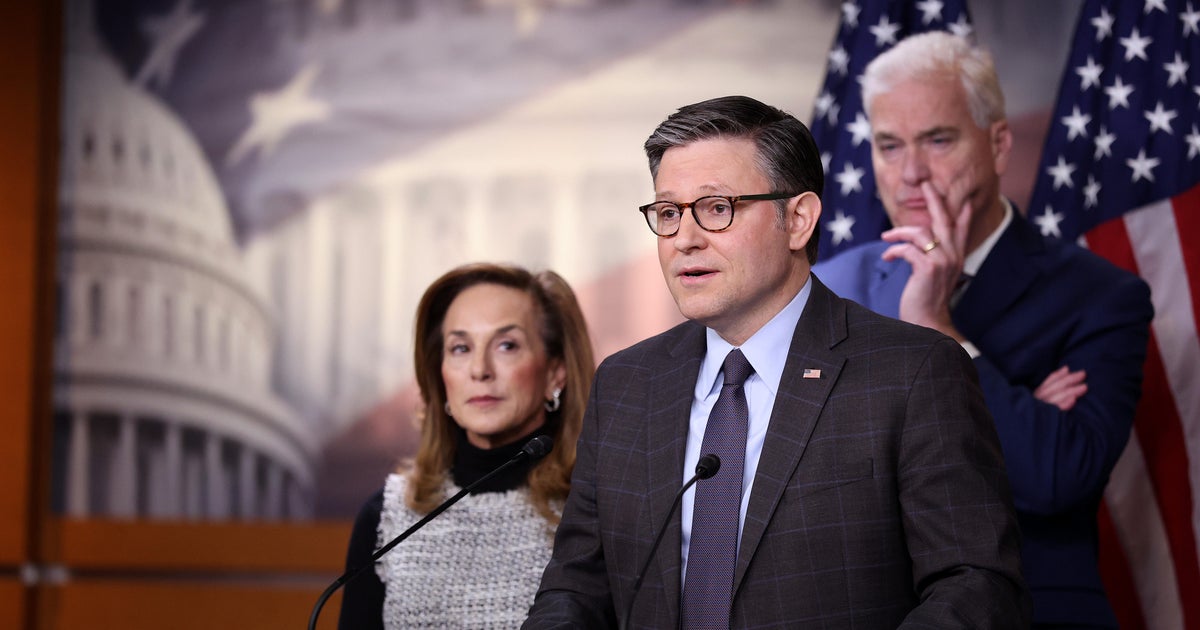
House Speaker Mike Johnson and his Republican colleagues have positioned the SAVE America Act as a straightforward, reasonable measure designed to ensure that only American citizens participate in American elections. “Common-sense legislation to just ensure that American citizens decide American elections — it really is that simple,” Johnson declared with confidence. Republicans point to what they see as an obvious truth: elections should be decided by citizens, and requiring proof of citizenship is a logical way to guarantee that. They argue that asking people to show a passport, birth certificate, or other citizenship documents when registering, and then presenting photo ID when voting, shouldn’t be controversial—it’s simply verification, much like showing ID when boarding a plane or entering a government building. The Republican leadership also highlights polling data that appears to show overwhelming public support for their position. According to surveys from Gallup and Pew Research Center, approximately 83% of Americans favor requiring proof of citizenship for first-time voter registration, and a similar percentage support photo ID requirements at polling places. For Republicans, these numbers suggest they’re aligned with mainstream American opinion, not pursuing some extreme agenda. President Trump has thrown his weight behind the legislation, framing it in dramatic terms by suggesting “we won’t have a country any longer” without such protections. The former and current president has even called for going beyond the SAVE Act’s provisions to eliminate most mail-in voting. While acknowledging that non-citizen voting is statistically rare, Republicans argue that any instance of ineligible voting undermines public confidence in elections, and preventing it is worth the additional requirements being placed on voters.
The Democratic Counterargument: Disenfranchisement and Barriers
Democrats have come out swinging against the SAVE America Act, characterizing it not as election security but as voter suppression disguised in patriotic language. Senate Minority Leader Chuck Schumer laid out the Democratic case clearly: “If you’re one of the 50% of Americans who doesn’t have a passport, or if you’re one of the tens of millions of Americans who can’t quickly access your birth certificate, the SAVE Act could, in effect, take away your right to vote.” This gets to the heart of Democratic concerns—while proof of citizenship and photo ID might seem simple to some Americans, millions of eligible voters don’t have easy access to these documents. House Minority Leader Hakeem Jeffries went even further, accusing Republicans of “adopting voter suppression as an electoral strategy.” From the Democratic perspective, this isn’t really about preventing non-citizen voting, which they point out is extremely rare. Instead, they see it as an attempt to make voting harder, particularly for populations that tend to vote Democratic: lower-income Americans, minorities, the elderly, and young people. These groups are less likely to have passports (which can cost over $100), and may face significant obstacles in obtaining birth certificates, especially if they were born in different states or in circumstances where proper documentation wasn’t created or has been lost over time. The reality that approximately half of Americans don’t possess passports underscores the Democratic argument that this isn’t a minor administrative requirement but a substantial barrier that would affect tens of millions of potential voters. Democrats also point out that this version of the bill is even more restrictive than previous iterations, suggesting that rather than finding middle ground, Republicans are moving toward more extreme positions on voting access.
The Senate Challenge: Math, Procedure, and Political Reality
Even if the SAVE America Act passes the House—which Speaker Johnson expects it will—the bill faces a much more challenging path in the Senate. The mathematics of the Senate create a significant obstacle for Republican ambitions. To advance most legislation in the Senate, 60 votes are needed to overcome procedural hurdles. With the Senate closely divided, Republicans would need support from at least seven Democrats to reach that threshold. Given the Democratic leadership’s vocal opposition to the bill, finding those votes appears highly unlikely. Schumer has been clear that if the bill “squeaks by the House, it’s dead on arrival in the Senate.” Some conservative senators, led by Utah’s Mike Lee, have pushed for using a parliamentary maneuver called the “talking filibuster” to try to circumvent the 60-vote requirement. However, this tactic comes with significant costs—it would consume valuable Senate floor time and open the door for Democrats to offer unlimited amendments, potentially turning the bill into a legislative quagmire. Senator Mike Rounds of South Dakota, while sympathetic to the bill’s goals, called the talking filibuster approach “very unworkable,” reflecting the practical challenges facing the legislation. Senate Majority Leader John Thune has acknowledged that Republicans are having “very robust conversations” about how to proceed, but he’s been noncommittal about the path forward. The Republican caucus is clearly divided on strategy, with some members eager to force Democrats to take a vote that Republicans believe will be politically unpopular, while others recognize the procedural and practical difficulties of actually passing the legislation. Adding to Republican challenges, Senator Lisa Murkowski of Alaska has already announced her opposition to the bill, not necessarily because she disagrees with its goals, but because of concerns about implementing major changes to election procedures so close to the upcoming midterm elections. Her worry about “federal overreach” and the practical difficulties of forcing states to rapidly implement new requirements reflects a more moderate Republican perspective that values stability in election administration.
The Broader Context: Election Security vs. Voting Access
The SAVE America Act debate exists within a much larger, ongoing American conversation about the balance between election security and voting access. These priorities aren’t necessarily incompatible, but in today’s polarized political environment, they’ve become associated with opposing partisan positions. Republicans have increasingly focused on election security, particularly since the 2020 election and the false claims of widespread fraud that followed. For many conservatives, any measure that makes elections more secure—even if it makes voting somewhat less convenient—is worthwhile. The specter of non-citizens voting, while statistically negligible, has become a powerful symbolic issue representing broader conservative concerns about immigration, national sovereignty, and electoral integrity. Democrats, meanwhile, have emphasized voting access, seeing it as the more pressing concern given America’s historically uneven record on ensuring equal voting rights. They point to the long history of voting restrictions that were specifically designed to prevent certain populations from participating in democracy, from literacy tests to poll taxes. From this perspective, any new requirement that makes voting harder carries echoes of these discriminatory practices, regardless of how it’s justified. The polling data that Republicans cite to show public support for ID requirements doesn’t necessarily settle the debate. While Americans may support the concept of showing ID in the abstract, they may not fully understand the practical implications for millions of people who lack easy access to the specific documents required. There’s also a difference between supporting ID requirements generally and supporting the specific, stringent requirements in the SAVE America Act. Both sides accuse the other of acting in bad faith—Republicans say Democrats are being deliberately obtuse about reasonable security measures, while Democrats charge that Republicans are manufacturing a crisis to justify making it harder for their political opponents’ supporters to vote.
What Happens Next: Political Theater or Legislative Progress?
As the House prepares to vote on the SAVE America Act, the legislation appears headed for a familiar fate: passage in the Republican-controlled House followed by failure in the Senate, resulting in a political messaging victory rather than actual policy change. This pattern reflects the current state of American governance, where many legislative efforts are designed more to draw political contrasts than to craft laws that can actually pass both chambers and be signed into law. For Republicans, forcing a vote serves several purposes even if the bill ultimately fails. It allows them to put Democrats on record opposing measures that poll well with the public, potentially creating campaign ammunition for future elections. It demonstrates to their base that they’re fighting for election security, a priority for many conservative voters. And it keeps the spotlight on immigration and citizenship issues that Republicans believe favor them politically. For Democrats, opposing the bill allows them to position themselves as defenders of voting rights and champions of accessible democracy. They can paint Republicans as pursuing voter suppression and trying to make it harder for ordinary Americans to participate in elections. The fight over the SAVE America Act also serves their political narrative about Republican extremism and disregard for democratic norms. The practical impact of all this political maneuvering on actual election administration remains unclear. States, which largely control their own election procedures, continue to operate under existing laws. Some states have already implemented stricter ID requirements on their own, while others maintain more accessible voting procedures. The federal government’s role in setting election standards has always been limited and contested, with states jealously guarding their authority over election administration. What’s clear is that the fundamental disagreement over how to balance election security with voting access won’t be resolved by the SAVE America Act, regardless of what happens in Congress. This debate reflects deeper questions about American democracy, questions that have existed since the nation’s founding: Who gets to vote? What barriers to voting are justified? And who gets to decide? Until Americans find more common ground on these fundamental questions, legislative battles like the one over the SAVE America Act will continue to generate more heat than light, more political positioning than practical progress.