


The Nuclear Standoff: Understanding Trump’s Pressure Campaign on Iran
A Decades-Old Problem Returns to Center Stage
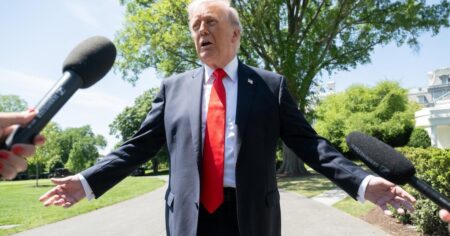
President Trump finds himself wrestling with one of the most persistent foreign policy challenges that has frustrated American leaders for generations: Iran’s nuclear ambitions. The current crisis has reached a critical juncture, with Trump drawing a hard line in the sand and giving Tehran just weeks to reach what he calls a “substantial” deal. His message couldn’t be clearer or more blunt: “They can’t have nuclear weapons. Very simple,” he stated recently, warning that if negotiations fail, “bad things will happen.” This stark ultimatum comes less than a year after Trump ordered military strikes on three major Iranian nuclear facilities last June, and now he’s suggesting that more military action could be on the horizon. Behind the scenes, U.S. and Iranian representatives have been engaged in careful indirect negotiations, while American naval vessels and military aircraft have been positioning themselves throughout the Middle East—a show of force designed to underscore the seriousness of Trump’s 10-to-15-day deadline. The president hasn’t made a final decision about whether to launch additional strikes, but the world is watching nervously as these two adversaries engage in this high-stakes diplomatic dance.
How Close Is Iran to Actually Having the Bomb?
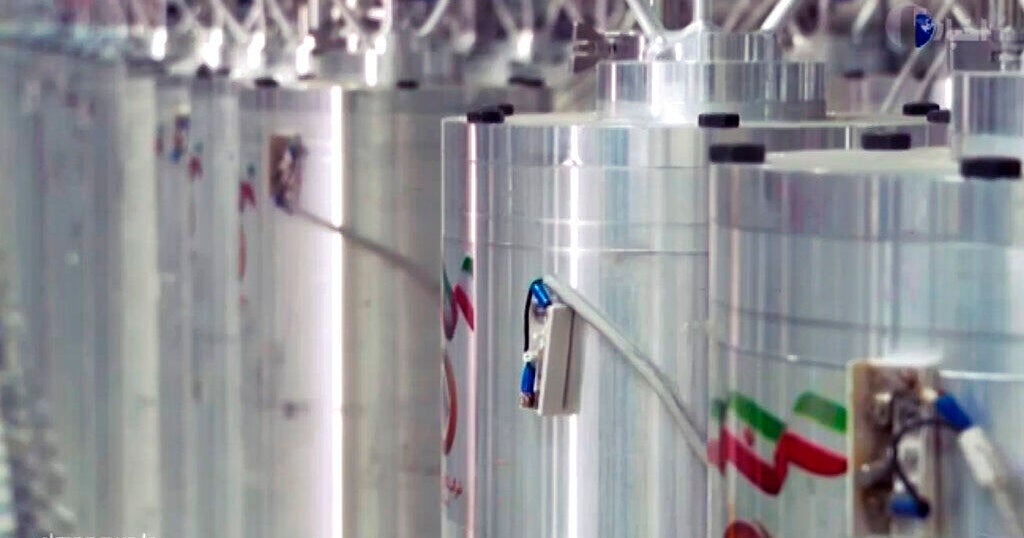
The uncomfortable truth is that Iran is alarmingly close to being able to produce weapons-grade nuclear material if its leadership decides to cross that threshold. According to the International Atomic Energy Agency, Iran had accumulated roughly 972 pounds of uranium enriched to 60% purity by mid-June 2025, just before the U.S. strikes. To put that growth in perspective, this represents a dramatic increase from 605.8 pounds in February 2025 and a staggering jump from just 267.9 pounds a year earlier. This 60%-enriched uranium sits just one technical step away from the 90% purity level needed for nuclear weapons. The Defense Intelligence Agency’s assessment from last May painted an even more concerning picture: if Iran’s leadership made the decision to go all-in on building a bomb, they could probably produce enough weapons-grade uranium in less than a week. Actually assembling a functional nuclear device would take somewhat longer—intelligence estimates suggest anywhere from three to eight months, assuming Iran doesn’t run into technical problems or logistical roadblocks along the way.
However, there’s a crucial distinction between having the capability to build a bomb and actually doing so. U.S. intelligence agencies believe that Iran hasn’t yet made that fateful decision. The DIA put it this way last spring: “Iran almost certainly is not producing nuclear weapons, but Iran has undertaken activities in recent years that better position it to produce them, if it chooses to do so.” IAEA Director General Rafael Grossi echoed this assessment in February, telling French television that his inspectors hadn’t seen evidence that Iran is currently working on nuclear weapons development. Iran itself has consistently maintained that its nuclear program serves entirely peaceful purposes—power generation and medical applications—and that building nuclear weapons contradicts its religious and political principles. Still, many experts find it troubling that Iran’s stockpile includes uranium enriched far beyond what’s needed for civilian uses, making it “the only non-nuclear-weapon State to produce such nuclear material,” according to the IAEA.
Did Last Year’s Strikes Actually Work?
When U.S. forces struck Iran’s Fordo and Natanz enrichment facilities and a research site near Isfahan last June, President Trump confidently declared that the attacks “obliterated” the targets and set back Iran’s nuclear program by “basically decades.” But as with many aspects of military operations, the reality appears more complicated and less conclusive. Rafael Grossi from the IAEA offered a more measured assessment, telling CBS News that the strikes caused “severe damage” but stopped short of “total damage.” In his recent interview with French media, Grossi confirmed that Iran’s nuclear material was “still there, in large quantities,” though he noted that “some of it may be less accessible” following the attacks. Satellite imagery from late January showed that Iran has been constructing roofs over damaged buildings at both the Natanz and Isfahan sites, suggesting Tehran is working to salvage whatever materials and equipment survived the bombardment.
The effectiveness of the strikes has been further limited by the subsequent breakdown in international monitoring. The IAEA withdrew its inspectors from Iran for safety reasons shortly after the June attacks, and Iran responded by suspending cooperation with the agency the following month. While the IAEA managed to conduct some inspections in the months after, they haven’t been able to access any of the sites that were actually hit by U.S. forces—leaving a significant blind spot in the international community’s understanding of Iran’s current capabilities. Iranian Foreign Minister Abbas Araghchi offered his own defiant assessment of the strikes’ impact, acknowledging the physical destruction while minimizing its long-term significance: “Yes, you destroyed the facilities, the machines. But the technology cannot be bombed, and the determination also cannot be bombed.” His words capture a fundamental challenge facing any military approach to stopping Iran’s nuclear program—knowledge and expertise can’t be destroyed with missiles.
The Long Road That Led Us Here
To understand today’s crisis, you need to look back at the tangled history of Iran’s nuclear program, which stretches back decades. Ironically, some of Iran’s earliest nuclear research happened under the Shah’s pro-American government before the 1979 Islamic Revolution that brought the current regime to power. By the mid-1980s, Iran was actively developing—and in some cases acquiring through black market channels—the sophisticated centrifuge technology needed to enrich uranium. The program remained relatively under the radar until 2002, when an anti-regime group publicly revealed that Iran had secretly constructed a pair of nuclear facilities, triggering intense international scrutiny and pressure. The IAEA later confirmed that until 2003, Iran ran what the agency called a “structured program” involving “activities that are relevant to the development of a nuclear explosive device.” While some of these activities could theoretically serve both military and civilian purposes, others were “specific to nuclear weapons.”
U.S. intelligence agencies believe Iran shut down its weapons development program in 2003, possibly in response to international pressure and the example of neighboring Iraq, where the U.S. had just invaded. But Iran continued enriching uranium at various levels and faced wave after wave of international sanctions designed to force it back to the negotiating table. This pressure campaign culminated in the 2015 Joint Comprehensive Plan of Action—the Iran nuclear deal—negotiated by President Obama’s administration along with other world powers. That agreement imposed strict limits on Iran’s uranium stockpiles and enrichment activities for a specified period, subjected the program to regular IAEA inspections, and in return lifted many of the economic sanctions that had been strangling Iran’s economy. The deal had its critics from day one, and in 2018, President Trump made good on his campaign promise to withdraw the United States from what he characterized as an insufficient agreement. He replaced it with what he called “maximum pressure”—a campaign of harsh sanctions meant to force Iran into negotiating a more comprehensive deal.
Where Things Stand Now and What Comes Next
The collapse of the nuclear deal has led to a dangerous escalation spiral. Iran stopped complying with the agreement’s restrictions and dramatically accelerated its uranium enrichment program, including enriching uranium to 60% purity for the first time in its history—a level that serves no obvious civilian purpose but brings the country tantalizingly close to weapons capability. Iranian Foreign Minister Araghchi made clear his country’s defiant stance shortly after last year’s U.S. strikes, telling CBS News that Iran “will not easily back down from enrichment” and declaring the nuclear program “a matter of national pride and glory.” This nationalist framing of the issue makes it politically difficult for any Iranian government to make major concessions, even in the face of American military threats.
President Trump’s current approach represents a gamble that the combination of past military strikes, the threat of future ones, and ongoing economic pressure will finally force Iran to accept terms it has rejected for years. The indirect negotiations currently underway represent a fragile opportunity, but the 10-to-15-day timeline Trump has publicly set seems unrealistic for resolving issues that have defied solution for decades. The fundamental question remains whether either side can find a face-saving compromise that addresses America’s security concerns about nuclear weapons while allowing Iran to maintain what it considers its sovereign right to nuclear technology. With American military assets positioned throughout the region and both sides engaged in high-stakes brinkmanship, the coming weeks will test whether diplomacy backed by military threat can succeed where previous approaches have failed—or whether this long-simmering crisis will boil over into direct military confrontation with potentially catastrophic regional consequences.