
The Unprecedented Clash Between President Trump and Pope Leo XIV
A Historic Diplomatic Rupture
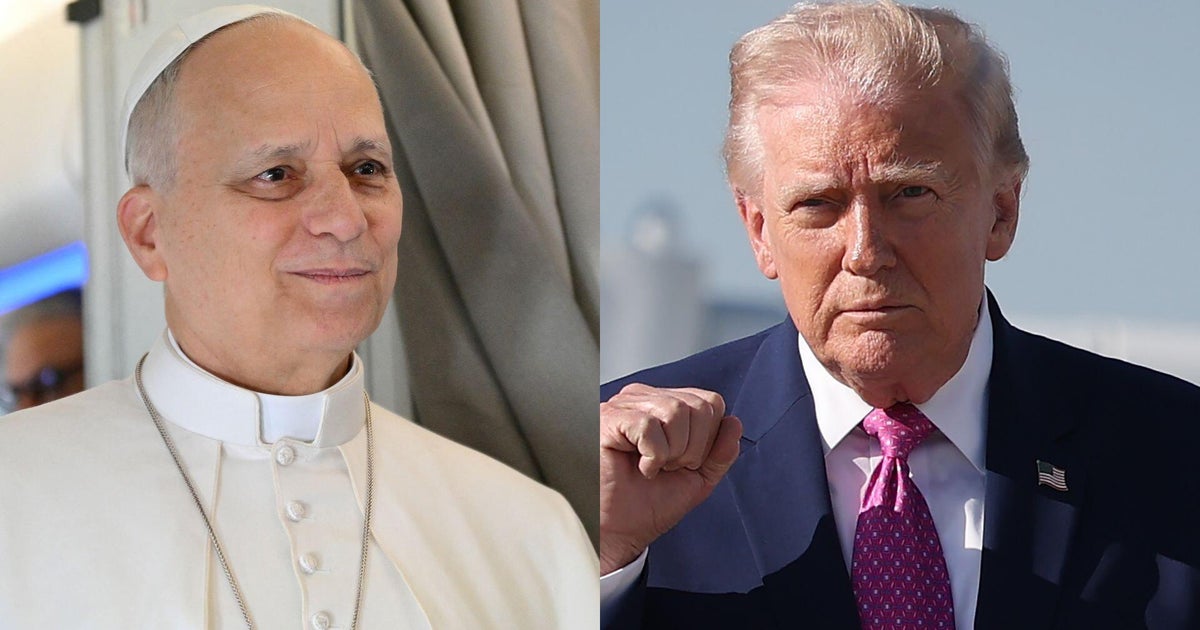
An extraordinary public confrontation has erupted between President Donald Trump and Pope Leo XIV, marking one of the most significant rifts in modern history between the leader of the United States and the head of the Catholic Church. This unprecedented exchange of criticisms began over disagreements about the war in Iran but has expanded to encompass immigration policy, religious authority, and the proper role of faith leaders in political discourse. The tensions between these two powerful figures have captured global attention, as the president of the world’s most powerful nation and the spiritual leader of 1.4 billion Catholics engage in an increasingly heated war of words that shows no signs of abating.
The conflict’s roots actually predate the current crisis, as Pope Leo had been critical of Trump administration policies even before ascending to the papacy. In November, before his election as pontiff, he characterized the treatment of immigrants under Trump’s deportation policies as “extremely disrespectful,” continuing the advocacy stance of his predecessor, Pope Francis. However, the situation escalated dramatically following Operation Epic Fury, the joint U.S.-Israeli military operation against Iran that began on February 28th. The day after airstrikes commenced, Pope Leo expressed “deep concern” and implored both sides to “stop the spiral of violence before it becomes an irreparable abyss.” As the military campaign continued, the pontiff’s language became increasingly forceful, condemning Trump’s threats to destroy Iranian civilization as “unacceptable” and even encouraging citizens to contact their political representatives to voice opposition to the war.
The President’s Explosive Response
The confrontation reached a boiling point after Pope Leo appeared in a “60 Minutes” segment that aired criticisms of both the Trump administration’s immigration enforcement and the Iran war. During this broadcast, several American Catholic cardinals directly challenged the conflict, arguing it failed to meet the theological standards for a just war under Catholic doctrine. President Trump’s reaction was swift and unrestrained. On April 12th, he launched into a lengthy tirade on Truth Social, his preferred social media platform, attacking the pope as “WEAK on Crime, and terrible for Foreign Policy.” The president’s post revealed deep frustration with religious criticism of his policies, as he wrote: “I don’t want a Pope who thinks it’s OK for Iran to have a Nuclear Weapon. And I don’t want a Pope who criticizes the President of the United States because I’m doing exactly what I was elected, IN A LANDSLIDE, to do.”
Trump’s attacks took an audacious turn when he claimed personal credit for Pope Leo’s election to the papacy, suggesting the Catholic Church only selected the first American pope in history as a strategy to manage relations with his administration. “If I wasn’t in the White House, Leo wouldn’t be in the Vatican,” Trump boldly asserted, characterizing the pope’s selection as a “shocking surprise” since he “wasn’t on any list to be Pope.” The president even praised the pontiff’s brother, Louis Prevost, an outspoken Trump supporter who had previously met with the president, perhaps suggesting that familial loyalty should influence the pope’s positions. Trump concluded his social media broadside by demanding Leo “get his act together as Pope, use Common Sense, stop catering to the Radical Left, and focus on being a Great Pope, not a Politician,” warning that the pope’s stance was “hurting him very badly and, more importantly, it’s hurting the Catholic Church.”
Administration Officials Join the Fray
The conflict quickly expanded beyond Trump himself as senior administration officials weighed in with their own criticisms of the pope’s involvement in political matters. Vice President JD Vance, himself a Catholic convert, entered the debate by suggesting on Fox News that “in some cases, it would be best for the Vatican to stick to matters of morality, to stick to matters of what’s going on in the Catholic Church, and let the president of the United States stick to dictating American public policy.” Despite his Catholic faith, Vance directly challenged Pope Leo’s theological position that God “is never on the side of those who once wielded the sword and today drop bombs.” Speaking at the University of Georgia, Vance posed pointed questions: “Was God on the side of the Americans who liberated France from the Nazis? Was God on the side of the Americans who liberated Holocaust camps?” His implication was clear—that military force can serve righteous purposes, contradicting the pope’s apparent pacifism.
White House border czar Tom Homan, identifying himself as a lifelong Catholic, also criticized church leaders who spoke out on “60 Minutes,” telling them to “stay out of immigration” and “stay out of politics.” Homan expressed love for the Catholic Church but wished they would “stick to fixing the church, because there’s issues.” Even House Speaker Mike Johnson, an evangelical Christian, joined the criticism by disputing the pope’s theological positions on warfare. Johnson invoked the “Just War doctrine,” a long-standing Christian theological framework that allows for defensive military action as a last resort when facing grave threats. Johnson argued that the Iran conflict met these criteria because eliminating Iran’s capacity to sponsor terrorism could save “millions of innocent people” from terrorist attacks, characterizing this as “a good thing” despite the pope’s objections.
The Pope’s Measured but Firm Response
Throughout this barrage of criticism, Pope Leo XIV has maintained a dignified stance while refusing to back down from his principles. On April 13th, responding to Trump’s attacks, the pope clarified that “the things that I say are certainly not meant as attacks on anyone, and the message of the Gospel is very clear: ‘Blessed are the peacemakers.'” He firmly stated, “I have no fear of the Trump administration, or speaking out loudly of the message of the Gospel, which is what I believe I am here to do, what the church is here to do.” The pontiff acknowledged the different perspectives between religious and political leaders, noting, “We are not politicians, we don’t deal with foreign policy with the same perspective he might understand it, but I do believe in the message of the Gospel, as a peacemaker.”
As the week progressed and attacks continued, Pope Leo’s language became slightly sharper while remaining rooted in religious principle rather than personal animosity. On April 16th, while traveling in Cameroon, the pope posted a warning on social media: “Woe to those who manipulate religion and the very name of God for their own military, economic, and political gain, dragging that which is sacred into darkness and filth.” This statement, while not naming Trump directly, was widely interpreted as a rebuke to those who invoke religious justification for policies the pope considers contrary to Gospel teachings. Throughout the exchange, Leo consistently returned to fundamental Christian principles of peace, compassion for the vulnerable, and the sanctity of human life, positioning his criticism not as political opposition but as spiritual and moral obligation.
The Broader Implications and International Reactions
This public rupture between the American president and the pope has generated international attention and concern, with even unexpected voices joining the conversation. Iranian President Masoud Pezeshkian, whose country stands at the center of the military conflict that sparked this dispute, came to Pope Leo’s defense, writing on social media: “I condemn the insult to Your Excellency on behalf of the great nation of Iran, and declare that the desecration of Jesus, the prophet of peace and brotherhood, is not acceptable to any free person.” The irony of Iran’s authoritarian leader defending the pope against the American president underscores the unusual nature of this conflict.
The dispute has also exposed deep divisions within American Catholicism and broader religious communities about the proper relationship between faith and politics. While some Catholics appreciate their pope’s willingness to speak prophetically against policies they view as unjust, others feel uncomfortable with what they perceive as the church’s intervention in political matters. The fact that prominent Catholic officials like Vice President Vance and border czar Homan have publicly disagreed with their church’s leader reveals the complexity of religious identity in contemporary American politics. Meanwhile, President Trump has made various claims throughout the dispute that have been challenged by fact-checkers, including his assertion that Pope Leo supports Iran having nuclear weapons—a position the pope has never articulated—and his repeatedly cited figure that Iran killed 42,000 protesters, a number that remains unverified by independent sources.
As the confrontation continues, President Trump has alternated between harsh criticism and attempts to downplay the personal nature of the dispute. When departing for Las Vegas on April 16th, Trump told reporters he has no personal issue with the pope and that Leo “can do that” regarding speaking his mind. “I have a right to disagree” with the pope, Trump stated, adding “we’re not fighting.” However, when asked if he would meet with Pope Leo to resolve their differences, the president responded, “I don’t think that’s necessary.” This suggests the rift may persist, with both leaders maintaining their fundamentally different perspectives on war, peace, immigration, and the role of moral authority in an increasingly complex world. What remains clear is that this unprecedented public conflict between two of the world’s most influential leaders represents a defining moment in the relationship between religious authority and political power in the 21st century, with implications that will likely resonate far beyond this particular dispute.