


The Daring Mountain Rescue: How America Brought Home a Downed Airman From Deep Inside Iran
A Fighter Jet Goes Down Over Enemy Territory
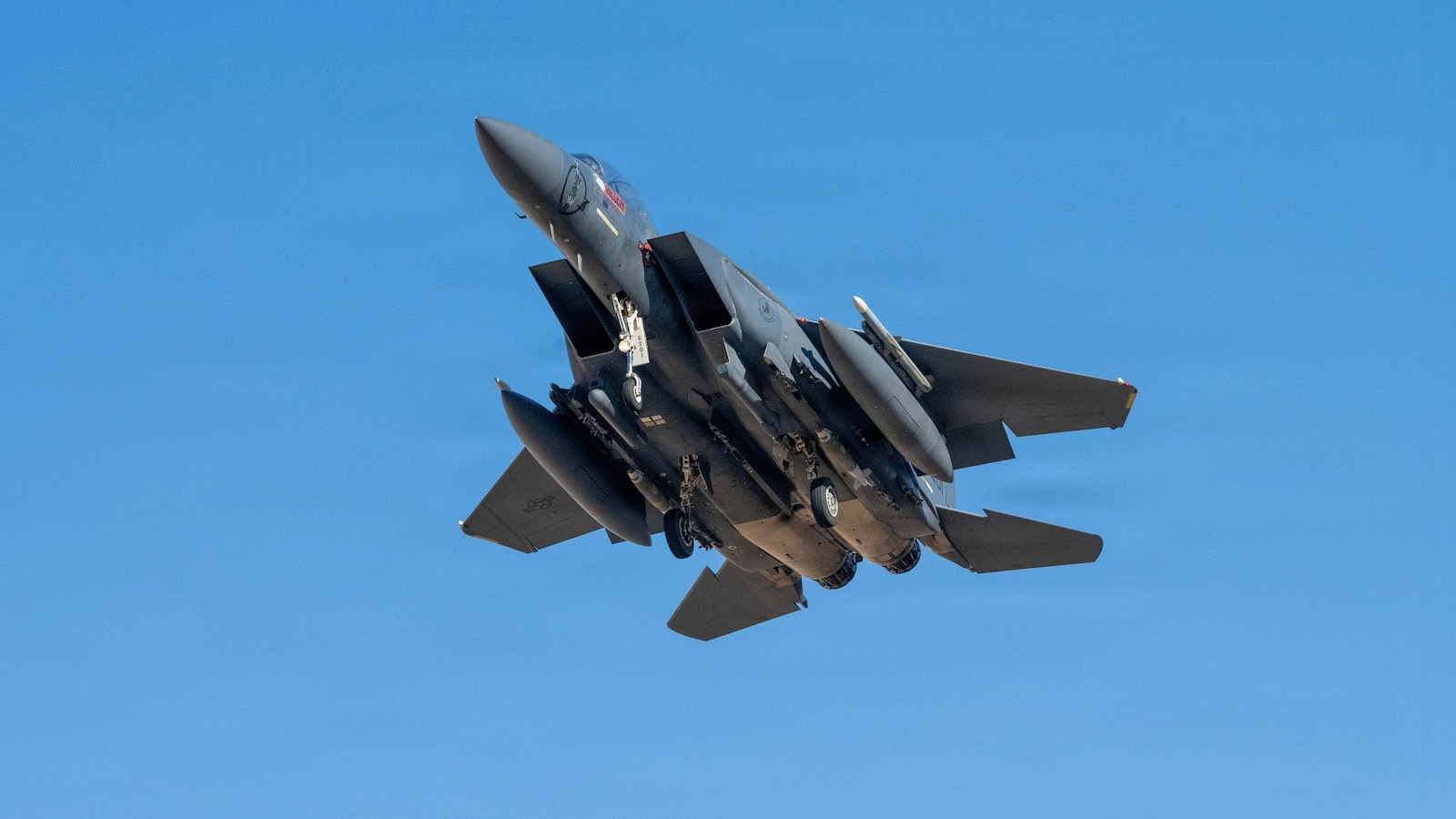
In what has become one of the most dramatic military rescue operations in recent American history, a U.S. Air Force F-15E Strike Eagle was shot down over Iranian territory on Friday, marking a significant escalation in ongoing tensions between the two nations. This advanced two-seater fighter jet, which represents some of America’s most sophisticated air combat technology, was brought down by enemy fire—the first American aircraft lost to hostile action in the current conflict. The incident immediately triggered a massive search-and-rescue operation that would unfold over several tense days, with the fate of two American airmen hanging in the balance. While one pilot was quickly recovered on Friday, the weapon systems officer remained missing in the rugged Iranian mountains, setting the stage for an extraordinary rescue mission that would capture national attention and demonstrate the military’s unwavering commitment to the principle that no American servicemember will be left behind in enemy hands.
The First Rescue and Initial Complications
The immediate aftermath of the F-15E’s downing on Friday saw American forces spring into action with remarkable speed, managing to rescue the aircraft’s pilot in broad daylight—itself an unusual and risky operation. However, this first rescue came at a cost. Two Black Hawk helicopters involved in the Friday rescue mission came under Iranian fire as they attempted to extract the pilot, with crew members sustaining injuries, though all managed to return to safety. The dangers didn’t end there—an A-10 Warthog aircraft providing close air support for the rescue was also hit by Iranian fire. Though damaged, the rugged aircraft managed to limp back to Kuwait, where the pilot safely ejected before the plane crashed. These incidents underscored just how dangerous the airspace over Iran had become and how determined Iranian forces were to prevent American rescue operations. Meanwhile, the weapon systems officer—a colonel—remained trapped somewhere in Iran’s treacherous mountain terrain, with Iranian military forces actively searching for him and closing in on his position with each passing hour.
A Tense Wait and Silent Preparation
For two agonizing days after the initial rescue, there was complete silence from military officials about the fate of the missing weapon systems officer. This information blackout was deliberate and strategic—military commanders and the White House had chosen not to reveal that the pilot had been successfully recovered on Friday, understanding that any public acknowledgment might compromise the ongoing efforts to locate and rescue the second airman. Behind this wall of silence, an intensive operation was underway. The rescued crew member’s Commander in Chief, along with the Secretary of War, Chairman of the Joint Chiefs of Staff, and military planners were monitoring the trapped airman’s location around the clock, meticulously planning what would become an extraordinarily complex rescue operation. The airman, injured and alone in hostile territory, was being hunted by Iranian forces in mountainous terrain that made both his survival and any rescue attempt incredibly challenging. Yet even in his isolation, he was never truly alone—military satellites, intelligence assets, and the full attention of America’s national security apparatus were focused on bringing him home.
The Rescue Operation Unfolds
Overnight Sunday, that focused attention resulted in action. A massive rescue operation involving dozens of aircraft launched deep into Iranian territory to extract the trapped airman. The mission was remarkable not just for its scale but for its audacity—such operations are rarely attempted because of the extraordinary danger they pose to both personnel and equipment. The rescue force included MC-130J aircraft, specifically designed for special operations missions, which would land inside Iran to serve as extraction points. MH-6 Little Bird helicopters ferried rescue personnel from these landing strips into the mountainous area where the airman had been located. The CIA played a crucial intelligence role, first helping to pinpoint the airman’s exact location—described as finding a needle in a haystack when they discovered him hidden in a mountain crevice. Then, in a brilliant piece of deception, the agency launched a misinformation campaign inside Iran, spreading false reports that U.S. forces had already found the airman and were moving him overland for extraction from the country, thereby confusing and misdirecting Iranian forces away from the actual rescue operation.
Heavy Costs and Difficult Decisions
The successful rescue came at significant material cost, demonstrating the military’s absolute prioritization of human life over equipment. During the operation, two MC-130J aircraft that had landed inside Iran experienced mechanical problems and became disabled at the landing site. Rather than allow these sophisticated special operations aircraft to fall into Iranian hands—where they could be studied and their technology compromised—U.S. forces made the difficult decision to deliberately destroy them. Additionally, four MH-6 Little Bird helicopters used in the rescue were also intentionally destroyed by American forces. These weren’t casual losses—each aircraft represents millions of dollars in taxpayer investment and years of specialized development. The destruction of these assets required three additional replacement aircraft to be flown into Iran to extract the rescued airman, the rescue teams, and other personnel. This willingness to sacrifice valuable equipment rather than leave a single servicemember behind speaks volumes about American military values and the sacred covenant between the nation and those who serve in uniform. As President Trump emphasized, this type of raid is seldom attempted precisely because of these dangers to both personnel and equipment—it simply doesn’t happen often because the risks are so extraordinary.
A Mission Accomplished and Its Broader Meaning
By Sunday morning, the rescued weapon systems officer was safe, though he had sustained serious injuries during his ordeal. President Trump hailed the operation as one of the most daring search and rescue operations in U.S. history, noting that this marked the first time in military memory that two U.S. pilots had been rescued separately from deep inside enemy territory. The president’s repeated declarations that “WE GOT HIM!” and “WE WILL NEVER LEAVE AN AMERICAN WARFIGHTER BEHIND!” resonated with a military community that holds the principle of never abandoning fellow servicemembers as sacred doctrine. The operation demonstrated not just military capability but national resolve—the willingness to risk additional lives, sacrifice expensive equipment, and conduct operations deep in hostile territory to uphold that principle. It showed that when an American in uniform is in danger, the full weight of the nation’s military and intelligence apparatus will be brought to bear for their recovery, regardless of cost or risk. As the nation awaited further details about the operation at a presidential press conference scheduled for Monday, the rescued airman was receiving medical care, alive and home thanks to the courage of rescue forces and the determination of military planners who spent days ensuring that a brother in arms would not be left behind in the mountains of Iran. The mission stands as a powerful reminder of both the dangers American servicemembers face and the extraordinary lengths their nation will go to bring them home.