
The Whiplash Diplomacy: Trump’s Changing Messages on Iran
Over a tumultuous weekend that left foreign policy experts, markets, and the American public struggling to keep up, President Trump delivered a dizzying array of contradictory statements about ongoing negotiations with Iran. What began Friday afternoon with optimistic declarations that Iran had “agreed to everything” transformed by Sunday morning into dire threats that “the whole country is getting blown up” if a deal wasn’t signed. This rollercoaster of presidential messaging unfolded against the backdrop of a fragile two-week ceasefire between the United States and Iran that was rapidly approaching its expiration date, with the actual status of negotiations remaining deeply unclear. The president’s comments, delivered through phone calls with individual reporters and posts on his Truth Social platform, painted a confusing picture that alternated between hope and hostility, leaving allies, adversaries, and the American people wondering what was actually happening behind the scenes.
From Optimism to Threats: The 48-Hour Journey
The weekend began on what seemed like a hopeful note. On Friday afternoon, President Trump spoke with CBS News and declared that Iran had agreed to all American demands, including working with the United States to remove enriched uranium from the country—a significant concession if true. He announced that the U.S. would essentially “take” this uranium, and further claimed that Tehran had agreed to stop supporting proxy groups like Hezbollah and Hamas, organizations that the United States designates as terrorist groups. These comments had immediate real-world consequences: oil prices dropped and stock markets jumped as investors interpreted the president’s words as signaling an end to the conflict that had threatened global oil supplies through the strategic Strait of Hormuz. For a brief moment, it appeared that a comprehensive deal was within reach and that the dangerous military confrontation that had brought the two nations to the brink would soon be resolved peacefully.
But that optimism lasted only a couple of hours. Almost immediately after the president’s interview aired, a spokesperson for Iran’s foreign ministry released a statement flatly contradicting Trump’s claims. The Iranian official declared that “enriched uranium is as sacred to us as Iranian soil and will not be transferred anywhere under any circumstances,” and made clear that “transferring uranium to the United States has not been an option.” This direct refutation raised serious questions about what had actually been agreed to, if anything, and whether the president’s sunny assessment was based on wishful thinking, misunderstood communications, or perhaps an attempt to pressure Iran through public declarations. By Friday evening, when reporters asked Trump about these conflicting accounts, he had already walked back his earlier certainty, saying he didn’t think there were “too many” significant differences between the U.S. and Iranian positions, but acknowledging, “there could be” and adding, “let’s see what happens.”
A President’s Silence and Then Escalation
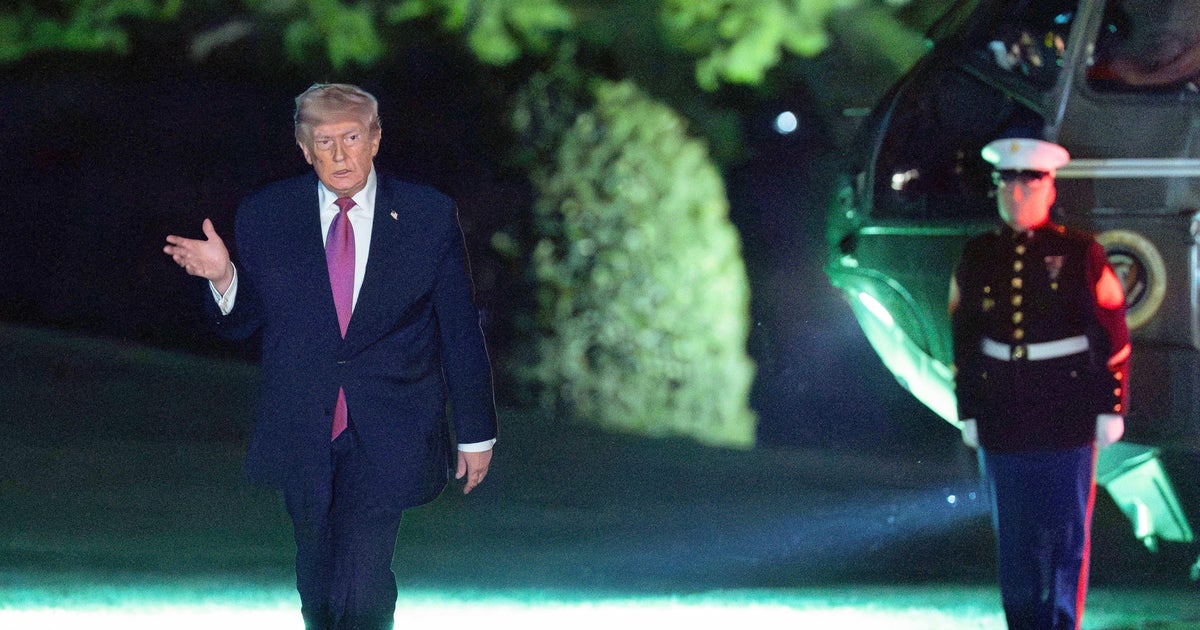
Saturday brought a notable change in the president’s approach: relative silence. After returning late Friday night from a West Coast trip, Trump said virtually nothing about the Iran situation throughout the day. During a Saturday morning Oval Office event, when a CBS reporter attempted to ask about reports that Iran’s Revolutionary Guard had fired on ships in the Strait of Hormuz, the president dismissed the press corps entirely, telling them to “get out” and “thank you very much, everybody.” He spent the afternoon at his golf club in Northern Virginia, offering no updates on what was being described as one of the most critical diplomatic moments of his presidency. This silence stood in stark contrast to his volubility the day before and the threats that would come the following morning, leaving observers to wonder whether the quiet reflected intensive behind-the-scenes work or simply a president taking a break from a crisis of uncertain dimensions.
The silence ended dramatically on Sunday morning when Trump spoke with Fox News before 8 a.m., delivering his starkest warning yet: “If Iran does not sign this deal, the whole country is getting blown up.” He characterized the upcoming talks in Pakistan as Iran’s “last chance,” language that echoed his April 7th declaration that “a whole civilization will die tonight” without a deal—a comment that preceded the announcement of the current ceasefire. The president’s messaging had shifted from Friday’s optimistic “they’ve agreed to everything” to Sunday’s ultimatum threatening the destruction of an entire nation, all within roughly 36 hours. This dramatic escalation in rhetoric came as concerns mounted about whether the ceasefire was actually holding, with reports of the Revolutionary Guard firing on ships and a deadly ambush in Lebanon that killed a French soldier, which France’s president blamed on Hezbollah, an Iranian proxy.
Threats Become Specific and Personal
Later on Sunday morning, the president took to his Truth Social platform to make his threats even more specific and personal. Responding to reports of Iranian forces firing into the Strait of Hormuz at vessels including a French ship and a British freighter, Trump declared this a “Total Violation of our Ceasefire Agreement!” He then announced that U.S. representatives, including Vice President JD Vance, would be traveling to Islamabad, Pakistan, for negotiations, arriving “tomorrow evening.” But the most striking part of the post was the president’s detailed threat about what would happen if Iran rejected the American deal. “We’re offering a very fair and reasonable DEAL, and I hope they take it because, if they don’t, the United States is going to knock out every single Power Plant, and every single Bridge, in Iran,” Trump wrote, adding “NO MORE MR. NICE GUY!” He went on to describe how these targets would “come down fast, they’ll come down easy,” and declared it would be his “Honor to do what has to be done, which should have been done to Iran, by other Presidents, for the last 47 years.”
This message represented a significant escalation not just in tone but in the specificity of threatened military action. Rather than vague warnings about consequences, the president was now publicly identifying categories of civilian infrastructure—power plants and bridges—as targets for American military strikes. The post concluded with the declaration “IT’S TIME FOR THE IRAN KILLING MACHINE TO END!” in all capital letters, mixing threats of devastating attacks with characterizations of Iran as the aggressive party. By Monday morning, as the president conducted a round of phone calls with various news outlets, he told PBS News that if the ceasefire expired, “then lots of bombs start going off.” He informed Bloomberg that it was “highly unlikely” he would extend the ceasefire if no deal was reached, while also creating confusion about when exactly that deadline would arrive—Tuesday night or Wednesday night Washington time, depending on which interview you were listening to.
The Confusion Spreads to the Details
Adding to the general confusion, even basic facts about the diplomatic process became unclear through the president’s contradictory statements. On Monday morning, Trump told the New York Post that the U.S. delegation would arrive in Islamabad that very night to begin negotiations. However, after the president made this statement public, a White House official felt compelled to clarify that the delegation “had not left yet,” but rather “plans to travel to Islamabad soon,” without providing any specific date for when this crucial diplomatic mission would actually begin. This contradiction about something as basic as whether American negotiators were already on their way to talks or hadn’t even departed yet underscored how the rapid-fire, uncoordinated nature of the president’s comments to various media outlets was creating confusion rather than clarity. Meanwhile, Iran announced on Monday that it had no current plans to return to peace talks, further calling into question what exactly was being negotiated, with whom, and on what timeline.
What This Means for American Foreign Policy and Global Stability
This weekend’s whipsaw of presidential statements reveals the challenges and dangers of conducting high-stakes international diplomacy through a combination of individual media interviews and social media posts rather than through coordinated, official government communications. Financial markets, which had rallied Friday afternoon on the president’s optimistic comments, faced new uncertainty as his tone shifted to threats of total destruction. America’s allies, attempting to coordinate their own responses to the Iran crisis, found themselves with no clear understanding of the U.S. position or strategy. And the American people, who understandably want to know whether their country is on the path to peace or preparing for a massive military campaign that could reshape the Middle East, received contradictory information depending on which Trump interview or post they happened to see. As the ceasefire’s expiration approaches—whenever that actually is—the question remains whether this public volatility reflects genuine uncertainty in the negotiations, a deliberate strategy of keeping adversaries off-balance, or simply the unfiltered reactions of a president reacting in real-time to developments without a coordinated communications strategy. What’s clear is that in an era of nuclear capabilities and global interconnection, the words of an American president carry enormous weight, and rapid shifts in messaging from optimism to threats of annihilation create instability that affects not just diplomatic negotiations but global markets, alliance relationships, and the daily lives of millions of people in the region and beyond.