


College Professor Placed on Leave After Controversial Remarks During School Board Meeting
The Incident That Sparked Outrage
A Hunter College associate professor has been placed on administrative leave following controversial comments she made during a virtual New York City school board meeting that sparked widespread condemnation. Allyson Friedman, who teaches in the Department of Biological Sciences at the prestigious Manhattan institution, found herself at the center of a growing controversy after remarks she made during a NYC District 3 Community Education Council (CEC3) meeting earlier this month were captured on video. The incident occurred while Friedman was attending the virtual meeting as a parent whose child attends school in the Manhattan district, not in her capacity as a college educator. During the meeting, an eighth-grade student was passionately speaking out against the potential closure of her school when Friedman’s voice could be heard making shocking statements that would soon reverberate throughout the educational community and beyond.
What Was Said and the Immediate Reaction
The video recording of the meeting captured Friedman making deeply troubling remarks while the student was speaking. “They’re just too dumb to know they’re in a bad school,” Friedman can be heard saying in the recording, before continuing with comments that referenced racial segregation practices. She then stated, “Apparently Martin Luther King said it. Like if you train a Black person well enough, they’ll know to use the back, you don’t have to tell them anymore.” These comments appeared to be a response to earlier remarks made during the same meeting by District 3 interim acting superintendent Reginald Higgins, who had quoted the renowned Black scholar Carter G. Woodson. Higgins had shared Woodson’s powerful observation: “When you can control a man’s thinking, you do not have to send him to the back door, he will go without being told.” The reaction to Friedman’s comments was immediate and visceral. Other attendees of the virtual meeting could be seen visibly reacting in shock and disbelief at what they were hearing. One participant quickly interrupted Friedman, telling her, “What you’re saying is absolutely hearable here, you’ve got to stop.” The exchange, captured on video, quickly spread across social media and news outlets, prompting calls for accountability and action.
The Professor’s Apology and Explanation
Following the immediate backlash, Friedman issued a statement attempting to explain and apologize for her remarks. She claimed that her comments were taken out of context and resulted from an accidental unmuting of her microphone during what she characterized as a private conversation with her child. “During a recent online CEC3 meeting, I was trying to explain the concept of systemic racism to my child by referencing an example of an obviously racist trope,” Friedman explained in her statement to ABC News. She insisted that the public only heard a partial conversation due to the inadvertent unmute, and that her complete comments would have made clear that these views were not her own. “My complete comments make clear these abhorrent views are not my own, nor were they directed at any student or group,” she stated. Friedman also expressed support for the students who were advocating against school closures, saying, “I fully support these courageous students in their efforts to stop school closures.” However, she acknowledged the impact of her words, stating, “However, I recognize these comments caused harm and pain, while that was not my intent I do truly apologize.” Despite this apology, many found her explanation insufficient, questioning how such remarks could be considered appropriate in any context, particularly during a discussion about systemic racism and while a student was speaking.
Hunter College’s Response and Investigation
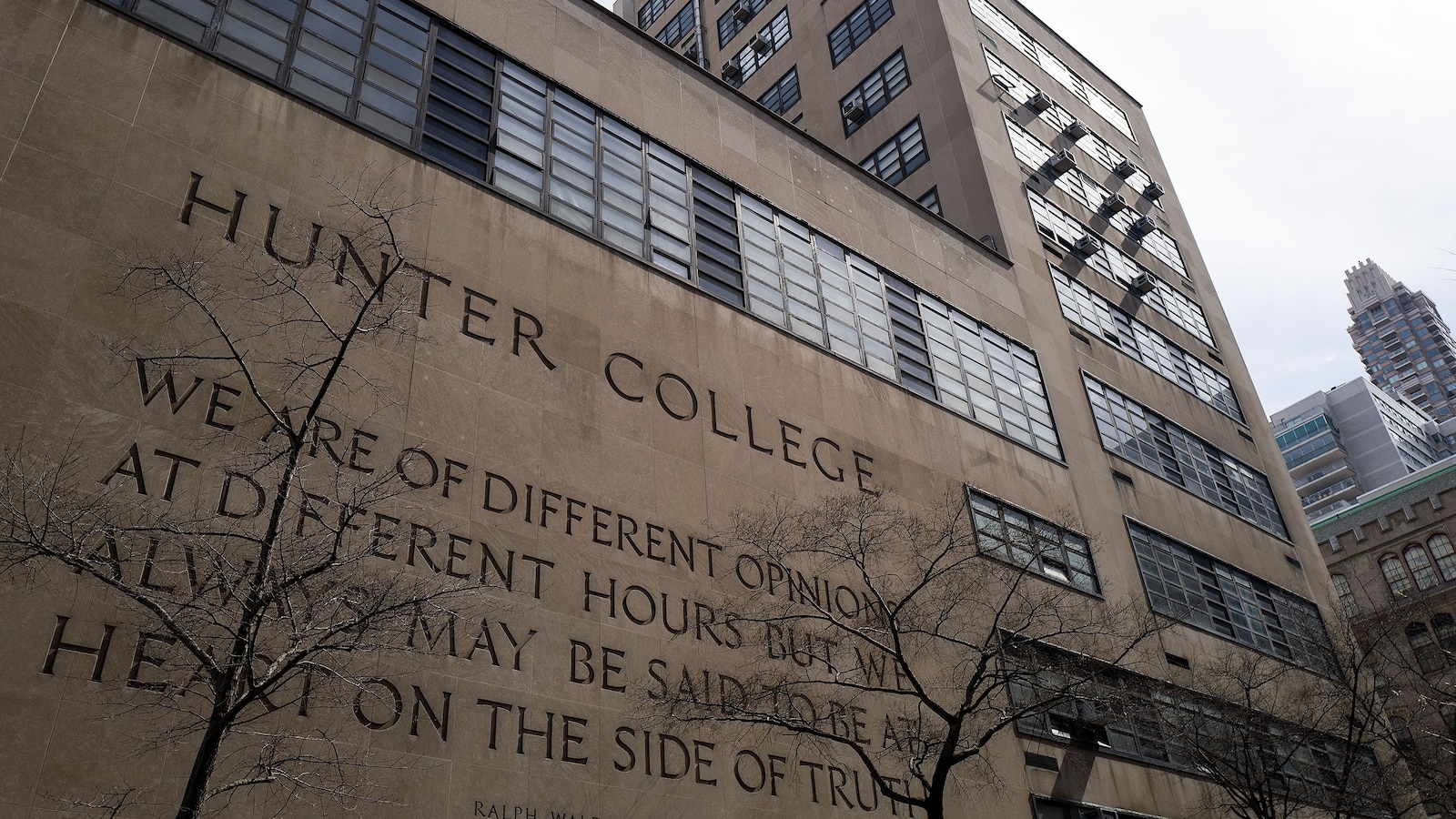
Hunter College, part of The City University of New York system, moved swiftly to address the situation. Initially, the college announced it would be reviewing the incident under the university’s applicable conduct and nondiscrimination policies. By Wednesday, Hunter College President Nancy Cantor announced that Friedman had been placed on administrative leave while the school conducts a thorough investigation into the matter. In her statement, President Cantor acknowledged the particularly painful nature of the incident’s timing and context. “This painful incident unfolded at a meeting where Black History Month was being celebrated and the pernicious and enduring effects of anti-Black systemic racism were being discussed, especially with regard to the role of educational institutions in addressing them,” Cantor noted. She emphasized Hunter College’s commitment to combating discrimination, stating that “Hunter has long embraced such a role, which requires constant vigilance to remain attentive and responsive to the ways in which we continually draw and redraw discriminatory social lines.” The decision to place Friedman on leave represents a significant step, allowing the institution time to conduct a comprehensive investigation while removing the professor from her teaching responsibilities. This approach serves both to protect students and to ensure a fair process as the college determines appropriate next steps.
Community and Official Condemnation
The reaction from the educational community and city officials was swift and unequivocal in condemning Friedman’s remarks. The NYC District 3 Community Education Council, where the incident occurred, issued a strong statement denouncing what they characterized as “racist, anti-Black remarks.” The council emphasized the harm caused by the comments, stating, “These comments were deeply harmful and wholly unacceptable.” The timing of the incident made it particularly egregious in the eyes of many observers. “That such remarks were made during Black History Month while a student was courageously offering public comment makes this incident even more troubling,” the CEC3 statement noted. New York City Public Schools Chancellor Kamar Samuels also weighed in on the controversy during an unrelated press briefing. His response reflected the seriousness with which city education leadership viewed the incident. “It was abhorrent to listen to. And our students deserve so much better,” Samuels stated, making clear that such behavior would not be tolerated within the educational community. His comments underscored the responsibility that all adults have when participating in discussions about education, regardless of whether they are attending as professionals or parents.
Calls for Accountability and Broader Implications
Beyond institutional responses, individual community members have called for more severe consequences. CEC3 member Felicia Reese Amos publicly called for Friedman’s resignation from her position at Hunter College during a subsequent CEC3 meeting. “The conduct heard publicly demonstrates a breach of moral and professional fitness that cannot be repaired through internal review alone,” Reese Amos argued. She emphasized that her call for resignation was not motivated by revenge but by a commitment to maintaining professional standards. “This is not about vengeance. This is about standards,” she stated. The incident has sparked broader conversations about accountability, the responsibilities of educators both in and out of professional settings, and the ongoing challenges of addressing systemic racism in educational institutions. It has also highlighted the complications of virtual meetings, where private conversations can become public due to technical mishaps, though many argue that such explanations do not excuse the nature of Friedman’s remarks. The case raises important questions about how educational institutions should handle situations where faculty members make controversial statements outside their official duties, the boundaries between personal and professional conduct in the age of virtual communication, and what constitutes appropriate consequences for speech that causes harm to communities. As Hunter College continues its investigation, the outcome will likely have implications for how universities navigate similar situations in the future, balancing principles of academic freedom with responsibilities to maintain inclusive, respectful learning environments for all students.