
The Complex Reality of DACA Arrests Under Trump’s Immigration Crackdown
Understanding the Scope of Recent DACA Arrests
In a development that has sent ripples through immigrant communities across America, newly released government statistics reveal that 261 participants in the Deferred Action for Childhood Arrivals program—commonly known as DACA or “Dreamers”—were arrested by federal immigration agents during the first ten months of the second Trump administration. These figures, obtained through official U.S. government statistics shared with Congress and reported by CBS News, provide the clearest picture yet of how President Trump’s aggressive deportation policies are affecting those who came to America as children. Of these arrests, 86 individuals were ultimately deported during the period spanning January 1 through November 19, 2025. While this timeframe technically includes the final 19 days of President Biden’s administration, it remains unclear exactly how many arrests occurred during those final weeks, though it’s worth noting that the Biden administration rarely targeted DACA recipients for enforcement actions.
The DACA program itself was established during the Obama administration as a humanitarian measure to protect individuals who were brought to the United States illegally or overstayed their visas as children—through no choice of their own. These young people, who have become known as Dreamers, were granted temporary work permits and protection from deportation after passing rigorous background checks and meeting several strict requirements. To qualify, applicants had to prove they arrived in the U.S. before June 2007, demonstrate they had no serious criminal histories, and show they had either graduated from an American high school or served in the U.S. military. Many of these individuals have known no other home than America, having spent their formative years growing up in American communities, attending American schools, and building their lives on American soil.
The Criminal History Question and Government Claims
According to the letter sent by Department of Homeland Security Secretary Kristi Noem to Democratic Senator Dick Durbin of Illinois, an overwhelming 92% of the arrested DACA recipients—241 out of 261 individuals—allegedly had “criminal histories” beyond civil immigration violations. The DHS typically considers both pending criminal charges and actual convictions when classifying someone as having a criminal history. However, the letter provided no details about the severity or nature of these alleged criminal records, leaving crucial questions unanswered about whether these histories involved serious violent crimes or minor infractions. This lack of transparency has raised concerns among advocates and lawmakers who question whether the administration is painting an accurate picture of who is being targeted. CBS News has reached out to DHS representatives requesting more specific information about the charges or convictions associated with these cases, but at the time of reporting, those details had not been provided.
This opacity has led to significant skepticism from Democratic senators, who have pointed out important context that challenges the administration’s narrative. Senators Durbin, Alex Padilla, and Mark Kelly issued a joint statement calling the arrests “deeply troubling,” emphasizing that these detentions “disrupt families, harm communities, and inflict unnecessary social, emotional, and economic costs” on American society. The senators specifically challenged Secretary Noem’s claims about criminal histories, noting that “DACA recipients go through strict background checks every time they renew this protection, and the Trump Administration has not hesitated to arrest immigrants with no serious criminal convictions and falsely label them the ‘worst of the worst.'” This statement highlights a critical tension in the debate: the administration’s broad categorization of “criminal histories” may include relatively minor offenses that wouldn’t ordinarily result in detention or deportation, raising questions about proportionality and fairness in enforcement priorities.
Putting the Numbers in Perspective
While 261 arrests may sound significant in isolation, it’s essential to understand this number in proper context. As of the end of June 2025, approximately 516,000 Dreamers maintained active DACA enrollment, with the majority residing in states including California, Texas, Illinois, Florida, and New York, according to data from U.S. Citizenship and Immigration Services. This means the arrests represent less than 0.1% of all DACA recipients—a relatively small fraction of the total population, though any arrest represents a life-altering event for the individual and their family. The arrests do, however, represent a significant increase from earlier unofficial estimates by advocacy groups regarding how many Dreamers had been detained under Trump’s deportation campaign. This escalation signals a shift in enforcement priorities that has created heightened anxiety throughout DACA communities, where recipients now face uncertainty about protections they had come to rely upon.
Interestingly, when compared to the broader immigration enforcement patterns under the second Trump administration, the criminal history statistics for DACA arrestees paint a notably different picture. During President Trump’s first year back in the White House, Immigration and Customs Enforcement arrested nearly 400,000 immigrants suspected of being in the country illegally. According to an internal DHS document obtained by CBS News, less than 14% of these overall arrestees had violent criminal records. In total, about 60% of all ICE arrests over the past year involved individuals with some form of criminal charges or convictions, while approximately 40% had no criminal records whatsoever beyond civil immigration violations. The fact that 92% of arrested DACA recipients allegedly had criminal histories—compared to just 60% of the general arrested population—suggests that immigration authorities may be applying more selective criteria when targeting DACA recipients, possibly to justify enforcement actions against a population that has traditionally enjoyed broader public sympathy.
The Precarious Legal Status of DACA
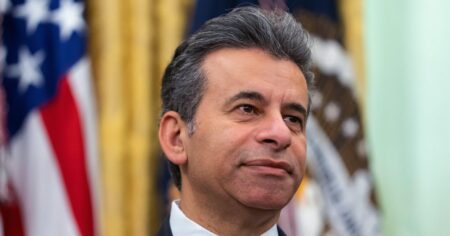
DACA exists in a particularly vulnerable legal position, having survived multiple attempts to dismantle it but remaining under constant threat. The program represents one of the few immigration policies created under a Democratic president that the second Trump administration has not yet moved to terminate outright, though its future hangs by a thread. Since returning to office, President Trump has moved aggressively to dismantle numerous Obama and Biden-era immigration policies, including revoking Temporary Protected Status for hundreds of thousands of immigrants from crisis-stricken nations. Yet Trump administration officials, including USCIS Director Joseph Edlow, have remained conspicuously silent about their specific intentions regarding DACA’s future, creating a climate of uncertainty for hundreds of thousands of young people and their families.
The program’s legal journey has been tumultuous from the start. During Trump’s first administration, officials attempted to terminate DACA entirely, arguing that the program exceeded executive authority and was therefore illegal. However, the Supreme Court blocked that termination effort in 2020, though notably on technical procedural grounds rather than ruling on the underlying legality of the program itself. This decision allowed DACA to continue, albeit in what immigration experts have described as a “zombie-like form”—existing but vulnerable. In recent years, federal courts in both Texas and Louisiana have declared DACA illegal, along with the Biden administration’s attempts to codify the policy through formal regulations. Despite these rulings, judges have permitted current recipients to continue renewing their two-year work permits and deportation deferrals, creating a strange limbo where the program is deemed unlawful yet continues to function for existing participants.
What This Means for Dreamers and American Communities
The implications of these arrests extend far beyond the 261 individuals taken into custody. In its letter to Congress, DHS emphasized that DACA “comes with no right or entitlement to remain in the United States indefinitely,” and that “aliens with certain criminal histories will not be considered for DACA.” The agency further noted that “those who violate the terms are also subject to termination and removal.” This language underscores the administration’s view of DACA as a revocable privilege rather than a protected status, a perspective that stands in sharp contrast to how many Dreamers and their advocates view the program—as a fundamental recognition of their American identity and contributions to society.
The Republican-led states that have challenged DACA’s legality in court have escalated their efforts, asking a federal judge in Texas last fall to order the Trump administration to gradually phase out the program entirely. As of now, it remains unclear when or how the judge will rule on this request, leaving DACA recipients in an agonizing state of uncertainty about their futures. For the hundreds of thousands of Dreamers living across America—many of whom have built careers, started businesses, bought homes, and raised families—this precarious situation creates profound anxiety about whether they’ll be able to continue living in the only country most of them have ever truly known. These are individuals who often learned they were undocumented only in their teenage years, who have contributed to their communities as teachers, healthcare workers, small business owners, and in countless other roles, and who have followed all the rules required of them to maintain their DACA status. The current enforcement climate raises fundamental questions about America’s values, the treatment of those who grew up as Americans in everything but legal status, and the kind of immigration system the country wants to have going forward.