


The Tragic Death Toll in ICE Detention: A Crisis of Care and Accountability
A Brother’s Desperate Plea Goes Unanswered
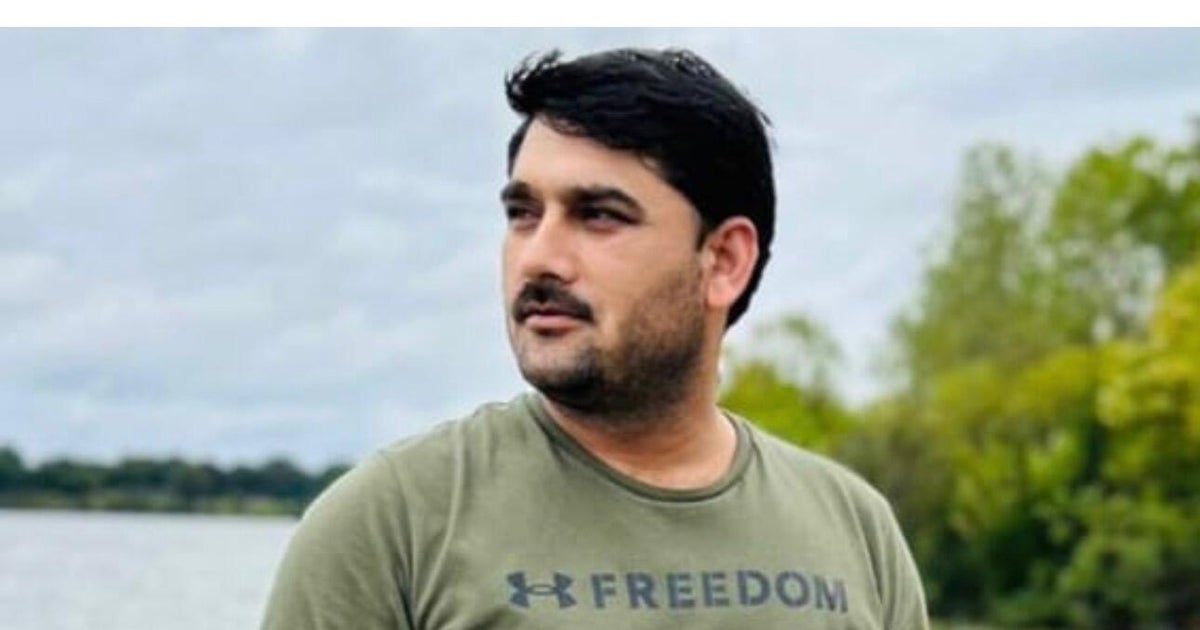
The phone call that Naseer Paktiawal received on March 13th from Immigration and Customs Enforcement would be the last time he would hear his brother’s voice. Mohammad Nazeer Paktiawal, a 41-year-old Afghan immigrant who had stood alongside American forces during the tumultuous decade leading up to the U.S. withdrawal from Afghanistan, had just been taken into ICE custody in North Texas. During that brief conversation, Mohammad’s distress was palpable—he told his brother that something was terribly wrong, that his body was wracked with pain. Naseer immediately conveyed his brother’s deteriorating condition to the ICE agent handling the call, pleading for medical attention. The response he received was meant to be reassuring: there was a nurse available, they would take care of him, don’t worry. Then the line went dead. Less than a full day later, Naseer received another call, this time delivering news that would shatter his family forever—Mohammad was dead. This wasn’t just another statistic in an immigration system under strain; this was a father, a brother, a man his 12-year-old son Imrain would remember as “a hero” who “will always be a hero.” Mohammad Paktiawal had no known pre-existing medical conditions, and his sudden death remains shrouded in questions that his family desperately seeks answers to. He became the first Afghan national to die in ICE custody since 2008, and tragically, he was just the twelfth person to die in ICE detention that year—a number that would continue to climb.
An Unprecedented Death Rate in Immigration Detention
The loss of Mohammad Paktiawal represents more than a personal tragedy—it’s part of a disturbing trend that has seen deaths in ICE custody reach alarming levels. Just two days after Mohammad’s death, a 19-year-old Mexican man died by presumed suicide, bringing the toll to thirteen deaths. To put this in perspective, by that same point the previous year, only four people had died in ICE custody. By the end of 2025, thirty-one people would lose their lives while detained by ICE, marking a two-decade high in a system that is supposed to be focused on immigration enforcement, not becoming a place where people die. The rising death toll corresponds with record-breaking detention numbers as the Trump administration pursued an aggressive crackdown on illegal immigration. By early February, ICE facilities across the United States were holding more than 68,000 people, an unprecedented number that strained resources and staffing. However, even when statisticians account for the increased population in detention—essentially calculating deaths per capita—the numbers remain deeply troubling. The death rate in 2025 reached 5.6 people per every 10,000 detainees, the highest rate since 2020 when the COVID-19 pandemic swept through detention facilities with devastating effect. This statistic suggests that the problem isn’t simply that more people are in custody, but that something fundamentally dangerous is happening within the system itself.
Long-Standing Criticisms of Inadequate Medical Care
The deaths occurring in ICE detention facilities have thrust a long-standing problem into the harsh light of public scrutiny: the persistent allegations that these facilities provide grossly inadequate medical care to the vulnerable people held within them. For years, advocacy groups, former detainees, and even some government officials have raised concerns about the quality of healthcare available to immigration detainees. In recent months, congressional Democrats have gone beyond expressing concern to making formal allegations of human rights abuses, including what they characterize as medical neglect. They’ve demanded increased oversight from the Department of Homeland Security, the parent agency of ICE, arguing that the current system lacks sufficient accountability measures to protect detainees’ health and wellbeing. Multiple civil rights organizations have filed lawsuits alleging inhumane conditions throughout the ICE detention system, painting a picture of facilities where requests for medical attention go unheeded, where chronic conditions go untreated, and where mental health crises are ignored until it’s too late. ICE has consistently and repeatedly denied these reports, maintaining that conditions at its detention sites meet appropriate standards. With each death announcement, the agency issues statements asserting that “comprehensive medical care is provided from the moment individuals arrive and throughout the entirety of their stay.” In what many critics find to be a particularly tone-deaf assertion, ICE has even claimed in multiple press releases that “this is the best healthcare that many aliens have received in their entire lives.” Yet the stories emerging from families of those who have died tell a very different story.
Heartbreaking Accounts of Medical Neglect
The individual stories behind the statistics reveal a pattern of alleged medical neglect that is as heartbreaking as it is disturbing. Isidro Perez was 75 years old with a history of heart disease when ICE arrested him in Key Largo, Florida, last June. Before his death just three weeks later on June 26, Perez told his former partner about experiencing chest pains—a potentially life-threatening symptom for someone with his medical history—and complained that he wasn’t receiving his medication while in detention. ICE’s own report on Perez’s death stated that a physician had ordered his medication while he was in custody, creating a discrepancy between the official record and what Perez communicated to his loved ones before he died. Maksym Chernyak, a Ukrainian national, died in February 2025 from a stroke, but before his death, he told both his wife and his cellmate that he was being refused immediate medical care and medication despite displaying alarming symptoms including heart palpitations and blood in his stool—clear warning signs that something was seriously wrong with his health. According to documentation compiled by Human Rights Watch, these pleas for help went unanswered until it was too late. Even ICE’s own internal death reports reveal troubling instances of delayed care that may have contributed to preventable deaths. The cases of mental health crises are particularly disturbing and point to a system ill-equipped to handle detainees experiencing psychological emergencies.
The Mental Health Crisis Within Detention Walls
Among the most tragic aspects of the rising death toll is the number of people who have taken their own lives while in ICE custody, pointing to a mental health crisis within the detention system that isn’t being adequately addressed. Brayan Rayo-Garzon, just 27 years old and from Colombia, died by suicide in April 2025. Before his death, he had been scheduled for a mental health appointment—an acknowledgment that staff recognized he needed help. However, that appointment was rescheduled once, then twice, bureaucratic delays that proved fatal. Before he could finally receive the mental health care he needed, Brayan was found unresponsive in his cell. Leo Cruz Silva was 34 years old when he died by suicide in October of the same year. His death came just two days after ICE medical staff had documented that he was experiencing a mental health crisis—meaning the system had identified him as being at risk, yet failed to prevent his death. These two men are among seven detainees who died of apparent suicides since the start of 2025, a number that suggests the psychological toll of detention is not being adequately addressed. The conditions of immigration detention—the uncertainty about one’s future, separation from family, the stress of potential deportation to dangerous situations—create a perfect storm for mental health crises. When the system fails to provide adequate mental health resources and intervention, the results can be fatal. Another detainee’s death was ruled a homicide in a particularly disturbing case: ICE agents physically held down 55-year-old Campos Lunas until he stopped breathing. The ICE report on his death stated that guards were intervening to prevent him from harming himself, raising profound questions about training, protocols, and the use of force in situations involving detainees in crisis.
A Family’s Search for Answers and Justice
For Naseer Paktiawal and his family, the official statements and statistics offer no comfort and provide no answers to the questions that haunt them. Mohammad Paktiawal came to the United States through legal channels, admitted under the humanitarian parole immigration policy that allows officials to quickly admit immigrants on humanitarian grounds, typically in emergency situations. He was among the thousands evacuated from Afghanistan during the chaotic U.S. military withdrawal in the summer of 2021, leaving behind a country falling to the Taliban after he had spent roughly a decade fighting alongside American forces. According to the Department of Homeland Security, his parole status, which is temporary by nature, had expired the previous August. ICE stated that Mohammad was arrested in a targeted enforcement operation following local arrests on charges of fraud and theft, though those cases had not been adjudicated—meaning he had not been convicted—at the time of his death. For young Imrain Paktiawal, who at twelve years old has lost his father, the circumstances of the arrest or the expired immigration status don’t change the fundamental loss he’s experiencing. His father was his hero, and now he’s gone. Naseer Paktiawal’s belief is straightforward and profound: his brother would still be alive today if he hadn’t been arrested and placed in ICE custody. “I want the answer for his children, for my family, for this community,” he said, his words carrying the weight of grief and the demand for accountability. “What happened to my brother?” It’s a question that echoes beyond one family’s tragedy, challenging the entire system of immigration detention and the care—or lack thereof—provided to the thousands of people held within it each year.