

Iran Strikes Back: Energy Infrastructure Attacks Send Shockwaves Through Global Markets
A Dangerous New Chapter in Regional Conflict
The conflict between Israel and Iran has entered alarming new territory, moving beyond military targets to strike at the heart of the global energy supply. On Wednesday, after Israel attacked Iran’s largest gas field, the Islamic Republic launched a calculated series of retaliatory strikes against energy facilities across the Persian Gulf region. The targets weren’t random—they were carefully chosen to inflict maximum economic pain while sending a clear message to Gulf states that have maintained tacit cooperation with Israel. Qatar, Saudi Arabia, and the United Arab Emirates suddenly found themselves caught in the crossfire, their critical energy infrastructure transformed into legitimate military targets in Iran’s eyes. The world watched nervously as fires blazed at facilities responsible for supplying a significant portion of global energy needs, while oil prices shot upward in response to the uncertainty. This wasn’t just another exchange of missiles—it represented a fundamental shift in how regional conflicts could directly impact every person on the planet through soaring energy costs.
The Domino Effect: From Israeli Strike to Regional Conflagration
The sequence of events unfolded with frightening speed. Israel’s initial strike targeted the South Pars Gas Field, the world’s largest natural gas field that Iran shares with Qatar in the Persian Gulf. This wasn’t a small operation—it was a direct blow to Iran’s economic lifeline and its ability to export energy. The Iranian response came swiftly and forcefully. The Islamic Revolutionary Guard Corps issued stark evacuation orders for energy facilities across neighboring Gulf states, warning that these installations had become “direct and legitimate targets.” Their statement carried an ominous reminder that they had previously warned regional leaders about the dangers of “entering this dangerous path and gambling with the fate of their nations.” The implication was clear: countries that cooperated with Israel or allowed their airspace to be used for strikes would pay a price. What followed was a coordinated assault that demonstrated Iran’s capability to strike multiple targets simultaneously across a wide geographic area, fundamentally changing calculations about regional security and the vulnerability of critical infrastructure.
Global Energy Lifelines Under Fire
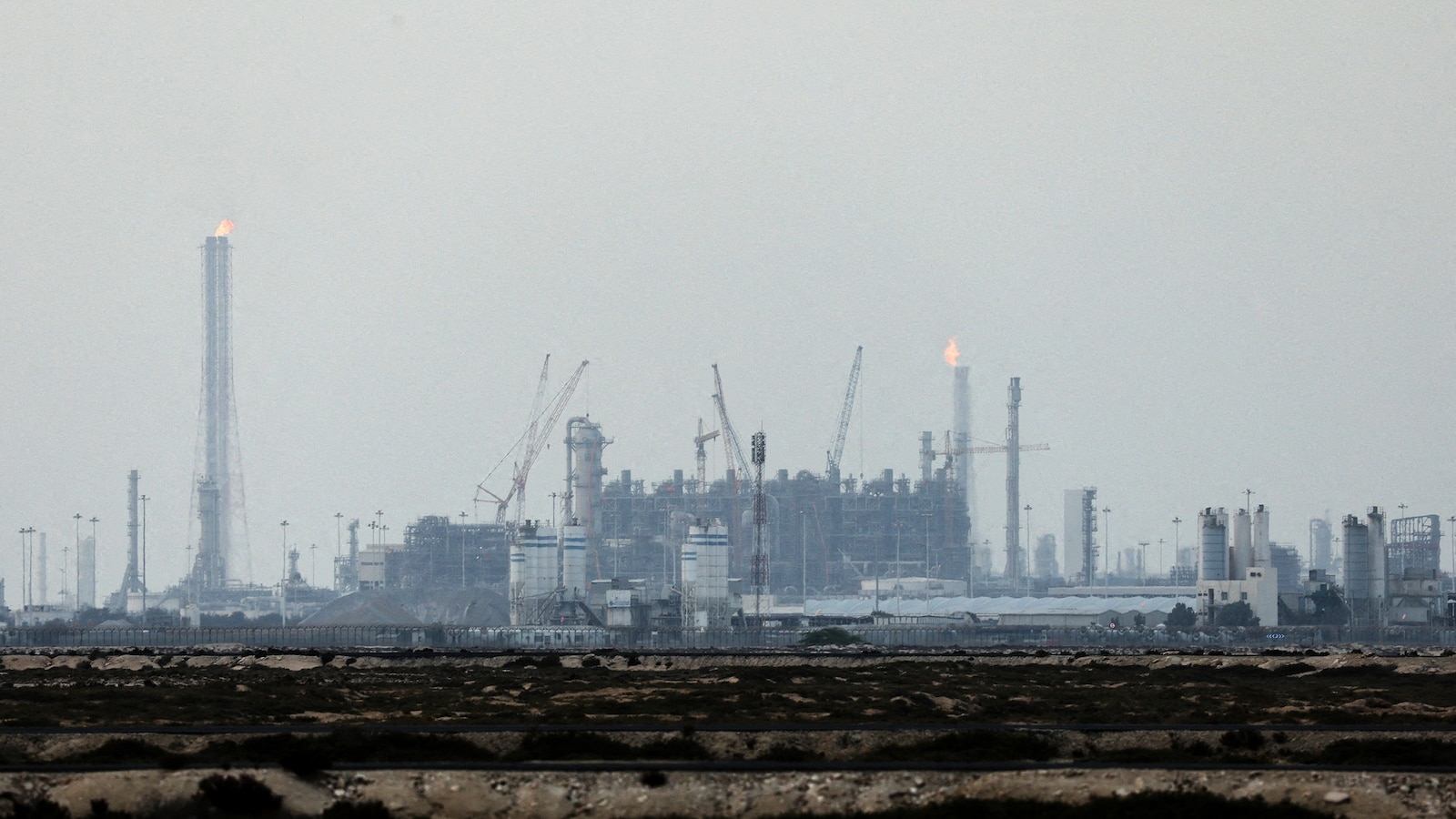
The scale and significance of Iran’s retaliatory strikes cannot be overstated. The most dramatic attack hit the Ras Laffan terminal in Qatar, the world’s largest liquefied natural gas (LNG) facility. Under normal circumstances, this single facility is responsible for shipping about one-fifth of the world’s LNG supply, making it an absolutely critical node in the global energy network. Qatar Energy, the state-owned company operating the facility, reported fires and “extensive damage” following the Iranian missile strikes. This represented the most serious attack on Qatar’s energy infrastructure since the current conflict began. The assault didn’t stop there. Saudi Arabia faced a barrage of missiles and drones targeting its energy facilities, according to the Saudi Ministry of Defense. The United Arab Emirates also came under fire, with missiles striking the Habshan gas facilities in Abu Dhabi. The UAE’s Ministry of Foreign Affairs described it as a “terrorist attack” that “represents a direct threat to the security and stability of the region and its people, as well as to global energy security.” These weren’t just symbolic strikes—they were carefully targeted attacks designed to disrupt production and send a message about Iran’s willingness to weaponize energy supplies.
Trump Steps Into the Fray With Stark Warnings
President Donald Trump’s late-night intervention added another layer of complexity to an already volatile situation. In a characteristically blunt social media post, Trump revealed that neither the United States nor Qatar had been informed in advance about Israel’s plan to attack the South Pars Gas Field. This admission highlighted potential friction in the relationship between Washington and Jerusalem over coordination and strategy. Trump then issued what amounted to a public ultimatum to both sides. He demanded that Israel make no further attacks on the South Pars field “unless Iran unwisely decides to attack a very innocent, in this case, Qatar.” But Trump’s warning to Iran was even more severe. He stated explicitly that if Iranian strikes continued against Qatar’s LNG facilities, the United States would respond by “massively” destroying the South Pars gas field. “I do not want to authorize this level of violence and destruction because of the long term implications that it will have on the future of Iran,” Trump wrote, “but if Qatar’s LNG is again attacked, I will not hesitate to do so.” The statement revealed the delicate balancing act facing the U.S. administration—supporting its Israeli ally while trying to prevent a wider regional war that could devastate global energy markets and harm American economic interests.
Economic Aftershocks: Markets React to Energy Insecurity
The immediate market response to the attacks demonstrated just how sensitive global energy prices are to Middle Eastern instability. Oil prices surged dramatically, with U.S. crude jumping nearly 3% to reach $99 per barrel, while global oil prices climbed approximately 5% to $108 per barrel. These weren’t just numbers on a screen—they translated directly to higher costs for transportation, manufacturing, and heating that would eventually reach consumers worldwide. Energy analysts quickly began calculating the potential long-term impact. According to Kpler’s lead oil analyst Matt Smith, the facilities threatened by Iran’s target list could affect over 1.25 million barrels per day of oil refining capacity in the region, plus substantial natural gas production. While this amounts to just over 1% of global refining capacity, the disruption comes at a particularly vulnerable time. Patrick De Haan of GasBuddy warned that attacks on refining facilities could have an even more significant impact on gas prices at the pump than the loss of crude oil supplies, since refined products like gasoline, diesel, and jet fuel are what consumers actually use. The situation was further complicated by the effective closure of the Strait of Hormuz, the critical waterway that normally facilitates shipping for about 20% of the world’s oil consumption, creating a chokehold on global supply.
A World Transformed: The New Reality of Energy Warfare
This escalation marks a troubling evolution in modern conflict, where energy infrastructure has moved from being an economic asset protected by all parties to becoming a legitimate military target. The attacks reveal several uncomfortable truths about our interconnected world. First, the global economy remains deeply vulnerable to disruptions in a handful of geographic locations. Second, regional conflicts can no longer be contained within traditional military spheres—they inevitably spill over into economic warfare that affects every nation. Third, countries that thought they could remain neutral or balance relationships with competing powers now find themselves forced to choose sides, with their critical infrastructure hanging in the balance. Qatar and the UAE, which had been carefully managing relationships with both Iran and Israel, suddenly discovered that neutrality offers no protection when missiles start flying. The condemnations issued by Qatar and the UAE—criticizing both Israel’s initial strike and Iran’s retaliation—reflected their desperate desire to de-escalate a situation that threatens their economic foundations. As energy analysts described it, this is “the upping of the ante,” a clear escalation that transforms the rules of engagement. The world now waits anxiously to see whether cooler heads will prevail or whether this dangerous new phase will trigger further retaliation, sending energy prices spiraling upward and pushing the global economy toward recession. The stakes couldn’t be higher, and the vulnerability of our energy-dependent civilization has never been more apparent.