


The Escalating Iran-U.S. Conflict: A Comprehensive Overview
The Staggering Financial Cost of War
The conflict between the United States, Israel, and Iran has entered a dangerous new phase, with eye-watering costs that are beginning to alarm both politicians and ordinary citizens. Iran’s Foreign Minister Abbas Araghchi didn’t mince words when he pointed fingers at Israeli Prime Minister Benjamin Netanyahu and his supporters in the U.S. Congress for the spiraling expenses of a war that’s barely three weeks old. According to reports from the Washington Post that Araghchi shared on social media, the U.S. Defense Department is seeking a jaw-dropping $200 billion in funding for the Iran war, though CBS News has not independently verified this figure. The Iranian diplomat called this astronomical sum merely “the tip of the iceberg,” suggesting that the true costs will be far greater as the conflict continues.
What we do know for certain is troubling enough: military officials briefing members of Congress revealed that just the first week of operations cost American taxpayers approximately $11.3 billion. When House Speaker Mike Johnson was asked about the war’s total price tag, he admitted that “I don’t think it could be calculated yet,” since military operations are ongoing. Araghchi’s characterization of this as a war “imposed on both Iranians and Americans” resonates with growing concerns among the American public about another expensive Middle Eastern conflict. His reference to a “trillion-dollar ‘Israel First tax'” strikes at a sensitive nerve in American politics, where support for Israel has long been a bipartisan consensus, but where questions about the costs and benefits of that alliance are increasingly being raised by citizens worried about domestic priorities.
Attacks on Critical Energy Infrastructure
The conflict took a particularly dangerous turn when drones struck oil and gas facilities across the Gulf region, targeting the economic lifelines of several nations. Saudi Arabia confirmed that a drone hit the country’s SAMREF refinery in the port city of Yanbu on the Red Sea, with damage assessments still underway. Kuwait faced even more severe attacks, with drone strikes on both the Mina Al-Ahmadi refinery—one of the Middle East’s largest petroleum facilities with a production capacity of 730,000 barrels per day—and the nearby Mina Abdullah refinery, sparking fires at both locations. Fortunately, no injuries were reported in Kuwait, but the attacks demonstrated Iran’s capability to strike at the heart of regional energy production.
Abu Dhabi faced its own crisis when Iranian attacks forced authorities to shut down operations at the Habshan gas facility and Bab field, with officials calling the overnight assaults a “dangerous escalation.” The attacks sent missile alert sirens wailing across multiple areas around the Gulf, creating panic among civilians and raising fears of a broader regional war. The diplomatic fallout was immediate and severe, with Qatar, Saudi Arabia, and the United Arab Emirates all issuing strong condemnations of Iran’s actions. Saudi Arabia’s top diplomat was particularly blunt, stating that the attacks on the kingdom meant “what little trust there was before has completely been shattered.” This breakdown in trust is particularly concerning given that many of these Gulf states had been engaged in delicate diplomatic efforts to ease tensions with Iran in recent years, efforts that now appear to be in tatters.
Global Economic Shockwaves
The military conflict’s impact on global markets has been swift and severe, with investors scrambling to adjust to a rapidly changing situation. Stock prices tumbled while oil prices spiked dramatically, reflecting widespread anxiety about the stability of global energy supplies. The crisis intensified after Israel struck Iran’s South Pars gas field—a massive reserve shared with Qatar—and President Trump issued a stark threat to destroy the entire field if Iran retaliated by attacking Qatari infrastructure. Financial markets reacted with alarm: U.S. crude futures soared above $97 per barrel, natural gas prices jumped 3%, and Brent crude futures climbed to $111.87 per barrel, representing a 4% increase in a single day.
The pain wasn’t limited to energy markets. Japan’s Nikkei stock index plummeted more than 3%, South Korean equities fell 2.8%, and European futures dropped over 1.5% before markets even opened on the continent. Financial analysts warned that this wasn’t just another geopolitical headline—it represented a fundamental threat to the global economic system. Charu Chanana, chief investment strategist at Saxo in Singapore, captured the market’s mood perfectly when she told Reuters, “This latest escalation feels like a turning point for markets because the conflict is no longer just about military headlines or Strait of Hormuz closure. It is now hitting the plumbing of the global energy system.” The growing concern about stagflation—a toxic combination of stagnant economic growth and rising inflation—means that what began as a regional military conflict has transformed into a global economic crisis with the potential to affect the daily lives of billions of people worldwide.
Iran’s Deadly Missile Barrage
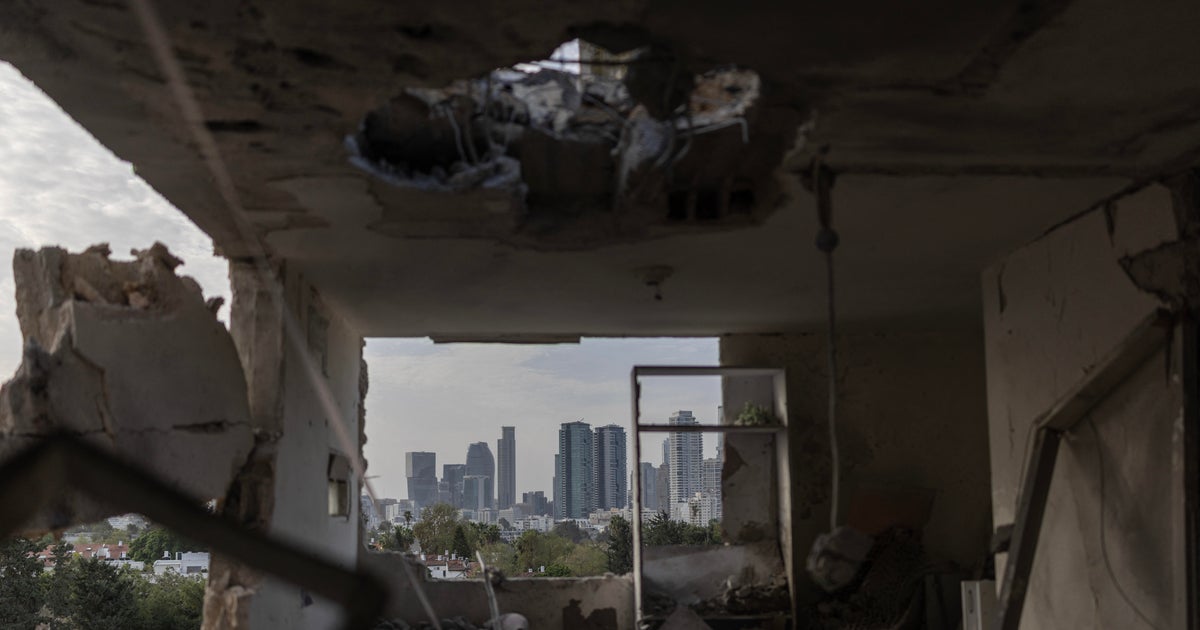
The military situation deteriorated further when Iran launched a massive overnight assault on Israel, firing at least six waves of missiles that included a terrifying new element: cluster bombs. While Israeli air defenses successfully intercepted most of the incoming missiles, debris and bomblets from the cluster munitions rained down on several locations, creating chaos and casualties. In Tel Aviv, an elderly man suffered light injuries when his apartment building was struck by falling debris. The use of cluster munitions—weapons that spread smaller bomblets over a wide area—represents a significant escalation in the types of weapons being deployed and raises serious humanitarian concerns.
The attacks weren’t limited to urban areas. In central Israel’s Sharon area, a cluster bomb struck the agricultural community of Adanim, killing a Thai agricultural worker who was simply trying to do his job. Another cluster bomb hit a home in Jaljulia, an Arab town also in central Israel, though fortunately no injuries were reported there. Perhaps most tragically, a direct hit in the Palestinian town of Bayt Awwa, located in the Israeli-occupied West Bank, reportedly caused fatalities, though confirmation of the exact number of casualties was not immediately available. These attacks demonstrate that the conflict is affecting people far beyond the military and political figures making decisions, with ordinary workers, elderly civilians, and residents of disputed territories all finding themselves in the crosshairs of a war they didn’t start and cannot control.
Maritime Attacks and Energy Facility Strikes
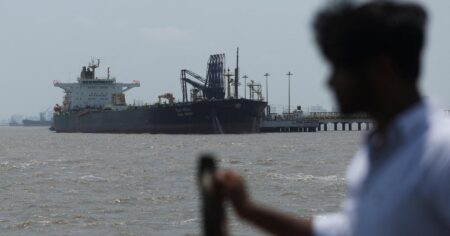
The violence extended beyond land-based targets to threaten one of the world’s most critical shipping routes. The U.K. military’s Maritime Trade Operations Center reported that a vessel was “hit by an unknown projectile” just off the coast of Qatar’s Ras Laffan petroleum industry area. While the center didn’t identify the vessel or specify what struck it, all crew members were reportedly safe. This incident is part of a pattern of Iranian attacks on commercial vessels in the Gulf region over the past three weeks, actions taken in retaliation for ongoing U.S.-Israeli strikes. These attacks have effectively paralyzed marine traffic through the Strait of Hormuz, a narrow waterway through which roughly one-fifth of the world’s oil supply normally passes.
The situation at Qatar’s energy facilities grew increasingly dire as QatarEnergy confirmed that multiple liquefied natural gas facilities had been targeted in successive attacks. The company reported that beyond the initial Wednesday missile attack on Ras Laffan Industrial City—which caused “extensive damage to the Pearl GTL (Gas-to-Liquids) facility”—several other facilities were struck in early Thursday morning attacks. These later strikes caused “sizeable fires and extensive further damage” at multiple LNG facilities, though thankfully no initial casualties were reported. The targeting of these facilities is particularly significant because Qatar is one of the world’s largest exporters of liquefied natural gas, and any prolonged disruption to its production could have severe consequences for global energy markets, particularly in Asia and Europe, which depend heavily on Qatari LNG imports.
International Response and Military Planning
President Trump’s response to the escalating crisis was characteristically bold and threatening, though it also revealed tensions in the U.S.-Israel relationship. In a post on Truth Social, Trump claimed that the United States “knew nothing” about Israel’s attack on Iran’s South Pars gas field and that Qatar was “in no way, shape, or form, involved with it.” He declared that Iran had “unjustifiably and unfairly” struck Qatar’s Ras Laffan gas facility in response, and announced that “NO MORE ATTACKS WILL BE MADE BY ISRAEL” on the South Pars field—a remarkably public constraint on an ally’s military operations. However, Trump added a stark warning: if Iran continues to attack Qatar’s facilities, the United States would “massively blow up the entirety of the South Pars Gas Field at an amount of strength and power that Iran has never seen or witnessed before.” Israeli officials have notably remained silent on both the South Pars strike and Trump’s comments about it, suggesting possible friction between Washington and Jerusalem over military strategy and coordination.
Behind the scenes, international military planners are working urgently to address the maritime crisis. CBS News learned that a team of military planners from the United Kingdom has been deployed to work alongside the U.S. military on developing options to reopen the Strait of Hormuz. This relatively small British team is stationed at U.S. Central Command headquarters at MacDill Air Force Base near Tampa, Florida, enhancing the U.K. planning staff already assigned there. However, the international response has been complicated by reluctance among U.S. allies to join active combat operations. Multiple diplomats have indicated that countries like the U.K. and Japan are hesitant to participate during the hot phase of the conflict, though they may consider contributing assets like mine detection equipment once hostilities conclude. Japanese Prime Minister Sanae Takaichi, scheduled to meet with President Trump, has already publicly stated that Japan’s constitution would not permit its self-defense forces to operate in an offensive capacity, highlighting the diplomatic challenges the United States faces in building a broad coalition for this conflict. As the war enters its fourth week with no clear end in sight, the questions about costs, strategy, and international support grow more pressing with each passing day.