


Europe Weighs Its Role as Trump Calls for International Naval Coalition in the Persian Gulf
The Call for Maritime Protection
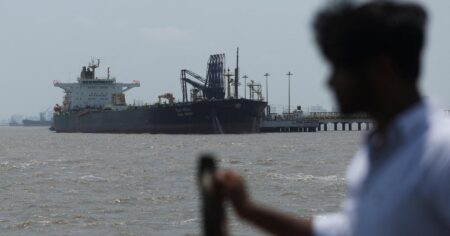
The waters of the Persian Gulf have become the center of a growing international security debate as President Donald Trump has called upon nations worldwide to join the United States in protecting one of the world’s most vital maritime corridors. In a social media announcement made over the weekend, Trump declared that numerous countries would be sending warships to work alongside American naval forces to keep the Strait of Hormuz open and operational. His statement specifically named several key players—China, France, Japan, South Korea, and the United Kingdom—as potential contributors to this maritime security effort. The Strait of Hormuz, a narrow waterway between Iran and the Arabian Peninsula, serves as a critical chokepoint through which roughly one-fifth of the world’s petroleum passes. Trump’s appeal comes amid heightened tensions with Iran, which has previously threatened to close the strait in response to international pressure. However, the president’s announcement lacked specific details about timelines, formal commitments, or the precise nature of the naval operation, leaving many questions unanswered for America’s traditional allies who are now weighing whether to commit their military resources to such an endeavor.
European Union’s Cautious Response
The European Union finds itself in a delicate position as it considers how to respond to Trump’s call for international naval support. Kaja Kallas, the EU’s foreign policy chief, acknowledged on Monday that keeping the Strait of Hormuz open aligns with European interests, and confirmed that the bloc is actively discussing potential contributions from the European side. Speaking ahead of a meeting of foreign ministers from the EU’s 27 member nations in Brussels, Kallas outlined two possible approaches the union might take. The first option would involve expanding Operation Aspides, the EU’s existing naval mission that currently focuses on protecting commercial shipping in the Red Sea, extending its operational area northward into the Persian Gulf region. The second possibility would be forming what diplomats call a “coalition of the willing”—a more flexible arrangement where individual EU member states would contribute military assets on a voluntary, case-by-case basis rather than through a formal EU-wide commitment. This approach would allow countries with greater naval capabilities and strategic interests in the region to participate while not requiring universal participation from all member states, some of which have limited naval resources or different foreign policy priorities.
The Demand for Strategic Clarity
What’s becoming increasingly apparent is that European leaders are not prepared to commit military assets without a much clearer understanding of the broader strategic picture. German Foreign Minister Johann Wadephul articulated this concern directly when he stated that it was essential for the United States and Israel to clearly define when they would consider their military objectives in the region to have been achieved. “We need more clarity here,” Wadephul emphasized, highlighting a fundamental tension in the current situation. European nations, still reeling from the complexities and consequences of previous Middle Eastern interventions, are understandably hesitant to commit warships and personnel to an operation whose scope, duration, and endgame remain undefined. They want answers to basic but critical questions: What exactly are the mission objectives? How will success be measured? What is the exit strategy? Under what circumstances would the naval presence be reduced or withdrawn? Without answers to these questions, European decision-makers fear they could be signing up for an open-ended military commitment with unpredictable consequences. This demand for strategic clarity also reflects a broader European concern about being drawn into a larger confrontation with Iran without having had meaningful input into the decisions that led to the current crisis.
France’s Conditional Consideration
France, one of Europe’s leading military powers with significant naval capabilities and historical interests in the Middle East, has approached Trump’s proposal with characteristic diplomatic caution. French officials have indicated they are indeed working with other countries to explore the possibility of an international mission to escort commercial vessels through the strait, acknowledging both the strategic importance of the waterway and France’s role as a nation with global maritime responsibilities. However, Paris has been careful to attach significant conditions to any potential French participation. Most importantly, French officials have stressed that any such mission could only proceed “when the circumstances permit”—specifically, when the level of active military conflict in the region has substantially subsided. This position reflects France’s desire to be part of a maritime security operation focused on protecting commercial shipping rather than becoming entangled in active combat operations. The French approach also reveals a preference for working through multilateral frameworks and building broad international consensus before committing military resources, rather than responding immediately to bilateral requests. This measured response balances France’s status as a permanent member of the UN Security Council with significant global interests against the risks of escalating tensions with Iran at a time when the full scope and intentions of American and Israeli military operations remain unclear.
The Question of Commitment
Luxembourg Foreign Minister Xavier Bettel spoke perhaps most directly to the fundamental question facing the European Union: whether to become directly involved in this situation at all. “The fact is, for the moment, the EU is not directly part of the situation. So we need to decide if we are going to be part or not. That’s an important decision,” Bettel stated plainly. His comments underscore that despite Trump’s announcement and assumptions about international participation, the European Union has made no commitments whatsoever to military action in the Persian Gulf. This reflects a broader European hesitancy about the current trajectory of events in the region. Many European leaders remain concerned about the lack of diplomatic alternatives being pursued alongside military options, the potential for escalation into a broader regional war, and the wisdom of the overall strategic approach being taken by the United States and Israel toward Iran. There is also an underlying tension regarding consultation and alliance management—European allies feel they are being asked to support operations and strategies they had little role in planning and over which they will have minimal control. For smaller EU member states without significant military capabilities, like Luxembourg, there is also a question of what participation would even mean in practical terms, and whether supporting such an operation would compromise their traditional positions of neutrality or measured engagement in Middle Eastern affairs.
The Broader Context and Implications
The current debate over Persian Gulf naval deployments unfolds against a complex backdrop of shifting international relationships, evolving security threats, and fundamental questions about the future of Western alliance structures. The Strait of Hormuz has long been recognized as one of the world’s most strategically vital waterways, and threats to close it have periodically emerged during times of heightened tension with Iran. However, the current situation is complicated by several factors that make European decision-making particularly challenging. First, there is the question of military feasibility—experts have noted that any effective escort operation would first require a substantial degradation of Iran’s offensive military capabilities, particularly its anti-ship missiles and naval forces, which could threaten both commercial vessels and the warships protecting them. This implies a level of military action against Iran that goes well beyond simple defensive convoy operations. Second, there is the broader question of what such an operation is ultimately meant to achieve—is it purely defensive protection of shipping, deterrence against Iranian aggression, or part of a larger strategy to fundamentally alter Iran’s regional position and capabilities? Without clarity on these strategic objectives, European leaders understand they cannot make informed decisions about their participation. Finally, this moment reflects larger questions about transatlantic relations and how security decisions are made within the Western alliance. The European desire for strategic clarity and meaningful consultation before committing to military operations represents an assertion of partnership rather than subordination—a request to be treated as genuine allies whose perspectives matter, rather than simply as sources of military assets to be deployed in support of strategies decided in Washington. How this particular situation is resolved may have implications far beyond the Persian Gulf, potentially shaping how the United States and its European allies work together on security challenges for years to come.