
The Fall of Iran’s Supreme Leader: A Historic Moment in Middle East Politics
The Strike That Changed Everything
In what may prove to be one of the most consequential military operations in recent Middle Eastern history, Iranian Supreme Leader Ayatollah Ali Khamenei was reportedly killed during a massive joint U.S.-Israeli strike on Saturday. President Trump confirmed the news through social media, describing Khamenei as “one of the most evil people in History.” The announcement came after multiple Israeli officials and senior U.S. intelligence sources had already verified the information to CBS News. The operation, which targeted a compound in the heart of Tehran, represents a dramatic escalation in the long-standing tensions between Iran and the West. In the immediate aftermath, reports emerged of celebrations in Tehran’s streets, with people openly rejoicing at news of the supreme leader’s death—a remarkable turn of events in a country where such expressions against the regime have historically been met with brutal suppression. However, Iranian state media and the Foreign Ministry have notably remained silent, neither confirming nor denying Khamenei’s death, leaving some uncertainty about the complete picture of events on the ground.
The Immediate Aftermath and Strategic Implications
President Trump indicated that the military operation has fundamentally shifted the landscape of Iranian power, stating that many members of the Islamic Revolutionary Guard Corps (IRGC), military personnel, and security forces are reportedly seeking immunity and no longer wish to continue fighting. This suggests a potential collapse of the regime’s enforcement apparatus from within. The president made clear that intensive bombing campaigns would continue throughout the week “or as long as necessary to achieve our objective of PEACE THROUGHOUT THE MIDDLE EAST AND, INDEED, THE WORLD!” Israeli Prime Minister Benjamin Netanyahu, when asked about the operation, spoke of “growing signs” that Khamenei was “gone,” and according to Israeli broadcasters, Netanyahu was shown photographic evidence of Khamenei’s body. The Israeli Defense Forces confirmed that seven Iranian officials and commanders were killed in the operation, including Ali Shamkhani, a close adviser to Khamenei. The coordinated nature of this strike and the apparent targeting of Iran’s top leadership suggests this was a carefully planned operation designed to decapitate the regime’s command structure in one decisive blow.
The Man Who Ruled Iran for Three Decades
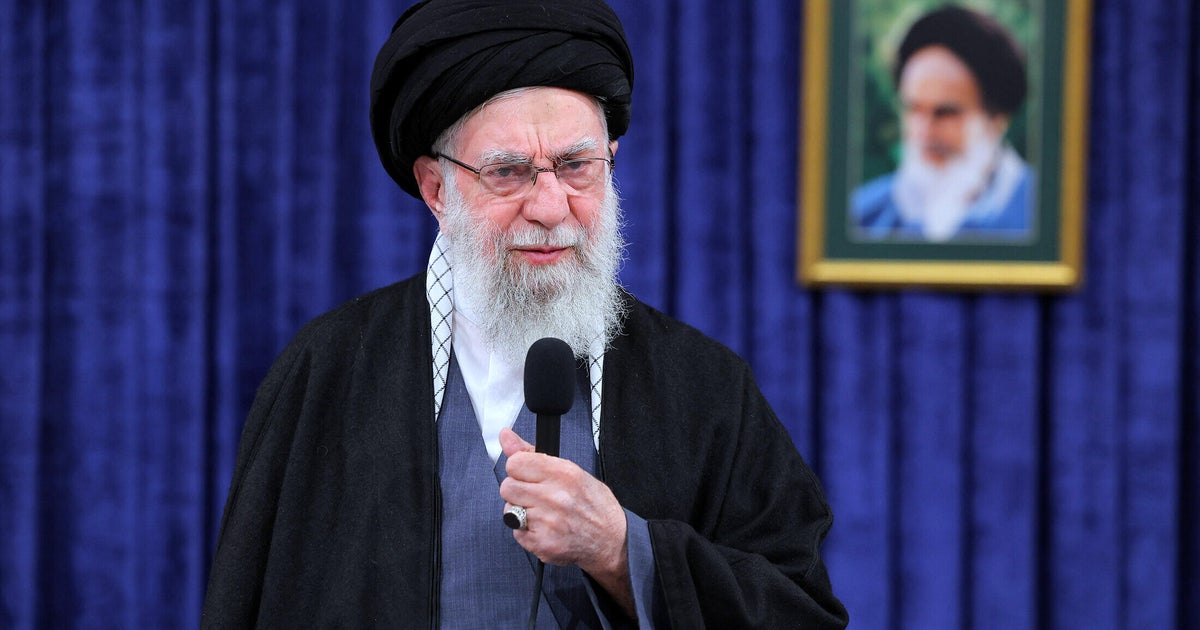
Ayatollah Ali Khamenei, who was 86 years old at the time of his death, had served as Iran’s supreme leader since 1989, taking over after the death of Ayatollah Ruhollah Khomeini, the leader of Iran’s 1979 Islamic Revolution. For more than three decades, Khamenei wielded unprecedented power in Iran, controlling all branches of government, commanding the military, and serving as the nation’s ultimate spiritual authority. Yet his position was more complicated than it appeared from the outside. While in theory he answered to no one but God, in practice he was constantly navigating between competing political factions within Iran’s complex power structure. His survival for so long at the top was largely due to his ability to maintain loyalty among these factions, particularly the powerful Islamic Revolutionary Guard Corps, even as he turned a blind eye to widespread corruption and abuse. Born in the northern city of Mashhad as the second of eight children, Khamenei received his education at various Islamic seminaries and studied under Ayatollah Khomeini himself as a young man. His rise through the ranks of the Islamic Revolution began in 1979, serving as deputy defense minister and later as Iran’s president for two terms between 1981 and 1989 before being selected as supreme leader by the Guardian Council.
Building and Maintaining a Network of Power
Unlike his charismatic predecessor, Khamenei lacked the same level of individual authority and religious credentials, so he compensated by building an extensive network of allies, cronies, and loyalists throughout Iran’s power structure. As Karim Sadjadpour wrote in his book “Reading Khamenei,” the supreme leader “handpicks the organization’s senior command and shuffles them regularly,” referring to his management of the Revolutionary Guard, which he helped transform into Iran’s most powerful political and economic institution. Khamenei was, according to experts, “a bit of a pragmatist” who understood that “for this system to survive, you need loyalty and you need loyalists.” This pragmatic approach extended to his handling of Iran’s controversial nuclear program. While he issued a religious fatwa in 2003 forbidding the production, stockpiling, or use of weapons of mass destruction—claiming such weapons were forbidden by Islam—he simultaneously gave implicit backing to the expansion of Iran’s nuclear capabilities. The country maintained that its nuclear program was solely for peaceful purposes, but Western intelligence agencies and leaders like Netanyahu remained unconvinced, with assessments suggesting Iran was positioning itself to produce nuclear weapons if it chose to do so, potentially within months to a year of making that decision.
Decades of Confrontation with the West
Khamenei’s worldview was shaped by his experiences during the era of Western, particularly British and American, influence over Iran’s oil resources. He never forgave the United States for the CIA-backed coup that toppled Iran’s democratic government in 1953 or for supporting the autocratic Shah Reza Pahlavi. His support for the students who held 52 Americans hostage for 444 days in 1979 set the tone for his relationship with the United States for the next four decades. Nearly three decades into his reign as supreme leader, he would declare America “the number one enemy of our nation.” When President Trump withdrew the United States from the international nuclear agreement in 2018 during his first term, Khamenei seized upon it as validation of his long-held position that Washington could never be trusted. His approach to negotiations was characteristically ambiguous—in 2014, regarding nuclear talks, he stated, “I am not optimistic about the negotiations, and they will lead nowhere. But I am not against them.” This kind of carefully hedged statement was typical of Khamenei’s public pronouncements, always leaving himself room to claim vindication regardless of the outcome. He never traveled outside Iran during his entire tenure as supreme leader and never granted interviews, maintaining an aura of mystery and remoteness that perhaps helped preserve his authority but also isolated him from global discourse.
A Leader Losing Touch with His People
Despite his careful management of internal power dynamics and his strategic maneuvering on the international stage, Khamenei increasingly lost legitimacy with the Iranian people themselves. As one expert noted, “The people’s sense of loyalty to the revolution and the Islamic ideology of the revolution declined significantly while Khamenei was leader. At the same time, the economic power of Iran declined significantly, so obviously he lost a massive amount of legitimacy with his people.” Rather than responding to growing domestic discontent with reforms or engagement, Khamenei chose repression. Young Iranians, frustrated with economic stagnation and social restrictions, took to the streets in 2019 and subsequent years carrying posters with the once unthinkable slogan: “Death to the supreme leader.” His response was to blame external forces—the United States and Israel—for Iran’s problems and to give tacit approval to security forces who violently suppressed protests, even killing demonstrators. Pictures released in 2014 showing Khamenei recovering from prostate surgery triggered constant speculation about his health and potential succession, but he clung to power for nearly twelve more years, remaining the “unflinching overlord of revolutionary ideals that were more and more out of step with a modernizing Iran.” The scenes of celebration in Tehran’s streets following news of his death suggest just how disconnected he had become from significant portions of the Iranian population, particularly younger generations who had known nothing but economic hardship and social repression under his rule. As Iran faces an uncertain future without the leader who dominated its political landscape for over three decades, the question of succession and whether the Islamic Republic itself can survive this moment remains unanswered.