
Texas Democratic Senate Primary: James Talarico’s Victory Marks New Chapter in State Politics
A Historic Win in an Unprecedented Primary Race
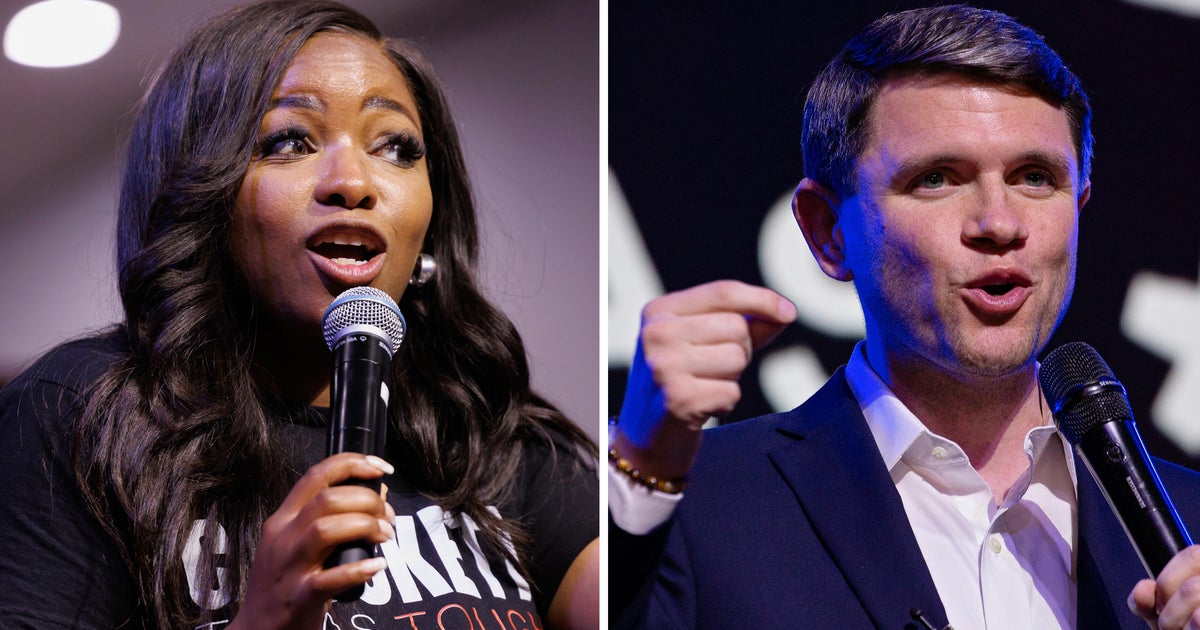
In what has already become the most expensive primary race in Texas history, State Representative James Talarico has emerged victorious in the Democratic Senate primary, according to CBS News projections. The former middle school teacher and Presbyterian minister-in-training defeated Representative Jasmine Crockett with enough votes to avoid a runoff, setting the stage for what promises to be one of the most closely watched Senate races in this year’s midterm elections. Talarico’s win represents a significant moment for Texas Democrats, who haven’t won a statewide race since 1994 but see an opportunity in the current political landscape. His campaign’s message of a “politics of love” and inclusivity resonated with Democratic voters across the Lone Star State, even as the party navigated deep internal divisions about the best path forward.
The primary race drew massive participation, with approximately 1.5 million votes cast during the 11-day early voting period alone—more than double the number from four years ago. This surge in voter engagement reflects both the high stakes of the race and the polarizing nature of the candidates’ contrasting approaches to politics. Talarico will now prepare to face either incumbent Republican Senator John Cornyn or conservative Attorney General Ken Paxton, who are headed to their own runoff on May 26. Democrats believe that the bruising and expensive GOP primary battle has left Republicans vulnerable in a state that has long been considered solidly red but has shown signs of shifting political dynamics in recent election cycles.
The Candidates: Two Visions for Texas Democrats
The Democratic primary represented more than just a contest between two candidates—it symbolized a fundamental disagreement about the best approach for Democrats to finally break their three-decade losing streak in Texas statewide races. Jasmine Crockett, a former public defender who gained national recognition for her confrontational approach toward President Trump and other Republicans, positioned herself as a fighter willing to take the gloves off. Her brand of politics appealed to the Democratic base that has grown frustrated with what they perceive as timidity from their party in the face of Republican dominance. Crockett’s supporters believed her combative style and willingness to make headlines would energize voters who are tired of losing and want someone who won’t back down from political battles.
In contrast, James Talarico offered a different vision rooted in his background as an educator and minister. His campaign consistently emphasized unity, compassion, and what he called a “politics of love”—a message that sought to appeal beyond the Democratic base to independent voters and even moderate Republicans disillusioned with their party’s direction. While both candidates agreed on most policy issues, the race ultimately came down to this clash of personalities and political philosophies. Both barnstormed across Texas with very different styles, and both ran combative advertisements against each other despite their policy similarities. The choice facing Democratic voters was essentially whether to fight fire with fire or to try a different approach that might broaden the party’s appeal in a state where demographic changes have made competitiveness possible but victory remains elusive.
The Road to the Primary: A Shifting Political Landscape
The path to this primary was anything but straightforward, shaped by political maneuvering, redistricting battles, and last-minute candidate shuffling that kept the race unpredictable until the very end. The contest gained additional complexity just months before voting began when the Republican-controlled state legislature, encouraged by President Trump, redrew Texas’s 38 House districts. This redistricting effort became a national story when Democratic legislators fled the state to deny Republicans the quorum needed to vote on the new maps, an effort that garnered nationwide attention and helped Democrats raise millions of dollars while putting an extra spotlight on the Senate race.
Several high-profile Democrats were rumored to be considering a Senate bid, including Beto O’Rourke, who came within three points of defeating Senator Ted Cruz in 2018 and gave Democrats hope that Texas might be winnable. Representatives Joaquin Castro and Colin Allred were also mentioned as potential candidates. Allred, who had challenged Cruz in 2024, actually jumped into the race in July, followed by Talarico in September. However, on the December filing deadline, Allred made the surprising decision to drop out of the Senate race, choosing instead to run in the newly redrawn House District 33. This opened the door for Crockett, whose Dallas-area district (the 30th) was one of those redrawn, to enter the Senate race. Her entry set up the direct showdown with Talarico that would define the primary’s final months. Interestingly, Republicans welcomed Crockett’s entry into the race, believing her more confrontational style would make her the more beatable candidate in a November general election—a calculation that ultimately proved irrelevant when Talarico won the primary.
The Colbert Controversy and Campaign Momentum
Talarico’s campaign received an unexpected boost in February when he became the center of a controversy involving CBS’s “The Late Show with Stephen Colbert.” The congressman was scheduled to appear on the popular late-night program, but the interview didn’t air on the CBS broadcast network due to new FCC guidance regarding political candidates. Colbert publicly criticized the decision not to air the interview and instead posted the full conversation on the show’s YouTube channel, which isn’t subject to the same FCC regulations. The controversy surrounding the censored interview generated exactly the kind of national attention that can transform a campaign’s fortunes.
In the 24 hours following the Colbert incident, Talarico’s campaign raised an astonishing $2.5 million—a fundraising haul that demonstrated both the power of national media attention and the enthusiasm of small-dollar donors who felt energized by the perceived unfairness of the situation. This fundraising surge gave Talarico additional resources to compete in the expensive Texas media markets and helped establish him as a candidate with genuine momentum. The incident also reinforced his campaign’s narrative about fighting against establishment forces and gave him a compelling story to tell supporters about overcoming obstacles. While it’s impossible to quantify exactly how much the Colbert controversy contributed to his eventual victory, there’s no question it came at a crucial moment in the campaign and helped Talarico reach voters who might not have otherwise paid attention to a Texas Democratic primary race.
Election Day Chaos and Allegations of Voter Suppression
The primary election itself faced significant disruptions that added drama and uncertainty to an already tense race. On Election Day, a judge in Dallas County—where Crockett enjoyed strong support as a local representative—ordered polling places to remain open for an extra two hours beyond the usual 7 p.m. Central Time closing. The extension was granted due to what the judge characterized as “mass confusion” over new precinct voting rules that had apparently made it difficult for some voters to cast their ballots. However, the Texas Supreme Court quickly intervened, staying the lower court’s decision and ordering that any ballots cast after the normal 7 p.m. deadline be separated from the rest. The ultimate fate of these late-arriving ballots remained unclear, and it was uncertain how many people had actually voted during the extended period.
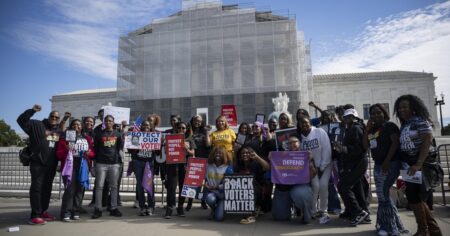
Crockett, who was leading in Dallas County by a substantial margin, told her supporters late Tuesday evening that she didn’t believe accurate election results could be determined that night due to the confusion and legal wrangling in Dallas. She went further, alleging that “this is what Republicans like to do,” specifically accusing them of targeting Dallas County—a heavily Democratic area with a large African American population. Her suggestion that Republican officials had deliberately created obstacles for Democratic voters in her stronghold reflected the deep mistrust and partisan tensions that characterize Texas politics. Talarico, while not declaring victory outright in his remarks to supporters gathered in Austin, said his campaign was “confident in this movement we’ve built together.” He also characterized the situation in Dallas as “voter suppression,” aligning himself with Crockett’s concerns even as his campaign appeared positioned to win despite any irregularities. The Election Day chaos served as a reminder of the ongoing battles over voting access that continue to shape American democracy, particularly in states like Texas where partisan control of election administration remains a contentious issue.
Looking Ahead: The General Election Challenge
With the primary now behind him, Talarico faces the monumental challenge that has defeated Texas Democrats for three decades: actually winning a statewide election. He’ll face either John Cornyn, a well-established incumbent with significant name recognition and fundraising capability, or Ken Paxton, the controversial but popular-with-the-base attorney general. The Republican runoff between these two has been characterized as both expensive and nasty, which Democrats hope has weakened whoever emerges as the nominee. The fact that Republicans are fighting among themselves while Democrats have (after a competitive but ultimately decisive primary) unified behind a single candidate gives Talarico’s team some cause for optimism.
However, the historical headwinds remain formidable. Texas hasn’t elected a Democrat to statewide office since 1994, and while Beto O’Rourke’s near-miss against Ted Cruz in 2018 suggested the state might be becoming competitive, subsequent races have shown that Texas remains a challenging environment for Democrats. Talarico’s message of unity and love will be tested against the harsh realities of a general election campaign in a conservative-leaning state. His ability to appeal to moderate voters and independents—the very people his campaign strategy was designed to reach—will be crucial. The coming months will reveal whether Texas Democrats have finally found the formula to break their losing streak, or whether 1994 will continue to mark the last time a Democrat won statewide office in the Lone Star State. What’s certain is that with record spending and national attention, this Senate race will be one of the most important contests of the midterm elections.