


Japan Deploys Its First Long-Range Missiles Amid Rising Regional Tensions
A Historic Shift in Japan’s Defense Strategy
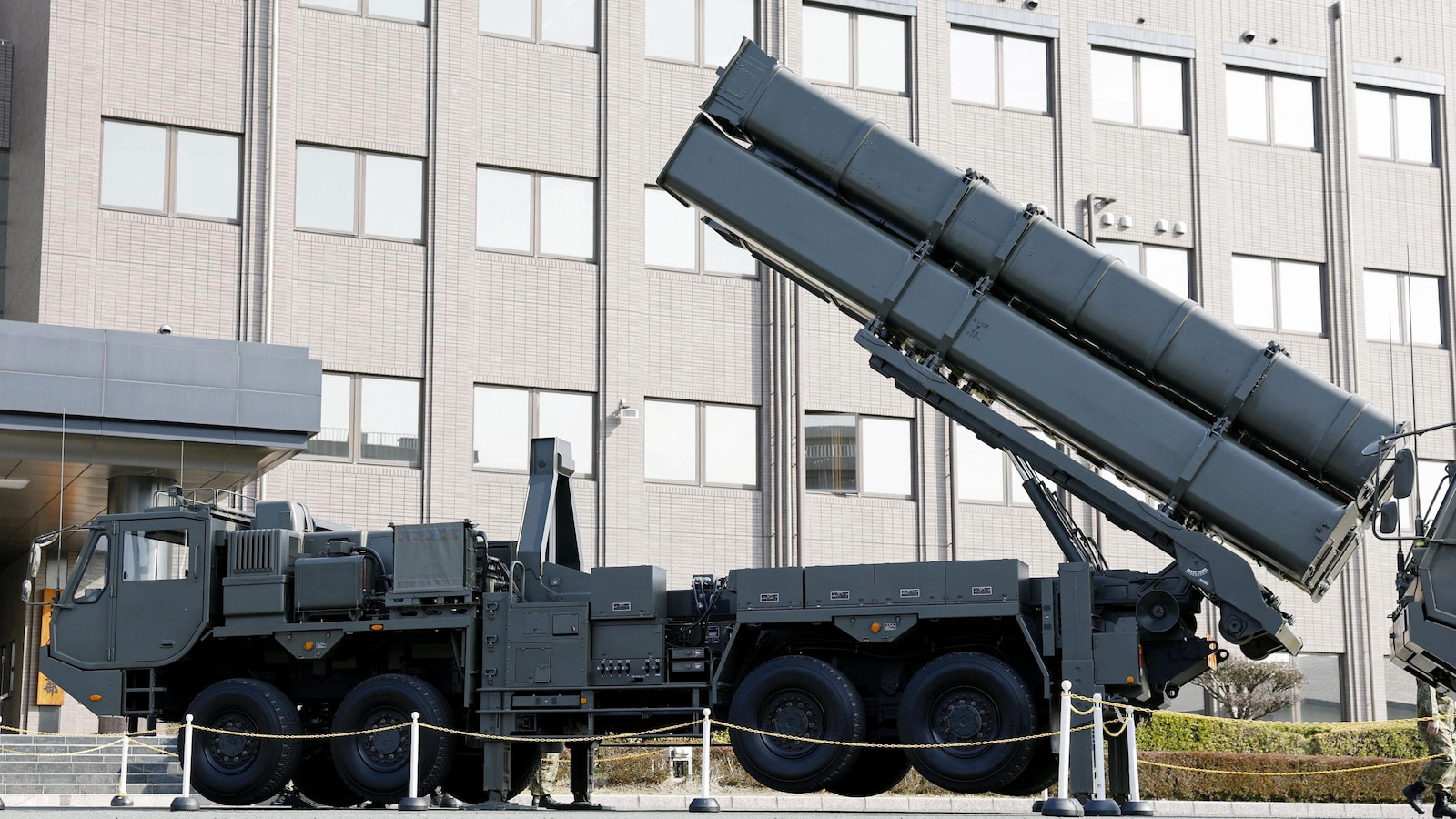
In a significant departure from its post-World War II pacifist stance, Japan has officially deployed its first long-range missile system, marking a pivotal moment in the nation’s defense policy. The upgraded Type-12 land-to-ship missiles became operational at Camp Kengun in Kumamoto prefecture, located in southwestern Japan. Developed and manufactured domestically by Mitsubishi Heavy Industries, these weapons represent more than just a technological advancement—they symbolize Japan’s evolving approach to national security in an increasingly uncertain regional environment. Defense Minister Shinjiro Koizumi emphasized the gravity of this decision during a press conference, stating that Japan currently faces “the most severe and complex security environment in the postwar era.” He described the deployment as an “extremely important capability to strengthen Japan’s deterrence and responsiveness,” adding that it demonstrates the nation’s “firm determination and capability to defend itself.” This deployment comes as Japan navigates a delicate balance between maintaining its pacifist constitutional principles and addressing what it perceives as growing security threats in the Asia-Pacific region.
Understanding the New Missile Capabilities and Strategic Implications
The technical specifications of the upgraded Type-12 missile represent a quantum leap in Japan’s offensive capabilities. With a range of approximately 1,000 kilometers (620 miles), these missiles can reach significantly farther than their predecessors, which had a maximum range of just 200 kilometers (125 miles). This five-fold increase in range is not merely an incremental improvement—it fundamentally changes the strategic calculus in the region, as the missiles now have sufficient reach to strike targets on mainland China. This capability introduces what military strategists call “standoff” capability, meaning Japan can now potentially strike enemy missile bases from a safe distance, without needing to position forces dangerously close to potential adversaries. This represents a clear break from the self-defense-only policy that Japan has maintained for decades under its pacifist constitution, which was adopted after World War II and has shaped the country’s military posture throughout the postwar period. The ability to strike first at enemy launch sites, even in a defensive context, marks a controversial shift that has sparked both domestic and international debate about Japan’s future role in regional security dynamics.
Expanding Arsenal: Hypersonic Weapons and Future Deployments
The deployment of long-range missiles is just one component of Japan’s broader military modernization effort. On the same day that the Type-12 missiles became operational in Kumamoto, Japan also deployed a hypersonic glide vehicle (HGV) at Camp Fuji in Shizuoka prefecture, west of Tokyo. This cutting-edge weapons system has been specifically designed for island defense, addressing concerns about Japan’s ability to protect its extensive archipelago, which includes numerous remote and strategically important islands. Hypersonic weapons travel at speeds exceeding five times the speed of sound, making them extremely difficult to detect and intercept with current defense systems. The Japanese government has ambitious plans for expanding these capabilities across the country, with additional deployments of both upgraded Type-12 missiles and hypersonic glide vehicles scheduled for various locations by March 2028. These sites include Hokkaido in the northern reaches of Japan and Miyazaki in the south, creating a comprehensive defense network that spans the entire nation. Furthermore, Japan plans to integrate American-made Tomahawk cruise missiles with even greater range—approximately 1,600 kilometers (990 miles)—onto Japanese destroyer JS Chokai later this year, with eventual deployment planned for seven other destroyers in the fleet. This combination of domestically-produced and American-supplied weapons systems creates a layered defense architecture designed to address multiple threat scenarios.
Local Opposition and the Human Cost of Military Expansion
Not everyone in Japan welcomes these military developments. At Camp Kengun in Kumamoto, where the Type-12 missiles were deployed, local residents staged protests outside the military facility, voicing strong opposition to having such powerful weapons stationed near residential areas. Their concerns are both practical and philosophical. From a safety perspective, protesters worry that the presence of these offensive weapons transforms their community into a potential target for adversaries who might seek to neutralize Japan’s strike capability in any future conflict. This fear is not unfounded—military installations housing offensive weapons systems typically rank high on enemy target lists during wartime planning. Beyond immediate safety concerns, many protesters also object on principle to what they see as an abandonment of Japan’s pacifist ideals. For generations, many Japanese citizens have taken pride in their nation’s post-war constitution, which renounced war as a means of settling international disputes. The deployment of long-range strike weapons capable of hitting targets in neighboring countries represents, to these critics, a dangerous erosion of these principles. They argue that such military expansion could escalate regional tensions rather than enhance security, potentially triggering an arms race that makes conflict more rather than less likely. These local protests reflect a broader national conversation about Japan’s identity and its role in the world—a debate that touches on fundamental questions about whether increased military capability truly enhances security or simply increases risk.
The China Factor: Regional Tensions and Strategic Concerns
While Japanese officials typically frame military modernization in terms of general security concerns, the reality is that these moves are largely driven by one specific factor: China’s growing military power and increasingly assertive behavior in the region. Japanese defense planners openly consider China their main regional security threat, a concern that has intensified in recent years as Beijing has expanded its military presence and activities near Japanese territory. Japan has responded by fortifying its southwestern islands near the East China Sea, transforming previously lightly-defended territory into a network of military installations designed to monitor and potentially counter Chinese activities. Prime Minister Sanae Takaichi’s Cabinet demonstrated the seriousness with which Japan views this challenge by approving a record defense budget in December that exceeds 9 trillion yen (approximately $58 billion) for the fiscal year beginning in April. This unprecedented spending plan aims to develop robust strike-back capabilities and strengthen coastal defense through cruise missiles and unmanned weapons systems. Specific incidents have fueled Japanese concerns about Chinese intentions. In June of last year, Japan detected two Chinese aircraft carriers operating almost simultaneously near Japanese remote islands in the Pacific—a first that sparked significant alarm in Tokyo about Beijing’s military activities extending far beyond China’s immediate borders. The Japanese Defense Ministry took the unusual step of establishing a dedicated office specifically to study and monitor Chinese activity in the Pacific, reflecting the priority Tokyo places on understanding and countering China’s military expansion. Tensions escalated further when Prime Minister Takaichi stated in November that any Chinese military action against Taiwan could serve as grounds for a Japanese military response—a remarkably explicit position that signals just how closely Japan views its security interests as being tied to Taiwan’s status.
Looking Forward: Japan’s Evolving Role in Asian Security
Japan’s deployment of long-range missiles and other advanced weapons systems represents more than a simple military upgrade—it signals a fundamental transformation in how this nation of 125 million people conceives of its role in Asian security and its relationship with the international order. For over seven decades, Japan’s pacifist constitution and self-defense-only military posture made it a unique major power, one that relied heavily on its alliance with the United States while forgoing the offensive military capabilities possessed by other nations of comparable economic and technological sophistication. That era appears to be ending. The Japan that is emerging possesses not just the ability to defend its territory from attack, but the capability to strike preemptively at threats before they materialize—a qualitatively different strategic posture. This shift reflects a calculation by Japanese leaders that the regional security environment has deteriorated to the point where traditional approaches no longer suffice. Whether this assessment is accurate, and whether Japan’s military expansion will achieve its stated goal of enhancing deterrence and reducing conflict risk, remains to be seen. Critics argue that arms buildups tend to create security dilemmas in which each nation’s attempt to enhance its security makes neighbors feel less secure, prompting countermeasures that leave everyone worse off. Supporters contend that in the face of an increasingly powerful and assertive China, Japan has little choice but to strengthen its defenses and demonstrate resolve. What seems certain is that the Asia-Pacific region is entering a new and more uncertain phase, one in which Japan will play a significantly more assertive military role than at any time since 1945. The long-term consequences of this shift—for regional stability, for Japan’s relationships with neighbors, and for the broader international order—will likely unfold over decades. For now, the deployment of those first long-range missiles in Kumamoto represents a historic turning point, one that future historians may well view as marking the end of the postwar era in Japanese security policy and the beginning of something entirely new.