

JD Vance’s Support for Viktor Orbán Sparks International Controversy
The Vice President’s Hungarian Mission
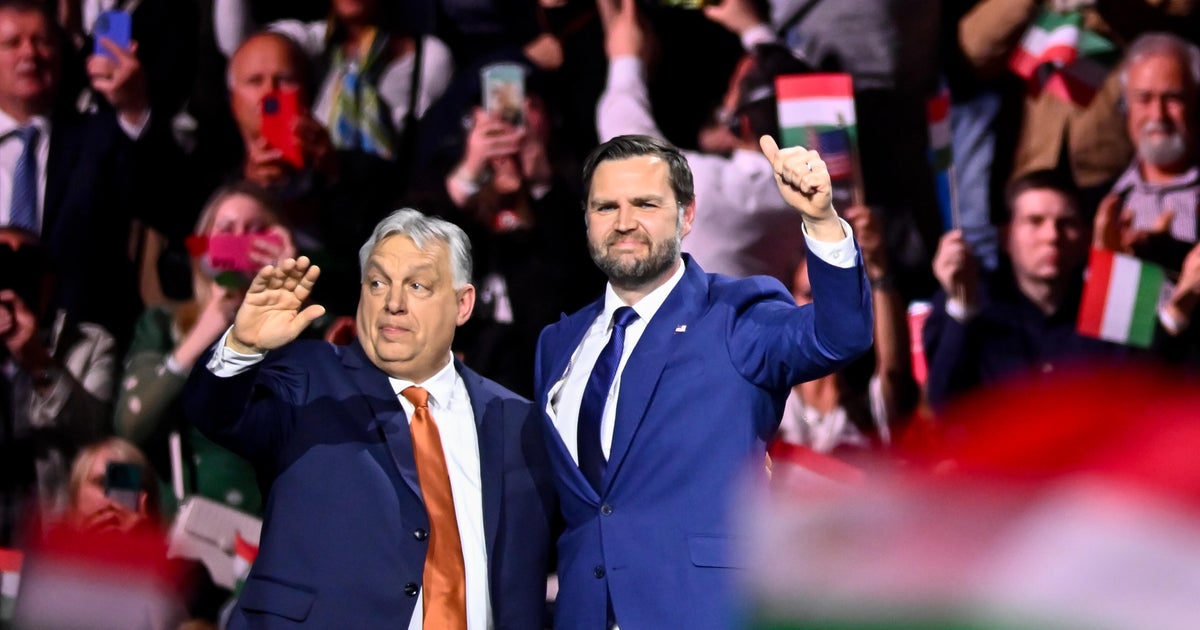
Vice President JD Vance has found himself at the center of an international political storm following his visit to Budapest, where he openly campaigned for Hungarian Prime Minister Viktor Orbán ahead of critical elections scheduled for April 12. During his trip, Vance made no attempt to hide his intentions, boldly stating that he was there “to help” Orbán secure his fifth consecutive term in office. Speaking to thousands of supporters in Budapest on Tuesday, Vance directly urged the crowd that “we have got to get Viktor Orbán reelected as prime minister of Hungary.” The visit represents an unprecedented level of American political intervention in a European democratic election, with the sitting U.S. Vice President actively working to influence the outcome of another nation’s vote. President Trump himself joined the rally via speakerphone, telling the enthusiastic crowd, “I love Hungary and I love that Viktor,” further demonstrating the Trump administration’s commitment to supporting Orbán’s government despite growing international concerns about the state of Hungarian democracy.
Accusations of Foreign Interference and the EU Funding Dispute
When confronted with the apparent contradiction of an American official interfering in a foreign election while Republicans have long complained about foreign meddling in U.S. elections, Vance offered a defense that attempted to shift blame to the European Union. He acknowledged the irony that he had been accused of foreign influence by coming to Hungary to support Orbán, but then turned the conversation toward EU-Hungary relations. “That’s foreign influence. But what’s not foreign influence is when the European Union threatens billions of dollars withheld from Hungary because you guys protect your borders. That’s apparently not foreign influence,” Vance argued. His comments reference the ongoing dispute between Hungary and the European Union over EU funds that have been withheld due to concerns about the rule of law in Hungary and the country’s failure to meet certain democratic standards. Vance characterized this financial pressure as the real foreign interference, suggesting that the EU was attempting to manipulate Hungarian voters by punishing the country economically for policies the bloc disapproves of, particularly regarding immigration and border control. “I find it darkly ironic that people are accusing me of engaging in some kind of foreign influence. All that we’re saying is that Viktor Orbán, he does a good job,” the vice president added, framing his involvement as simply expressing an opinion rather than active electoral interference.
Hungary’s Democratic Decline and Election Outlook
The context for Vance’s visit makes his intervention even more controversial. Hungary, once considered a promising young democracy after the fall of communism, has steadily backslid under Orbán’s leadership. Freedom House, a respected democracy-oriented nonprofit organization based in the United States, now designates Hungary as only “partly free,” a significant downgrade that reflects serious concerns about the health of Hungarian democracy. The organization specifically cites problems with elections that are not fully free and fair, as well as the systematic stifling of independent institutions that should serve as checks on government power. These aren’t just abstract concerns—Orbán’s government has been accused of manipulating electoral systems, controlling media outlets, undermining judicial independence, and suppressing civil society organizations that challenge his authority. Despite these democratic deficiencies, or perhaps because of them, Orbán has cultivated a strong relationship with conservative Republicans in the United States, positioning himself as a champion of traditional values against liberal European elites. This relationship has paid political dividends, as evidenced by Vance’s appearance, but it comes at a time when Orbán faces his toughest electoral challenge yet. According to the Associated Press, most independent polls show Orbán and his Fidesz party running a double-digit deficit behind his main opponent, Péter Magyar, among decided voters—a remarkable turnaround in a country where Orbán has dominated politics for over a decade.
Vance’s Vision of Western Civilization Under Threat
During his appearances in Budapest, Vance offered a sweeping ideological justification for his support of Orbán that went far beyond simple diplomatic friendship. He portrayed Hungary under Orbán’s leadership as nothing less than a beacon of Western civilization standing against the twin threats of rampant immigration and liberalism. “I’m here because of the moral cooperation between our two countries,” Vance explained. “Because what the United States and Hungary together represent under Viktor’s leadership and under President Trump’s is the defense of Western civilization. The defense of the idea that children should be able to go to school and get educated and not indoctrinated.” This framing is significant because it positions the Trump-Vance administration explicitly alongside Orbán’s self-described “illiberal democracy”—a model that embraces nationalist, traditionalist values while rejecting certain liberal democratic norms around pluralism, independent institutions, and minority rights. Vance continued by describing this shared mission as defending “the idea that European and American families should be able to transport themselves and be able to afford to heat and cool their homes” and “the idea that we are founded on a certain Christian civilization and Christian values that animate everything from freedom of speech to rule of law to respect for minority rights and protection of the vulnerable.” The speech painted a picture of Hungary and the United States as natural allies in a civilizational struggle, united by Christian values and traditional ways of life against unnamed but clearly implied enemies—liberal elites, uncontrolled immigration, and secularism.
Challenging European Union Authority
A central theme of Vance’s message was hostility toward the European Union and encouragement for Hungarian voters to resist what he characterized as Brussels bureaucrats attempting to dictate terms to sovereign nations. Vance called on Hungarian voters to “stand against the bureaucrats in Brussels,” positioning the EU as an antidemocratic force that punishes countries like Hungary for pursuing independent policies. While acknowledging that he didn’t expect “the people of Hungary to listen to the vice president of the United States,” he said he wanted his presence to “send a signal to everybody,” particularly EU leaders, whom he accused of doing “everything that they can to hold down the people of Hungary, because they don’t like the leader, who has actually stood up for the people of Hungary.” This framing conveniently ignores the fact that Hungary is a voluntary member of the European Union and receives substantial benefits from that membership, including access to the single market and significant financial transfers. The EU’s concerns about the rule of law in Hungary aren’t arbitrary but stem from specific commitments Hungary made when joining the union. Vance’s rhetoric also glosses over Hungary’s deepening alliance with Russia under Orbán—a relationship that has troubled both EU members and NATO allies, particularly since Russia’s invasion of Ukraine. In his closing remarks, Vance asked the crowd a series of rhetorical questions: “Will you stand for sovereignty and democracy? Will you stand for Western civilization? Will you stand for freedom, for truth and for the God of our fathers?” He then urged them: “Then my friends, go to the polls in the weekend, stand with Viktor Orbán because he stands for you and he stands for all these things.”
European Union Response and Diplomatic Fallout
The European Union was quick to push back against Vance’s characterizations and his unprecedented intervention in a member state’s election. European Commission spokesperson Thomas Regnier told CBS News in no uncertain terms that “in Europe, elections are the sole choice of citizens,” a pointed rebuke to the American Vice President’s campaign appearance. Regnier went on to praise recent EU initiatives designed to protect democratic processes, including the Digital Services Act, which requires online platforms “to mitigate risks to protect our democracies.” Taking aim at American tech companies’ influence on political discourse, he pointedly added: “In Europe, elections are not the choice of Big Tech and their algorithms.” This was a clear shot at the influence of American social media platforms and their algorithms in shaping political debates—an interesting counter to Vance’s accusations of EU interference. When it came to the diplomatic implications of Vance’s visit and remarks, the EU’s foreign policy spokesperson, Anitta Hipper, indicated that formal concerns would be conveyed to American counterparts. She told reporters that the EU has “our diplomatic channels and we will be using these also to convey our concerns to our U.S. counterparts.” However, when pressed for details about what those concerns specifically were, she declined to elaborate, saying the EU was “not in the business of disclosing what we talk about with our partners.” This diplomatic language suggested that behind-the-scenes conversations would address the breach of protocol represented by Vance’s active campaigning in a European election. The episode has created an awkward situation for transatlantic relations at a time when the EU and United States need to coordinate on numerous global challenges, from trade to security to climate change. It also highlights the Trump administration’s willingness to prioritize ideological alliances with right-wing leaders over traditional diplomatic norms and relationships with democratic institutions.