
Remembering Rev. Jesse Jackson: A Champion of Civil Rights and Political Transformation
A Role Model Who Changed American Politics Forever
The passing of Rev. Jesse Jackson at age 84 has left America mourning one of its most influential civil rights leaders and political trailblazers. Marc Morial, president of the National Urban League, captured the sentiment of many when he described Jackson as “a role model for a generation.” Jackson’s impact extended far beyond his own accomplishments, inspiring countless individuals who entered public service in the decades following his groundbreaking presidential campaigns. His historic runs for the Democratic nomination in 1984 and 1988 weren’t just about winning votes—they were about fundamentally transforming who could participate in American democracy and how political campaigns could bring together diverse coalitions of people who had been systematically excluded from the political process.
Jackson’s approach to politics was revolutionary for its time. He didn’t just want to win elections; he wanted to register voters who had never been part of the system, to give voice to those who had been silenced, and to build bridges across racial and economic divides. His vision of a multi-racial American democracy became central to his campaigns and helped reshape the Democratic Party itself. Morial noted that Jackson “paved the way for both Bill Clinton and Barack Obama” by changing how Democratic candidates were nominated and by expanding the Democratic National Committee to include more diverse voices in the party’s decision-making process. This wasn’t just political strategy—it was a moral mission to make American democracy live up to its promise of equal participation for all.
A Personal Legacy of Never Giving Up
While the world saw Jackson as a towering political figure, his son, Representative Jonathan Jackson, shared a more intimate portrait of his father in the final moments. Describing the peaceful atmosphere as family gathered around Jackson’s bedside, the younger Jackson painted a picture of a man surrounded by love—family members, close friends, and numerous ministers who came to pray and offer comfort. In those final hours, the public figure gave way to the private man, the father who had devoted himself not just to changing the world but to being present for his children.
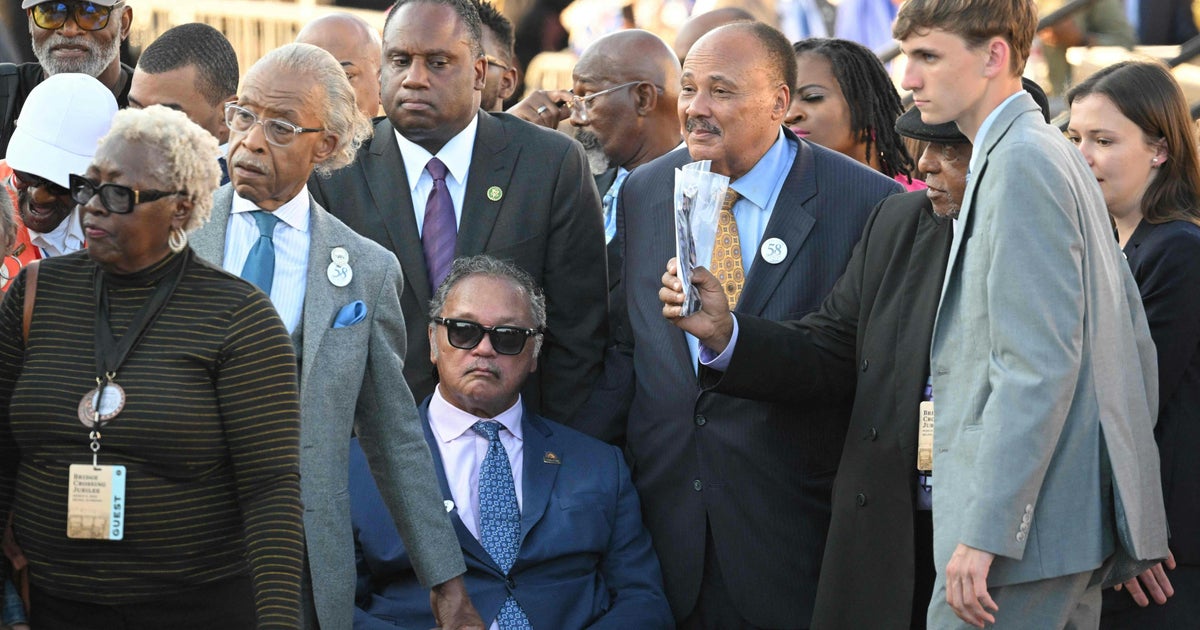
Rep. Jonathan Jackson’s words carried profound weight when he said, “Some people see a political figure, and I just know him as a person that never gave up on me.” This simple statement reveals the essence of Jesse Jackson’s character—his unwavering commitment extended from the national stage to his own home. The son’s advice to others, “never give up on your children,” reflected lessons learned from a father who embodied persistence and faith in human potential. This personal dimension of Jackson’s life reminds us that great leaders are also human beings who navigate the same relationships and responsibilities as everyone else, and that sometimes their greatest legacy is not in public achievements but in the values they instill in those closest to them.
From Martin Luther King’s Circle to National Leadership
Jesse Jackson’s journey as a civil rights leader began in the most transformative era of American social justice movements. As a young man in Dr. Martin Luther King Jr.’s inner circle, Jackson witnessed and participated in the struggle that would define a generation. He led the Southern Christian Leadership Conference’s Chicago chapter and spearheaded Operation Breadbasket, a community empowerment campaign that had King’s blessing and support. This program focused on economic justice, using boycotts and negotiations to create jobs and opportunities in Black communities—an early example of Jackson’s understanding that civil rights must include economic rights.
The most defining moment of Jackson’s early activism came in Memphis in 1968, when he was present at the Lorraine Motel during the assassination of Dr. King. This traumatic experience marked Jackson indelibly, and in many ways, he spent the rest of his life carrying forward the work that King had begun. Marc Morial described Jackson as “one of the final remaining links to the work of Dr. King,” noting that Jackson’s most important contribution was bringing “the ethos of civil rights into mainstream American politics.” Bernice King, Dr. King’s daughter and current CEO of the King Foundation, honored this connection by sharing a photo of Jackson and her father together, writing, “Both ancestors now…” Her tribute acknowledged the deep bonds between their families, “rooted in a shared commitment to justice and love.”
Breaking Barriers and Expanding Possibilities
Jackson’s presidential campaigns represented watershed moments in American political history. In 1984, he won 18% of the vote and became the first Black American to appear on the ballot in all 50 states—a seemingly simple achievement that required extraordinary effort and represented a massive expansion of what seemed possible in American politics. Four years later, his 1988 campaign showed even greater strength when he won the Michigan caucuses and briefly led the entire Democratic field. These weren’t symbolic gestures or token candidacies; they were serious political campaigns that forced the Democratic Party and the entire nation to reckon with questions about representation, inclusion, and who deserved a seat at the table of American power.
Jaime Harrison, former Democratic National Committee chair, shared how profound Jackson’s impact was on a generation of young people who had never seen someone like themselves in such a prominent political role. Harrison’s “first real political memory” was watching the 1988 Democratic National Convention with his grandfather, witnessing Jackson command a convention hall with more than a thousand delegates behind him. “Until that moment, I had never seen someone who looked like me command a convention hall,” Harrison wrote, capturing how Jackson’s presence expanded young people’s sense of what they might achieve. As Harrison noted, “Movements are not sustained only by victories. They are sustained by expansions of belief. Reverend Jackson expanded what felt possible—inside the Democratic Party and across the country.” This expansion of belief may be Jackson’s most enduring contribution to American politics.
A Mentor Who Made People Believe They Were Somebody
Rev. Al Sharpton’s tribute to Jackson highlighted another crucial aspect of his legacy—his role as a mentor who lifted others up and gave them the confidence to pursue their own paths to leadership. Sharpton, himself a prominent civil rights leader, acknowledged Jackson as his mentor and described him as “a consequential and transformative leader who changed this nation and the world.” But beyond Jackson’s impact on institutions and policies, Sharpton emphasized something more personal and perhaps more powerful: “He told us we were somebody and made us believe.” This simple statement captures Jackson’s gift for instilling dignity and self-worth in people who had been told by society that they didn’t matter.
Sharpton’s pledge to “keep hope alive”—echoing Jackson’s famous rallying cry—represents the passing of the torch from one generation of civil rights leadership to the next. Jackson didn’t just fight for justice himself; he deliberately cultivated the next generation of leaders, taking people like Sharpton “under his wing” and preparing them to continue the struggle. This multiplication of leadership ensures that Jackson’s work will continue long after his passing. House Minority Leader Hakeem Jeffries honored this aspect of Jackson’s legacy, describing him as a “legendary voice for the voiceless, powerful civil rights champion and trailblazer extraordinaire”—someone whose advocacy always centered those who had no platform of their own.
A Legacy of Justice, Love, and the Beloved Community
The tributes pouring in from across the political and religious spectrum testify to the breadth of Jackson’s impact. Sen. Raphael Warnock, who serves as senior pastor of Atlanta’s Ebenezer Baptist Church—Dr. King’s former congregation—described Jackson as “one of America’s great moral voices” whose “eloquence and rhythmic rhetoric” reminded the nation that “equal justice is not inevitable; it requires vigilance and commitment, and for freedom fighters, sacrifice.” Warnock’s description of Jackson’s work as “poetry and spiritual power in the public square” captures how Jackson brought the Black church tradition of prophetic preaching into the political arena, insisting that faith must be lived out in the pursuit of justice.
Bernice King’s tribute carried special weight, given her family’s long history with Jackson. She wrote of their “shared commitment to justice and love” and called on Americans to honor Jackson’s legacy “by widening opportunity, uplifting the vulnerable, and building the Beloved Community”—the vision of an inclusive, just society that her father had articulated and that Jackson spent his life working to realize. As America reflects on Jesse Jackson’s extraordinary life, his legacy challenges us to continue the unfinished work of building that Beloved Community. He showed that change is possible when people who have been locked out are brought in, when diverse coalitions are built on shared values rather than division, and when leaders remind everyone—especially those whom society has marginalized—that they are somebody, that their voices matter, and that together, they can bend the arc of history toward justice. In an era when many question whether such transformation is still possible, Jesse Jackson’s life stands as powerful testimony that dedication, courage, and an unwavering commitment to justice can indeed change the world.