
Speaker Johnson Criticizes Democratic Boycott of Trump’s State of the Union Address
A Matter of Respect and Tradition
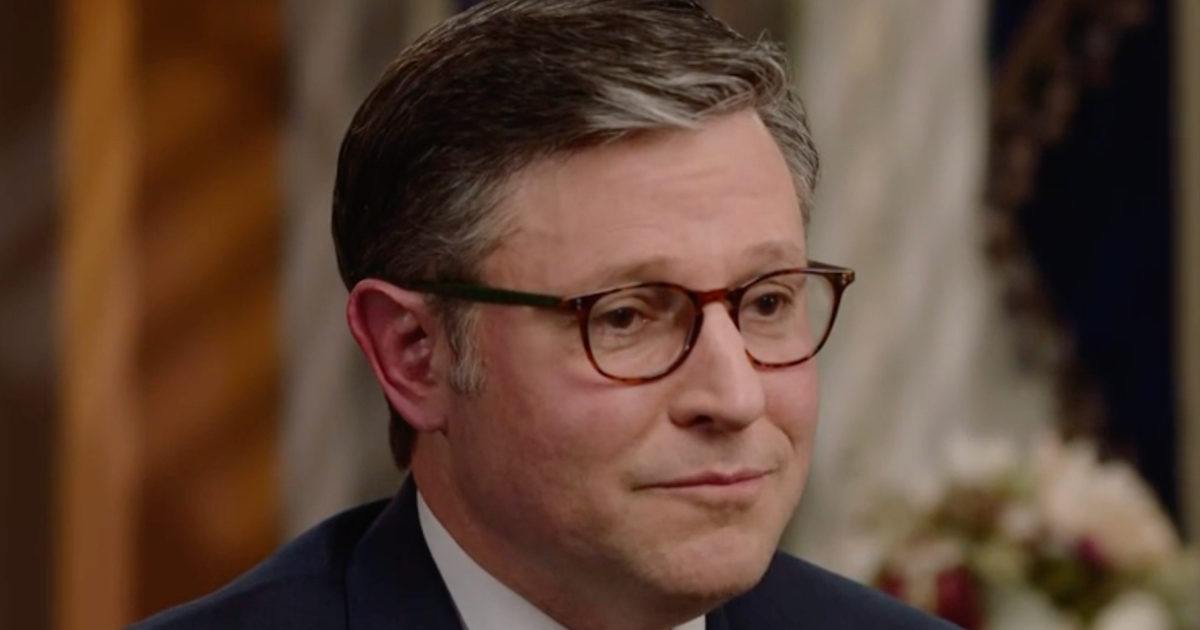
House Speaker Mike Johnson has voiced strong disapproval of Democratic lawmakers who plan to skip President Trump’s State of the Union address scheduled for Tuesday evening. In an exclusive interview with CBS Evening News anchor Tony Dokoupil, Johnson didn’t mince words, calling the planned boycott “detestable” and emphasizing that attending such events transcends partisan politics. According to Johnson, this isn’t about supporting or opposing any particular president—it’s about honoring the office itself, the institutions that uphold American democracy, and the long-standing traditions that bind the nation together. He pointed out that regardless of which party controls the White House, members of Congress have a responsibility to show up and demonstrate respect for the constitutional process. Johnson noted that Republican lawmakers have never engaged in such boycotts, even when Democrats held the presidency, suggesting that attending the State of the Union is a fundamental duty that comes with being an elected representative of the American people.
Democrats’ Reasoning and Alternative Plans
The boycott stems from guidance provided by House Minority Leader Hakeem Jeffries, who told his Democratic caucus members last week that they had options regarding their attendance at the president’s address. Jeffries framed the choice as either attending “with silent defiance” or staying away entirely “to send a message to Donald Trump in that fashion.” Dozens of Democratic lawmakers have opted for the latter approach, choosing to make their opposition known through absence rather than presence. Some of these legislators aren’t simply staying home, however—they’re planning to attend what’s being called the “People’s State of the Union,” an alternative event scheduled for the same time as the president’s speech at the National Mall. This counter-event will feature several prominent Democratic senators and representatives, including Senators Ed Markey of Massachusetts, Jeff Merkley of Oregon, Chris Murphy of Connecticut, Tina Smith of Minnesota, and Chris Van Hollen of Maryland, along with Representatives Pramila Jayapal of Washington, Becca Balint of Vermont, and Greg Casar of Texas. Other Democratic members are choosing to skip both events altogether, making their protest through complete disengagement from the evening’s official proceedings.
A History of Disruptions During State of the Union Addresses
While Johnson criticized the planned boycott as unprecedented behavior, the State of the Union address has not been entirely free from controversy and disruption in recent years, with members from both political parties contributing to tense moments during these traditionally formal occasions. Just last year, in 2024, former Republican Representative Marjorie Taylor Greene shouted “liar” at then-President Joe Biden during his address to Congress, creating an awkward and uncomfortable moment that broke with the decorum typically expected during such speeches. These incidents highlight the increasingly polarized atmosphere in American politics, where even ceremonial occasions that once served as moments of national unity have become flashpoints for partisan conflict. The tradition of maintaining respectful silence during the State of the Union, regardless of political disagreements with the president’s policies or positions, has gradually eroded as political divisions have deepened. This erosion of norms concerns many observers who worry about the long-term health of American democratic institutions when even basic courtesies and traditions can no longer be relied upon to bridge political divides.
Johnson’s Call for Unity and Decorum
Despite the challenges and the heated political environment, Speaker Johnson emphasized Tuesday that he has consistently encouraged his Republican colleagues to maintain proper decorum and uphold the dignity of the presidential office, regardless of who occupies it. At the weekly Republican conference meeting, Johnson urged his fellow party members to take inspiration from an unlikely source—the U.S. Olympic hockey teams that recently won gold medals in Milan. Both the men’s and women’s teams triumphed in their respective competitions, providing a source of national pride and a powerful metaphor for what Johnson hopes to see from his caucus. “We play for one team,” Johnson told CBS News, adding emphatically, “We’re all for America.” This sports analogy serves as Johnson’s attempt to remind lawmakers on both sides of the aisle that despite their policy disagreements and political battles, they ultimately serve the same country and the same constituents. The hockey teams’ victories demonstrated what Americans can achieve when they work together toward a common goal, setting aside individual egos and personal differences for the greater good—exactly the kind of spirit Johnson believes should prevail during the State of the Union address.
Special Guests and Symbolic Gestures
In a gesture that further emphasizes the unity theme Johnson is promoting, the men’s U.S. Olympic hockey team has been invited to attend Tuesday’s State of the Union address and has accepted the invitation. President Trump personally spoke with the team following their gold medal victory, and the invitation to attend this important national event serves as both recognition of their achievement and a symbolic representation of American excellence and teamwork. By featuring these athletes at the State of the Union, the administration and congressional leadership hope to create a moment that transcends partisan politics and celebrates something all Americans can rally behind—the success of their fellow citizens on the world stage. The presence of these champions at the address sends a message about national pride, collective achievement, and the importance of working together toward shared goals. It’s a visual and symbolic reminder that Americans can accomplish extraordinary things when they focus on what unites them rather than what divides them, a lesson that many hope the political class will take to heart as they navigate an increasingly fractured political landscape.
The Broader Implications for American Political Culture
The controversy surrounding this year’s State of the Union address reflects deeper concerns about the state of American political culture and the erosion of norms that once helped maintain a baseline of civility and cooperation in Washington. The fact that dozens of elected representatives feel compelled to boycott the president’s address—and that such a decision generates fierce debate about patriotism, respect, and institutional loyalty—speaks to how thoroughly partisan considerations now dominate even traditionally non-partisan moments in American civic life. Johnson’s characterization of the boycott as “sad” and “detestable” resonates with those who worry that the loss of these shared rituals and moments of national unity, however symbolic, weakens the fabric of American democracy. When lawmakers cannot even gather in the same room to hear their president speak, regardless of their feelings about his policies, it raises questions about whether the political system can continue to function effectively when basic courtesies and traditions are abandoned. The competing visions represented by the official State of the Union address and the alternative “People’s State of the Union” event illustrate how completely the American political landscape has fractured, with each side increasingly inhabiting separate realities and refusing to participate in shared national moments. Whether this represents a temporary aberration brought on by particularly intense political divisions or a permanent shift in how American democracy functions remains to be seen, but Speaker Johnson’s plea for unity and his invocation of the Olympic hockey teams’ collaborative success suggests a recognition that something important is being lost in the current environment of constant partisan warfare.