
Federal Judge Blocks California’s Mask Ban for Immigration Agents
Court Rules Against Discriminatory Law While Upholding Identification Requirements
A federal judge delivered a split decision on Monday regarding California’s groundbreaking attempt to regulate how immigration enforcement officers conduct their operations. While blocking a state law that would have banned federal immigration agents from covering their faces during operations, U.S. District Judge Christina Snyder upheld provisions requiring these officers to wear clear identification displaying their agency affiliation and badge numbers. The ruling represents a significant moment in the ongoing tension between state authorities and the federal government over immigration enforcement tactics, particularly as communities across California have witnessed increasingly aggressive ICE operations that have left residents frightened and uncertain about who exactly is conducting these raids.
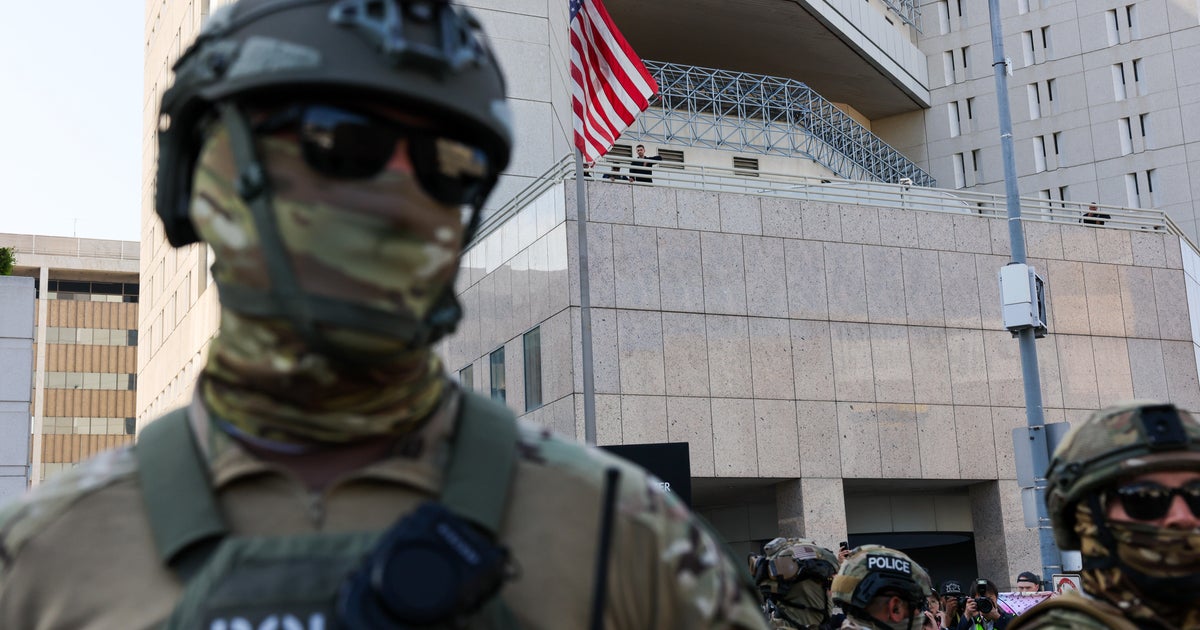
California had made history by becoming the first state to ban most law enforcement officers from wearing facial coverings, a measure signed into law by Governor Gavin Newsom in September 2024. The legislation came as a direct response to high-profile immigration raids conducted throughout Los Angeles during the summer months, where Immigration and Customs Enforcement officers were frequently observed wearing masks, balaclavas, and other face coverings that concealed their identities. These tactics sparked widespread concern among immigrant communities and civil rights advocates, who argued that masked federal agents created an atmosphere of terror and made it impossible to hold individual officers accountable for potential misconduct or civil rights violations during enforcement actions. The law was scheduled to take effect on January 1, 2025, but its implementation was immediately put on hold when the Trump administration filed a lawsuit in November challenging its constitutionality and arguing that it would endanger federal officers.
The Legal Battle: Federal Authority Versus State Oversight
The Trump administration’s legal challenge centered on several key arguments that ultimately proved partially successful in court. Federal attorneys contended that the mask ban would directly threaten the safety of immigration enforcement officers who they claim face escalating levels of harassment, doxing, and physical violence while performing their duties. The Department of Homeland Security provided evidence of what they described as a significant increase in assaults and threats against federal officers, though the exact nature and verification of these claims became a point of contention during court proceedings. Perhaps most compellingly from the federal government’s perspective, they argued that California’s law violated constitutional principles by attempting to directly regulate how the federal government conducts its operations, an arrangement that runs contrary to established principles of federalism and the supremacy of federal authority in matters of immigration enforcement.
During a hearing on January 14, Judge Snyder pressed the government’s attorney, Tiberius Davis, to explain precisely why prohibiting masks would interfere with federal law enforcement duties, especially given that officers rarely wore such facial coverings before 2025. Davis pointed to specific incidents to support his case, including a troubling event in Los Angeles where three women allegedly livestreamed while following an ICE agent to their home and subsequently posted the officer’s residential address on Instagram. “There is real deterrence on the officer’s safety and ability to perform their duties,” Davis argued, painting a picture of federal agents working in an increasingly hostile environment where concealing their identities had become a matter of personal safety rather than intimidation tactics. The federal government’s legal briefs also warned that allowing California’s legislation to stand could embolden other states to impose what they characterized as “similar unconstitutional restraints” on federal operations, potentially creating a patchwork of conflicting regulations across the country.
California’s Case: Public Safety and Accountability
California’s legal team, led by state Department of Justice attorney Cameron Bell, mounted a vigorous defense of the mask ban, arguing that the law served critical public interests in transparency and accountability. Bell challenged the federal government’s safety claims, asserting that there was no concrete evidence demonstrating that federal agents genuinely cannot perform their duties without facial coverings. More powerfully, he referenced sworn declarations from U.S. citizens who had been detained by masked federal agents and genuinely believed they were being kidnapped rather than lawfully arrested, a confusion that highlights the serious public safety concerns created when law enforcement officers operate without clearly visible identities. “It’s obvious why these laws are in the public interest,” Bell stated, emphasizing that communities have a legitimate need to know who is exercising government authority over them, particularly during enforcement actions that can be traumatic and life-altering for those involved.
The original legislation, proposed by California State Senator Scott Weiner, included several exemptions that ultimately proved to be its legal undoing. While the law banned masks, neck gaiters, and other facial coverings for most law enforcement officers, it carved out exceptions for state law enforcement authorities, undercover agents, protective equipment like N95 respirators or tactical gear, and situations where removing masks might jeopardize ongoing operations. Judge Snyder sided with the federal government’s argument that exempting state officers while targeting federal agents constituted discriminatory treatment that violated constitutional principles. However, in a notably significant portion of her ruling, Snyder wrote that “the Court finds that federal officers can perform their federal functions without wearing masks,” suggesting that a more evenly applied law might pass constitutional muster. This opening has provided California legislators with a clear roadmap for crafting revised legislation that could withstand legal scrutiny.
Moving Forward: Revised Legislation and Local Responses
Senator Weiner responded swiftly to Monday’s court decision, announcing his intention to immediately introduce new legislation that would include state police under the mask ban provisions, addressing the discriminatory concern that led Judge Snyder to block the original law. “ICE and Border Patrol are covering their faces to maximize their terror campaign and to insulate themselves from accountability,” Weiner stated in a news release, making clear his belief that facial coverings serve no legitimate law enforcement purpose but rather function as tools of intimidation. The revised legislation represents California’s determination to assert some degree of oversight over federal operations within its borders, even as it navigates the complex constitutional limitations on state authority over federal agents. The situation has become even more urgent as the Trump administration has dramatically escalated immigration enforcement operations across the country, with California communities bearing a particularly heavy burden of ICE and Border Patrol activity.
Beyond the statewide legislation, local jurisdictions have attempted to address these concerns through their own ordinances. Los Angeles County supervisors voted in December to enact a local mask ban for law enforcement that officially took effect on January 8, though its practical implementation remains uncertain. Both the Los Angeles County Sheriff’s Department and the Los Angeles Police Department have indicated they will not enforce these mask ban provisions until the courts provide final clarity on the statewide law, creating a temporary holding pattern where local regulations exist on paper but lack active enforcement. This cautious approach reflects the legal complexity surrounding these issues and the potential liability that local agencies might face if they attempt to enforce regulations that are ultimately deemed unconstitutional. Meanwhile, the identification requirement portion of California’s legislation—mandating clear display of agency affiliation and badge numbers—remains in effect following Judge Snyder’s decision to uphold those provisions, providing at least some measure of accountability and transparency even as the mask question remains unresolved until February 19, when the ruling officially takes effect and the legal landscape may shift once again.