
Trump’s East Wing Renovation: A Legal Battle Over Presidential Authority and Historic Preservation
Court Allows Construction to Proceed Despite Preservationist Concerns
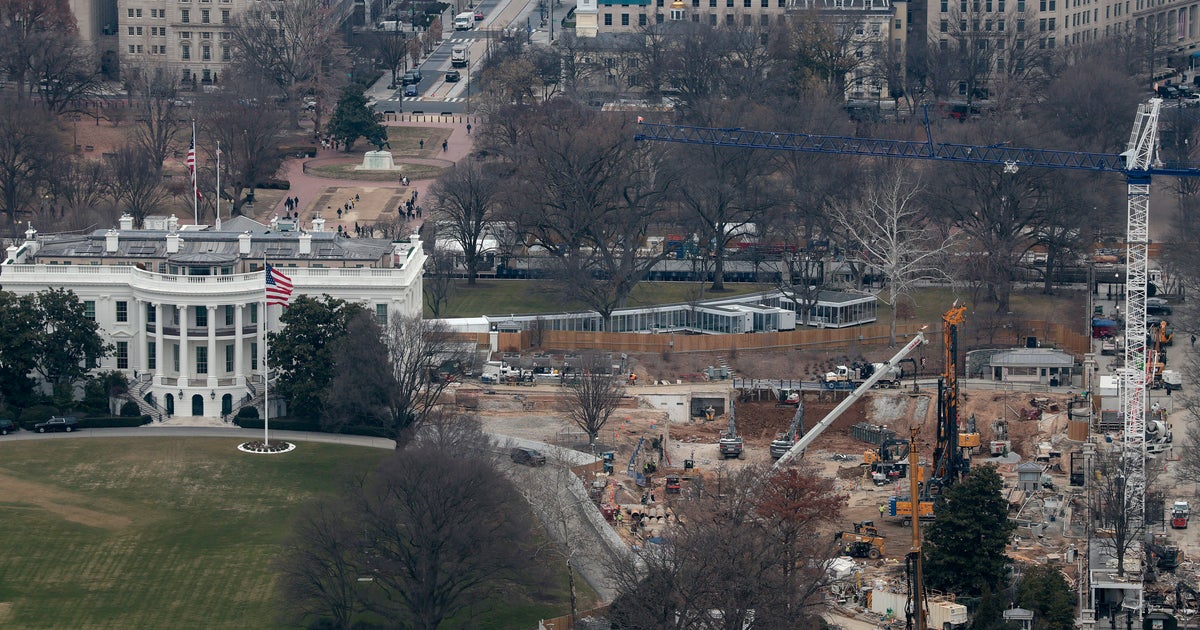
In a decision that highlights the complex intersection of presidential power, historic preservation, and government oversight, a federal judge has permitted the Trump administration to move forward with its controversial renovation of the White House East Wing. U.S. District Judge Richard Leon dismissed a legal challenge brought by the National Trust for Historic Preservation, though not on the merits of the case itself. Instead, Judge Leon found that the preservationist group’s lawsuit wasn’t properly structured to address the core legal questions at stake. The judge acknowledged that the case raises “novel and weighty issues” about presidential authority, but ruled that the plaintiffs would need to amend their complaint before he could meaningfully evaluate whether President Trump has the legal right to undertake such a massive renovation using private funds and without explicit Congressional approval. This decision allows construction to continue in the short term, though it leaves the door open for future legal challenges if the Trust decides to refile with a more targeted legal strategy.
The Technical Legal Issues Behind the Ruling
Judge Leon’s ruling turned on a somewhat technical legal point that has significant implications for how presidential actions can be challenged in court. The National Trust had based its lawsuit on what the judge called “a ragtag group of theories,” attempting to use the Administrative Procedures Act as one avenue to halt the construction. However, this federal law specifically governs how administrative agencies propose and implement regulations, and Judge Leon found that the White House Office of the Executive Residence doesn’t qualify as an agency under this statute. This determination essentially pulled the rug out from under one of the Trust’s main legal arguments. The judge noted with some frustration that both sides had initially focused their arguments on the constitutional authority of the president to demolish and rebuild portions of the White House, rather than addressing the more fundamental question of statutory authority—whether existing laws actually permit a president to undertake such construction without Congressional blessing and using privately raised funds. Leon made clear that if the Trust refines its legal approach and files an amended complaint that directly challenges the statutory basis for the project, he would be willing to reconsider the substantive issues the case raises about the limits of presidential power and the proper stewardship of America’s most iconic residence.
The Controversial $400 Million Funding Arrangement
One of the most eyebrow-raising aspects of this entire project is how it’s being financed. President Trump claims to have raised $400 million for the East Wing renovation from private donors and major corporations—a funding mechanism that has raised serious questions about potential conflicts of interest and the appropriate way to pay for work on the People’s House. According to court records, the money has come from corporate giants like Lockheed Martin, Amazon, and Microsoft, all of which have substantial business interests before the federal government and could potentially benefit from currying favor with the administration. The financial arrangement itself follows a convoluted path: funds were collected by a nonprofit organization, then transferred to the National Park Service, and finally deposited into an account controlled by the president that is typically used only for minor White House repairs and routine maintenance—not major construction projects costing hundreds of millions of dollars. At a hearing in January, Judge Leon himself characterized this financial structure as a “Rube Goldberg” arrangement, invoking the famous cartoonist known for designing absurdly complicated machines to accomplish simple tasks. This colorful comparison from the bench suggests that even the judge found the funding mechanism unnecessarily complex and potentially problematic, even if he wasn’t prepared to rule it illegal based on the specific legal arguments presented to him.
Fast-Tracked Approval From Presidential Appointees
Adding another layer of controversy to the project, the approval process has been notably rushed and conducted by oversight boards whose membership was dramatically reshaped by the president himself. On February 19th, the Commission of Fine Arts—a body that advises the federal government on architecture and artistic matters in Washington, D.C.—voted to give final approval to Trump’s East Wing overhaul. What made this approval particularly striking was that every single member of the commission had been appointed by President Trump after he fired the previous board in October, just months before this crucial vote. The commission’s secretary, Thomas Luebke, acknowledged that public comments on the project were “overwhelmingly in opposition,” with architectural experts and concerned citizens alike criticizing the design as too large and objecting to the White House’s decision to circumvent the typical, more deliberative approval process. Despite this substantial public opposition and expert criticism, the Trump-appointed commission unanimously approved the project in a fast-tracked decision. The National Capital Planning Commission—another oversight board that has similarly been stacked with the president’s allies—was expected to render its verdict on the East Wing renovation in early March, raising questions about whether any meaningful independent oversight of this project exists at all.
Broader Questions About Presidential Power and Accountability
This legal battle over the East Wing renovation touches on fundamental questions about the scope of presidential authority and the mechanisms available to check potential overreach. The White House is unlike any other building in America—it simultaneously serves as the president’s home, the headquarters of the executive branch, and a powerful symbol of American democracy that belongs to all citizens. When a president wants to make major changes to this iconic structure, what legal constraints apply? Can a sitting president simply raise money from wealthy donors and corporations with business before the government and use those funds to remake the building as he sees fit? Or does Congress need to authorize such work, providing a check on presidential power and ensuring public accountability for changes to public property? These are the “novel and weighty issues” that Judge Leon acknowledged but declined to address based on how the current lawsuit was structured. The case also raises questions about what happens when the normal oversight mechanisms—boards and commissions designed to provide independent expert judgment—are populated entirely with presidential appointees who may feel beholden to the person who gave them their positions. When the president can fire existing board members and replace them with his own choices right before they vote on his pet project, does that oversight have any real meaning?
What Comes Next for the East Wing and the Legal Challenge
As things stand, construction on the East Wing will continue while these legal and procedural questions remain unresolved. The National Trust for Historic Preservation now faces a choice: accept Judge Leon’s ruling and allow the project to proceed unchallenged, or take the judge’s invitation to file an amended complaint that more directly addresses the statutory authority question. If they choose the latter route, the legal battle could continue for months or even years, though construction would likely proceed in the meantime unless the Trust successfully argues for an injunction. Meanwhile, the project itself moves forward with approval from oversight boards whose independence has been seriously compromised. The situation illustrates a broader challenge in our constitutional system—what happens when normal checks and balances break down, when oversight bodies are captured by the very people they’re supposed to oversee, and when legal challenges struggle to find the right framework to address genuinely novel situations? The East Wing renovation may seem like a relatively narrow issue about one building project, but it actually serves as a test case for much larger questions about presidential accountability, the proper use of privately raised funds for public purposes, and whether our existing legal frameworks are adequate to address situations the framers of our Constitution could never have imagined. Whatever ultimately happens with this project, the precedent it sets could have implications far beyond the White House grounds.