
Justice Department’s Sudden Reversal: The Battle Over Trump’s Law Firm Sanctions
A Dramatic Change of Course
In a stunning turn of events that has left legal experts and the targeted law firms reeling, the U.S. Justice Department has reversed its position on defending President Trump’s controversial executive orders targeting four prominent law firms. Just hours after announcing it would drop its appeals of lower-court rulings that struck down these directives as unconstitutional, the department made an abrupt about-face on Tuesday. Government lawyers filed a motion with the U.S. Court of Appeals in Washington, D.C., seeking to withdraw their previous request to voluntarily dismiss the appeals, insisting it remains their “prerogative” to continue fighting for the executive orders despite overwhelming opposition from the affected firms and unfavorable court rulings at the trial level.
The whiplash-inducing reversal has drawn sharp criticism from the law firms caught in the crosshairs. Susman Godfrey, one of the four firms targeted by Trump’s executive orders, issued a pointed statement highlighting the administration’s inconsistency: “Yesterday evening, the Administration told the Court that it gave up and wouldn’t even try to defend its unconstitutional executive orders. Today, it reversed course.” The firm emphasized its unwavering commitment to defending itself and upholding the rule of law, regardless of the government’s shifting strategies. The sudden change in direction occurred less than a day after Associate Attorney General Stanley Woodward, a senior Justice Department official, had signed the motion to end the appeals, suggesting either significant internal disagreement within the department or external pressure that prompted the reversal.
The Executive Orders and Their Targets
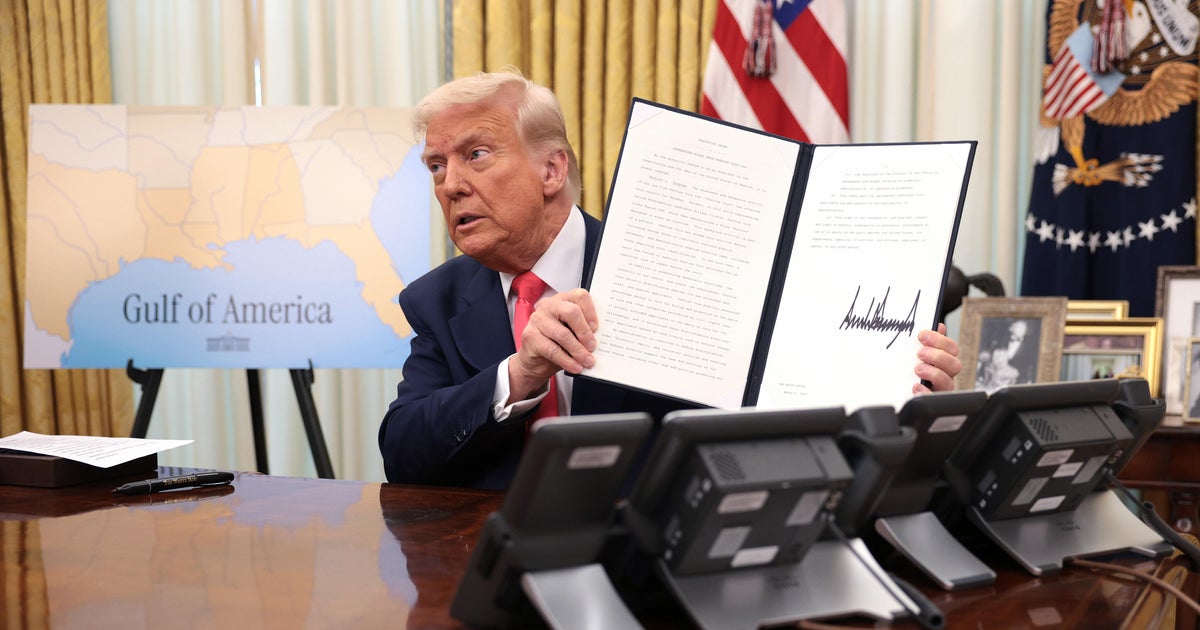
The controversy stems from executive orders issued by President Trump during his second term, specifically targeting four law firms: Perkins Coie, WilmerHale, Jenner & Block, and Susman Godfrey. These unprecedented directives sought to impose harsh sanctions on the firms based on lawyers they had hired and cases they had handled—cases and personnel decisions that had apparently drawn the president’s ire. The punitive measures outlined in the executive orders were sweeping and severe: they threatened to harm the firms’ clients who held government contracts, restricted the firms’ access to federal buildings and officials, and attempted to suspend security clearances held by their employees. These sanctions represented an extraordinary use of executive power to punish private law firms for their professional activities and hiring decisions.
The reasons these particular firms found themselves in the administration’s crosshairs reveal much about the motivations behind the executive orders. Two of the targeted firms, WilmerHale and Jenner & Block, had hired attorneys who worked on former Special Counsel Robert Mueller’s investigation into Russian interference in the 2016 election—including Mueller himself. Susman Godfrey had represented Dominion Voting Systems in its high-profile defamation lawsuit against Fox News, which arose from the network’s broadcasting of baseless allegations about voting fraud in the 2020 election and resulted in a $787 million settlement. Perkins Coie had represented Hillary Clinton during the 2016 presidential campaign when she ran against Trump and had also hired a research firm that retained Christopher Steele, the former British intelligence officer who compiled the controversial “Steele Dossier.” In essence, each firm had been involved in legal matters or employment decisions that the Trump administration viewed as adversarial to the president’s interests.
The Courts Strike Back
All four law firms challenged the executive orders in federal court, and their legal battles proved remarkably successful. Four different federal judges presided over these cases at the trial-court level, and all four ruled overwhelmingly in favor of the law firms, delivering a comprehensive rebuke to the Trump administration’s actions. These judges found that the executive orders violated multiple constitutional protections, including the First Amendment’s guarantee of free speech, the Fourth Amendment’s protection against unreasonable searches and seizures, and the Sixth Amendment’s right to counsel. The unanimity and strength of these rulings sent a clear message that the judicial branch viewed the president’s attempt to punish law firms for their professional activities as fundamentally incompatible with constitutional principles.
The sweeping nature of the judicial victories raised questions about why the Justice Department would initially move to abandon its appeals, only to reverse course hours later. With written arguments in the ongoing appeals due in the coming days, the government faced the challenge of defending executive orders that had been thoroughly dismantled by multiple federal judges. The appeals court had not yet approved the government’s initial motion to dismiss the cases when the reversal occurred, leaving the legal proceedings in an unusual state of uncertainty. The affected law firms have made clear their opposition to the government’s attempted withdrawal and subsequent reversal, characterizing it as an “unexplained about-face” in court filings—a description that captures the confusion and frustration surrounding the Justice Department’s erratic handling of these cases.
The Broader Context of Political Retribution
These executive orders did not exist in isolation but were part of a broader pattern of actions taken during the early months of Trump’s second term aimed at punishing perceived political enemies. The administration’s approach created a two-tiered system: firms that had engaged in activities the president viewed as hostile faced punitive executive orders, while those willing to make amends could negotiate their way out of trouble. This dynamic was exemplified by Paul, Weiss, a fifth firm that was initially targeted but managed to have its executive order rescinded after reaching an agreement with the White House to provide $40 million in pro bono legal work for causes supported by the administration. Similarly, nine other law firms avoided executive orders altogether by entering into agreements that pledged hundreds of millions of dollars in free legal services for Trump administration-backed initiatives.
This transactional approach to what should have been neutral enforcement of executive authority raised serious concerns about the politicization of government power and the rule of law. By creating a system where law firms could essentially buy their way out of presidential sanctions by supporting administration priorities, the White House blurred the lines between legitimate executive action and what critics characterized as a protection racket. The firms that refused to negotiate and instead chose to fight the orders in court—Perkins Coie, WilmerHale, Jenner & Block, and Susman Godfrey—took a principled stand that ultimately vindicated their position when federal judges universally struck down the executive orders as unconstitutional. Their willingness to challenge presidential overreach, despite the potential costs to their businesses and clients, demonstrated the important role that an independent legal profession plays in checking government power.
Unanswered Questions and Future Implications
The Justice Department’s reversal leaves numerous questions unanswered and creates uncertainty about the path forward. Neither the Justice Department nor the White House provided immediate explanations for the dramatic change in strategy, with the department declining to comment and White House representatives not responding to requests for information. This silence only deepens the mystery surrounding what prompted the initial decision to abandon the appeals and what caused that decision to be reversed within hours. Was there disagreement among Justice Department officials about the wisdom of continuing to defend indefensible executive orders? Did political pressure from the White House force the reversal? Or did legal strategists reconsider their approach after evaluating the implications of simply giving up on the appeals?
As this legal saga continues to unfold, it serves as a stark reminder of the tensions that can arise when executive power is wielded against private citizens and organizations for political reasons. The law firms involved have made clear they intend to continue their vigorous defense of constitutional principles, regardless of the government’s shifting positions. The appeals court will ultimately need to decide whether to allow the Justice Department to withdraw from the appeals entirely, continue defending the executive orders despite their poor prospects, or chart some other course. Whatever happens, these cases have already established important precedents about the limits of presidential power to punish law firms for their professional activities and client representation. The constitutional protections that the trial courts found these executive orders violated—freedom of speech, protection against unreasonable government intrusion, and the right to legal counsel—represent fundamental American values that transcend any single administration or political dispute. The outcome of these appeals will help determine whether those protections remain robust safeguards against executive overreach or become vulnerable to erosion when presidents seek to settle scores with their perceived adversaries.