



A Legal Battle Over Justice or Revenge: The Case of Kilmar Abrego Garcia
The Heart of the Controversy
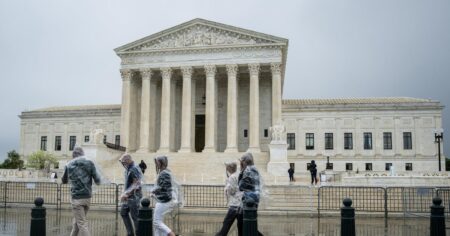
The federal courthouse in Washington became the stage for a dramatic legal showdown Thursday as attorneys representing Kilmar Abrego Garcia made their case that their client is being prosecuted not for justice, but for revenge. At the center of this complex legal drama is a Salvadoran man whose story reads like something from a legal thriller—wrongfully deported to one of the world’s most notorious prisons, fighting his way back through the American court system, and now facing criminal charges that his lawyers say are nothing more than government retaliation for daring to challenge powerful federal agencies. Abrego Garcia’s legal team is asking the court to dismiss human smuggling charges against him, arguing that the prosecution represents a vindictive response to his successful civil lawsuit against the Trump administration. Their argument is straightforward but explosive: the government is punishing a man not because he broke the law, but because he had the courage to stand up for his rights and won.
A Journey Through Legal Nightmares
To understand the current legal battle, you need to know Abrego Garcia’s extraordinary journey through the American immigration and justice systems. Back in 2019, immigration authorities recognized that this Salvadoran man faced serious danger if returned to his home country—specifically, likely persecution from local gangs that plague El Salvador. Based on this assessment, he was granted legal protection that should have prevented his deportation. But in a stunning administrative failure, he was deported anyway, not just to El Salvador, but to CECOT, a mega-prison known as one of the harshest detention facilities in the Western Hemisphere. Even a federal immigration official later admitted what Abrego Garcia already knew: his removal was an “error”—a bureaucratic mistake that could have cost him his life.
Rather than accept this fate quietly, Abrego Garcia did something many in his situation might not have had the resources or courage to do: he sued. His civil lawsuit against the Trump administration wound its way through the federal court system, and remarkably, he won at every level. A federal judge in Maryland ordered the administration to bring him back from the Salvadoran supermax prison. When the government appealed, the decision was upheld all the way to the Supreme Court. According to his lawyers, “Rather than fix its mistake and return Mr. Abrego to the United States, the government fought back at every level of the federal court system. And at every level, Mr. Abrego won.” But victory in court didn’t bring the relief one might expect.
The Charges and the Questions They Raise
After resisting court orders for weeks, the Trump administration finally did bring Abrego Garcia back to the United States in June of last year. But he didn’t return to freedom or even to immigration detention—he returned in handcuffs, facing human smuggling charges. The criminal case stems from an incident that occurred two years earlier, in 2022, when Abrego Garcia was stopped by Tennessee state Highway Patrol for the simple traffic violation of speeding. At the time, he had nine passengers in his vehicle. When questioned by police, Abrego Garcia explained that he and his passengers had been working together at a construction site in St. Louis, Missouri, and were traveling together. While a Department of Homeland Security report noted that he was suspected of human trafficking, authorities at the time made a significant decision: they didn’t arrest him. They didn’t charge him with any crime. They let him go.
Now, years later and only after his successful lawsuit against the government, those same circumstances have been resurrected and transformed into federal criminal charges. Abrego Garcia has pleaded not guilty, and his legal team sees a clear pattern. “As a matter of timing, it is clear that it was that lawsuit — and its effects on the government — that prompted the government to reevaluate the 2022 traffic stop and bring this case,” his lawyers argued. To them and to their client, the message seems clear: if you successfully sue the government and embarrass powerful agencies, you will pay a price. His attorneys have characterized the prosecution as part of a “retribution campaign” and have accused senior administration officials of publicly attacking their client in ways that seem designed to discredit and punish him. They’ve specifically named Vice President JD Vance and Attorney General Pam Bondi as participating in public statements attacking Abrego Garcia for exercising his constitutional rights.
The Legal Precedent and the Uphill Battle
U.S. District Judge Waverly Crenshaw, who is overseeing the criminal case, has already made one significant ruling in Abrego Garcia’s favor: he determined that the Salvadoran man has demonstrated that his prosecution may indeed be vindictive. This doesn’t mean the case is dismissed, but it shifts an important burden. Now it falls to the government to rebut that presumption—to prove that they’re prosecuting Abrego Garcia for legitimate law enforcement reasons, not as punishment for his legal victories. The judge allowed Abrego Garcia’s lawyers to collect materials from the government through the discovery process, but this hasn’t been smooth. The defense and federal prosecutors have clashed over what testimony should be allowed and which documents the administration must turn over, particularly regarding communications and decisions made by high-ranking officials.
At Thursday’s hearing, the Justice Department planned to call three witnesses to make their case that the prosecution is legitimate. Two are Homeland Security Investigations agents who worked on the federal investigation into Abrego Garcia’s alleged smuggling activities. The third is Robert McGuire, the first assistant U.S. Attorney in the Tennessee judicial district where the charges were filed. McGuire’s testimony is expected to address how prosecutors came to seek the indictment against Abrego Garcia, attempting to establish that it followed normal prosecutorial procedures rather than orders from political superiors seeking revenge. However, Abrego Garcia’s legal team faces what lawyers know is an extremely difficult challenge. In American criminal law, defendants face a very high bar for successfully proving that a prosecution is vindictive. Courts are generally reluctant to second-guess prosecutors’ decisions, giving them broad discretion in whom to charge and when.
Competing Narratives in the Courtroom
The two sides present fundamentally different stories about what’s happening here. Abrego Garcia’s lawyers paint a picture of government abuse of power at its most troubling. They describe a man who suffered an acknowledged government error, fought through the legal system and won repeatedly, and is now being punished for that success. They’ve argued that the indictment itself is “riddled with inflammatory, irrelevant — and, it has turned out, thinly supported — allegations,” suggesting prosecutors are relying more on prejudice than evidence. In their court filings, his attorneys wrote that “the unprecedented public pronouncements attacking Mr. Abrego for his successful exercise of constitutional rights by senior cabinet members, leaders of the DOJ, and even the President of the United States, make this the rare case where actual vindictiveness is clear from the record.” They characterize the case as revenge, pure and simple, for having “the audacity to fight back, rather than accept a brutal injustice.”
Federal prosecutors tell a completely different story. They insist they’re simply doing their jobs—prosecuting someone they believe “committed a serious federal crime” and building a case they believe they can “prove beyond a reasonable doubt to a jury.” In their response to the defense’s dismissal request, prosecutors argued that “the allegation that a criminal indictment in Tennessee was sought to punish the defendant for his assertions in a civil case in Maryland is not true and cannot be established.” They’ve essentially accused the defense of creating drama where none exists, stating that “the defendant’s argument, while high on rhetoric, lacks the basic facts to succeed.” From the government’s perspective, the timing may look suspicious, but that doesn’t mean the prosecution isn’t legitimate. They would argue that investigations take time, priorities shift, and the decision to prosecute was based on the evidence and the seriousness of human smuggling, not on any desire to punish Abrego Garcia for his lawsuit.
What This Case Means Beyond One Man’s Fate
While the immediate question before Judge Crenshaw is whether to dismiss the charges against Kilmar Abrego Garcia, the implications of this case extend far beyond one man’s legal troubles. At its core, this case raises fundamental questions about government accountability and the rights of individuals to challenge official actions without fear of retaliation. If Abrego Garcia’s lawyers are correct, this case represents a chilling example of what can happen when someone successfully stands up to powerful government agencies—they may win in court, but they’ll lose in the end through retaliatory prosecution. Such a precedent would discourage others from asserting their legal rights, knowing that victory might come with a criminal indictment attached.
On the other hand, if prosecutors are telling the truth and this is a legitimate case based on evidence of human smuggling, dismissing it would set an equally troubling precedent. It would mean that anyone who successfully sues the government might gain a kind of immunity from prosecution, able to claim vindictiveness any time they face charges. The challenge for Judge Crenshaw is to look beyond the competing narratives and determine what actually motivated this prosecution. Did investigators and prosecutors follow the evidence wherever it led, or did they go hunting for charges against a man who had become an embarrassment to the administration? The answer matters not just for Abrego Garcia, but for the integrity of both the immigration system and the criminal justice system, and for every person who might one day need to challenge government actions in court.