


Latino Voters Surge in Texas Primaries: A Potential Game-Changer for Democrats
Record-Breaking Turnout Signals Shifting Political Landscape
Something remarkable happened in Texas last week that has both political parties scrambling to understand what it means for the future. Over 4.4 million people turned out to vote in the state’s primary elections—more than showed up for the 2024 and 2020 presidential primaries. What’s catching everyone’s attention isn’t just the sheer number of voters, but who they are and which ballot they chose. Latino voters, particularly those living in communities along the southern border and throughout South Texas, came out in unprecedented numbers. These are the same areas that trended toward President Trump just months ago in the 2024 election, making this shift all the more surprising. Counties with majority-Latino populations saw their primary voting numbers jump by roughly 37% compared to their average turnout across recent elections, outpacing the 33% increase seen in other Texas counties. Along the U.S.-Mexico border, the numbers were even more dramatic—Starr County saw a 67% surge while Hidalgo County experienced a 51% increase. What makes this particularly interesting for Democrats is that about one-third of Latino early voters hadn’t participated in a recent primary before, suggesting something has energized previously disengaged voters to get involved in the political process.
Democrats Find Hope in a Red State
The Democratic Party has been nursing some serious wounds when it comes to Latino voters. President Trump made significant inroads with this community, winning 48% of Latino voters nationwide in 2024—a substantial 12-point jump from just four years earlier, according to research from the Pew Research Center. In Texas specifically, this shift was particularly painful for Democrats who have long counted on Latino support as essential to their electoral strategy. Communities along the Rio Grande that were once solidly Democratic strongholds turned light red, signaling what many feared was a permanent realignment. But last week’s primary results offer Democrats a glimmer of hope that this trend might be reversing. The data tells a compelling story: roughly three out of every four Latino voters chose to participate in the Democratic primary rather than the Republican one, with new primary voters leaning even more heavily Democratic. For a party that has watched its support among Latino voters erode in recent years, these numbers represent not just good news but potentially a lifeline in their quest to pull off what would be a stunning upset—winning a Senate race in Texas for the first time since 1988.
Republican Alarm Bells and Strategic Challenges
Not everyone is celebrating, of course. Mike Madrid, a veteran California Republican strategist who has been critical of Trump, didn’t mince words about what these numbers mean for his party: “There is no question this is a red flag for Republicans, a five alarm fire.” Madrid points to specific Trump administration policies as the catalysts for what he sees as a “downslide” among Latino voters—particularly the implementation of tariffs and the highly visible immigration raids conducted across the country, including in border communities where many Latino families live. Recent polling backs up his concern, showing that most Americans, including a majority of Latino respondents, disapprove of how President Trump has handled immigration and believe he’s placed too much emphasis on tariffs. The challenge facing Republicans, as Madrid sees it, is nearly impossible to navigate: “They’re going to have to distance themselves from key Trump policies, without distancing themselves from Trump. That is very difficult to do.” House Speaker Mike Johnson acknowledged the problem directly on Tuesday, admitting the party is in “course correction mode” and conceding that “we got a little hiccup with some of the Hispanic and Latino voters for certain because some of the immigration enforcement was viewed to be overzealous.” Behind closed doors, the White House is also showing concern. Deputy Chief of Staff James Blair reportedly encouraged House Republicans to stop emphasizing “mass deportations” when talking about the administration’s agenda, instead focusing on efforts to remove violent criminals who are in the country illegally—though the White House quickly emphasized that no policy changes were being made.
The Talarico Campaign and the Power of Spanish-Language Outreach
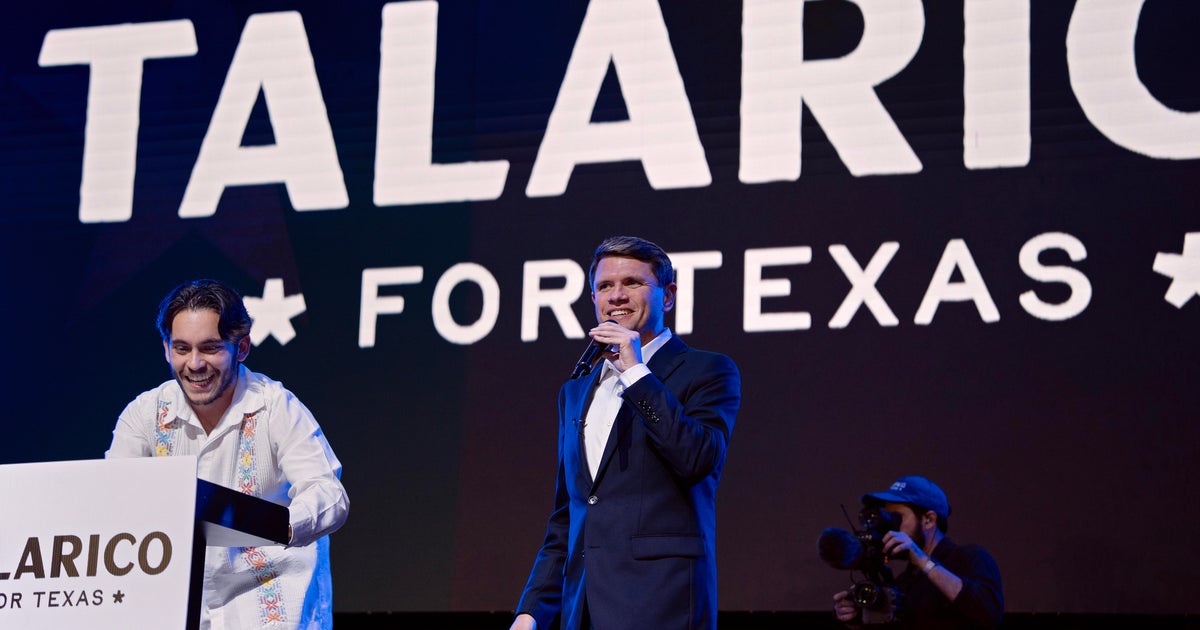
The Democratic Senate candidate who emerged victorious from last week’s primary, state Representative James Talarico, seems to have cracked the code on reaching Latino voters. The 36-year-old seminary student-turned-politician didn’t just win—he specifically outperformed his Democratic opponent, U.S. Representative Jasmine Crockett, in heavily Latino areas across the state. His secret weapon? Early, intentional outreach to Latino communities, much of it conducted in Spanish, with significant help from Carlos Eduardo Espina, a Hispanic TikTok influencer who commands over 20 million followers across various social media platforms. Espina, who says he volunteered for the campaign, created pro-Talarico videos, campaigned on his behalf, and helped develop Spanish-language social media content that resonated with younger Latino voters. “We’re getting to a point where beyond Talarico, in general, if you want to win in Texas, it’s very hard to do so, especially at the state level, without having Spanish communication,” Espina explained. He plans to continue sharing Talarico’s message and supporting other Democratic congressional candidates through content that reaches millions of Hispanic voters, positioning himself not as a “hardline Democrat” but as someone advocating for what he sees as positive change for his community. This approach represents a recognition of something many political observers have long argued: in a state where Latino residents make up around 40% of the population, effectively communicating with this community in their preferred language isn’t just good strategy—it’s essential.
Redistricting Gambles and November Uncertainties
Here’s where things get complicated. Last year, Texas Republicans redrew the state’s congressional district maps at President Trump’s request, strategically making five Democratic seats more favorable for Republicans heading into the 2026 midterms. These new boundaries were drawn with the assumption that Republicans could replicate their 2024 gains among Latino voters—an assumption that last week’s primary results now call into question. GOP congressional candidates will need Latino voters to show up for them in November just as enthusiastically as they did in 2024, or those carefully gerrymandered districts might not deliver the expected results. One race drawing particular attention is in the 15th Congressional District, a majority-Hispanic area stretching from the Rio Grande Valley to regions east of San Antonio. Republican Representative Monica De La Cruz is defending her seat against Bobby Pulido, a Democratic candidate and Tejano music star. While the district has leaned Republican recently, Democrats see an opportunity if the Latino leftward swing continues. De La Cruz, for her part, says she understands her constituents’ concerns but believes they don’t want to return to what she characterizes as “the chaos and the lack of law and order that was happening under the Biden administration,” while also calling for bipartisan solutions like temporary work visas for construction workers affected by immigration enforcement.
The Long Game and What It All Means
Before anyone gets too carried away with predictions, some political observers are urging caution about reading too much into primary results. Jorge Martinez, an adviser with Libre Action Texas, points to historical data showing that while more Hispanics have voted in Democratic primaries in years past—including 2002, 2004, 2008, and 2020—Republicans still managed to win statewide races in those same years when the general election rolled around. His organization is supporting a Trump-endorsed Republican candidate, Eric Flores, who’s challenging Democratic incumbent Representative Vicente Gonzalez in a border district that was redrawn to favor Republicans. Martinez emphasizes that success with Latino voters comes down to something fairly straightforward: “Look, if you’re not reaching out to our community, you’re going to lose. We’ve seen over the last few election cycles, Republicans making inroads because of gains they made through outreach. We’ve been out there for many years, informing on issues, but you also see Democrats trying to do the same because they’ve realized that they took Hispanics for granted.” That last point might be the most important takeaway from last week’s primaries. The surge in Latino turnout and their overwhelming preference for the Democratic ballot could represent a meaningful shift in Texas politics, or it could be a temporary reaction to specific policies that will fade by November. What’s certain is that both parties now understand they cannot take Latino voters for granted, and that reaching these communities—in their language, on their terms, and addressing their specific concerns about the economy, immigration, and their families’ futures—will likely determine who controls not just Texas but potentially the entire political direction of the country in the years ahead.