


Americans Urged to Flee Iraq Immediately Amid Rising Threats from Iran-Backed Militias
Urgent Security Warning Issues New Evacuation Orders
The United States Embassy and Consulate in Iraq have issued an urgent security alert to all American citizens currently in the country, strongly advising them to leave immediately. This isn’t the first time such warnings have been issued, but the latest alert carries particular weight given the escalating tensions in the region. According to Thursday’s statement, Iraqi terrorist militia groups with ties to Iran are believed to be planning imminent attacks in central Baghdad, possibly within the next 24 to 48 hours. The warning comes at a critical time, as the broader conflict between the United States, Israel, and Iran has now entered its second month, creating an increasingly volatile security environment throughout Iraq. The embassy’s message was clear and unambiguous: “U.S. citizens should leave Iraq now,” reflecting the serious nature of the intelligence they’ve received about potential threats to American lives and interests in the region.
Journalist Kidnapping Highlights Deteriorating Security Situation
The urgency of this latest warning has been dramatically underscored by the recent kidnapping of Shelly Kittleson, a 49-year-old American freelance journalist from Wisconsin. In a brazen daylight abduction on a busy Baghdad street earlier this week, Kittleson was forcibly taken by individuals allegedly connected to an Iran-linked militia group. Security camera footage verified by ABC News and confirmed by Iraq’s Ministry of Interior captured the terrifying moment when a silver car approached Kittleson as she stood on a sidewalk. The video shows her being pushed toward the vehicle before it speeds away with her inside. The incident has sent shockwaves through the international community and serves as a stark reminder of the very real dangers facing Americans in Iraq. Iraqi authorities have arrested one suspect after one of the getaway vehicles crashed and overturned during the escape, but Kittleson had been forced into another car that successfully fled the scene. The search for her continues, with Iraq’s Ministry of Interior stating they have “no answer or explanation” for her abduction. Dylan Johnson, the assistant secretary of state for global public affairs, revealed that the arrested suspect has connections to Kataib Hezbollah, an Iranian-aligned militia group known for its hostility toward American interests in the region.
Iran-Aligned Militias Pose Widespread Threats Throughout Iraq
The security alert from the U.S. Embassy paints a troubling picture of the threat landscape facing Americans throughout Iraq, including the Iraqi Kurdistan Region. According to the embassy’s statement, Iran and Iran-aligned terrorist militias have already conducted “widespread attacks against U.S. citizens and targets associated with the United States” across the country. What makes this situation particularly dangerous is that these militia groups may present themselves as legitimate Iraqi government representatives. The alert specifically warns that terrorists may carry identification claiming they are Iraqi government employees, making it extremely difficult for Americans to distinguish between actual government officials and hostile actors. This deception tactic significantly complicates the security environment and increases the risk for American citizens who might otherwise trust individuals presenting official-looking credentials. The potential targets for these attacks extend far beyond obvious American government facilities. According to the warning, terrorist militias might target businesses, universities, diplomatic facilities, energy infrastructure, hotels, airports, and essentially any location that could be perceived as having associations with the United States. This broad targeting strategy means that virtually any American in Iraq, regardless of their purpose for being there, could find themselves at risk.
Limited Evacuation Routes as Airspace Remains Closed
Adding to the complexity and danger of the situation is the fact that Americans seeking to leave Iraq face severely limited evacuation options. The country’s airspace is currently closed, preventing commercial airlines from operating flights in or out of Iraq. This means that the usual method of international travel—simply booking a flight home—is not currently available to Americans trying to heed the embassy’s warning to leave immediately. Instead, U.S. officials have advised that the only viable escape routes are overland journeys to neighboring countries: Jordan, Kuwait, Saudi Arabia, and Turkey. The embassy’s alert emphasized that “local ground transportation options are functioning” and urged “Americans should depart now via one of these overland routes.” These land border crossings represent the only practical means of exit, though they come with their own set of challenges and risks. Traveling overland through potentially unstable regions, navigating border crossings during a security crisis, and coordinating transportation logistics without air travel options all present significant obstacles for Americans trying to evacuate. The embassy’s insistence that citizens leave “now” suggests that officials believe even these overland routes may not remain safely accessible indefinitely, adding urgency to an already critical situation.
Embassy Operations Continue But Americans Told to Stay Away
In a somewhat paradoxical situation, the U.S. Mission in Iraq, including the Embassy in Baghdad and the Consulate General in Erbil, remains officially open and operational. However, the very institution issuing the evacuation warning is also telling Americans not to come to them for help. The security alert explicitly states: “Do not attempt to come to the Embassy in Baghdad or the Consulate General in Erbil in light of significant security risks.” This instruction reflects the assessment that even U.S. diplomatic facilities are potential targets and that traveling to them might actually increase rather than decrease the danger for American citizens. This unusual guidance highlights just how serious the threat assessment has become—when the embassy itself, typically considered a safe haven for citizens abroad, warns people to stay away due to security concerns, it underscores the severity of the situation. American citizens are essentially being told they’re on their own when it comes to organizing their departure from the country, without the usual consular support systems they might expect during an evacuation. This places significant responsibility on individuals to arrange their own safe passage out of Iraq through the available overland routes, navigating a complex and dangerous security environment without the direct assistance of U.S. diplomatic personnel.
Regional Conflict Context and Ongoing Military Parade Demonstrations
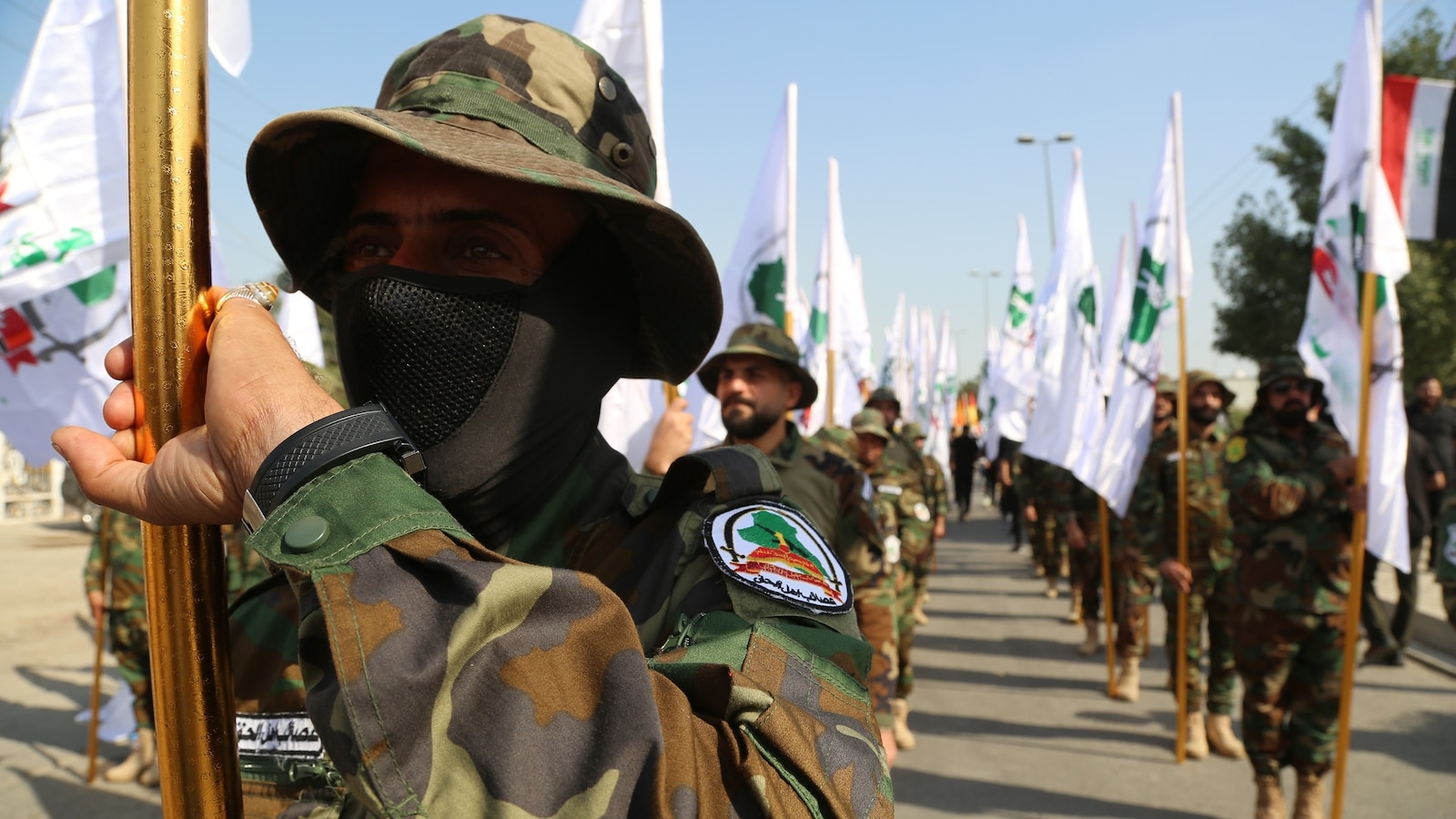
The current crisis cannot be understood in isolation from the broader regional conflict that has been intensifying over recent months. The alert comes as what officials describe as “the U.S.-Israeli war on Iran” has entered its second month, a reference to the escalating military and diplomatic confrontations between these powers. This larger geopolitical struggle has created ripple effects throughout the Middle East, with Iraq serving as one of the key battlegrounds where proxy forces aligned with Iran operate against American interests. Visual evidence of these tensions was on display just days ago when Iraqi Shiite militia groups organized military parades in Baghdad as part of ‘World Quds Day’ events on March 28, 2025. These public demonstrations of military capability by Iran-aligned groups serve as both a show of strength and an implicit threat to American presence in the region. The militias’ ability to openly parade their military assets through the streets of Baghdad demonstrates their confidence and the degree of influence they wield within Iraq. For ordinary American citizens caught in this geopolitical chess match, these broader strategic conflicts translate into very real and immediate personal danger. The combination of kidnapping incidents like Kittleson’s abduction, intelligence about imminent planned attacks, and the open demonstrations of military force by hostile militia groups creates an environment where the risks to American safety have reached critical levels, prompting the strongest possible warning from U.S. officials: leave Iraq immediately, by any means available.