
Breaking Down the Numbers: Who Is Really Being Arrested in Trump’s Immigration Crackdown?
The Reality Behind the Rhetoric
When President Trump returned to the White House, he promised Americans that his immigration enforcement would laser-focus on removing what he and his administration repeatedly called “the worst of the worst” – dangerous criminals, violent offenders, and gang members threatening American communities. However, newly obtained internal government documents tell a different story. According to a Department of Homeland Security document exclusively obtained by CBS News, fewer than 14% of the nearly 400,000 immigrants arrested by Immigration and Customs Enforcement (ICE) during Trump’s first year back in office actually had charges or convictions for violent criminal offenses. This revelation represents the most comprehensive look yet at who is actually being targeted in the administration’s massive deportation operation, and the numbers paint a picture quite different from the one being presented to the American public. While the administration’s messaging has consistently emphasized targeting murderers, rapists, and gang members, the data shows that the vast majority of those being arrested and detained fall into entirely different categories. This disconnect between political rhetoric and enforcement reality has significant implications for understanding what is actually happening on the ground in communities across America.
Who ICE Is Actually Arresting
The internal statistics reveal that ICE has dramatically ramped up arrests since Trump’s return to power, detaining approximately 393,000 people between January 21, 2025 (Trump’s first full day back in office) and January 31 of this year. While nearly 60% of those arrested had some form of criminal charge or conviction on their record, the nature of those criminal histories varies widely and often doesn’t align with the administration’s public emphasis on violent offenders. Perhaps most strikingly, nearly 40% of all those arrested by ICE during this period had no criminal record whatsoever – they were detained solely for civil immigration violations such as living in the United States without authorization or overstaying their legal permission to remain in the country. These immigration-related violations are typically handled through civil proceedings in immigration court, not criminal courts, yet these individuals make up a massive portion of those being swept up in enforcement operations.
When examining the criminal histories of those who did have charges or convictions, the picture becomes even more nuanced. Less than 2% of all ICE arrestees over the past year had homicide or sexual assault charges or convictions – the kinds of serious violent crimes that dominate the administration’s public statements about immigration enforcement. Another 2% were accused of being gang members, including members of Tren de Aragua, the Venezuelan prison gang that Trump initially made a focal point of his crackdown. In total, when combining all arrests involving individuals charged with or convicted of violent crimes including homicide, robbery, sexual assault, assault, kidnapping, and arson, these cases represent only about 13.9% of all arrests. The remaining criminal arrests involved offenses ranging from drug charges (about 22,600 individuals) and weapons offenses (approximately 6,100 people) to DUI convictions (nearly 30,000 arrestees) and burglary charges (around 5,000 people). A significant portion – roughly 118,000 detainees – had criminal charges or convictions categorized as “other” crimes, which could include immigration-related offenses like illegal entry (a misdemeanor for first-time offenders) or illegal re-entry after deportation (a felony).
Comparing Trump’s Approach to Previous Administration
The numbers also reveal how dramatically enforcement priorities and practices have shifted compared to the previous administration. ICE conducted more than triple the number of administrative arrests over the past year under Trump compared to fiscal year 2024 under the Biden administration, when the agency recorded 113,000 administrative arrests. However, while the raw number of arrests has skyrocketed, the percentage of those arrested who have criminal histories has actually declined. Under Biden in fiscal year 2024, approximately 72% of ICE arrests involved individuals with criminal records. Under Trump’s first year back in office, that percentage dropped to nearly 60%. This suggests that while the Trump administration has massively expanded the scope of immigration enforcement, it has simultaneously broadened its net to capture more people without criminal backgrounds. This represents a fundamental shift in enforcement philosophy – from a more targeted approach focusing primarily on those with criminal convictions to a much wider dragnet that encompasses large numbers of people whose only violation of law was related to their immigration status.
The Human Impact and Growing Public Concern
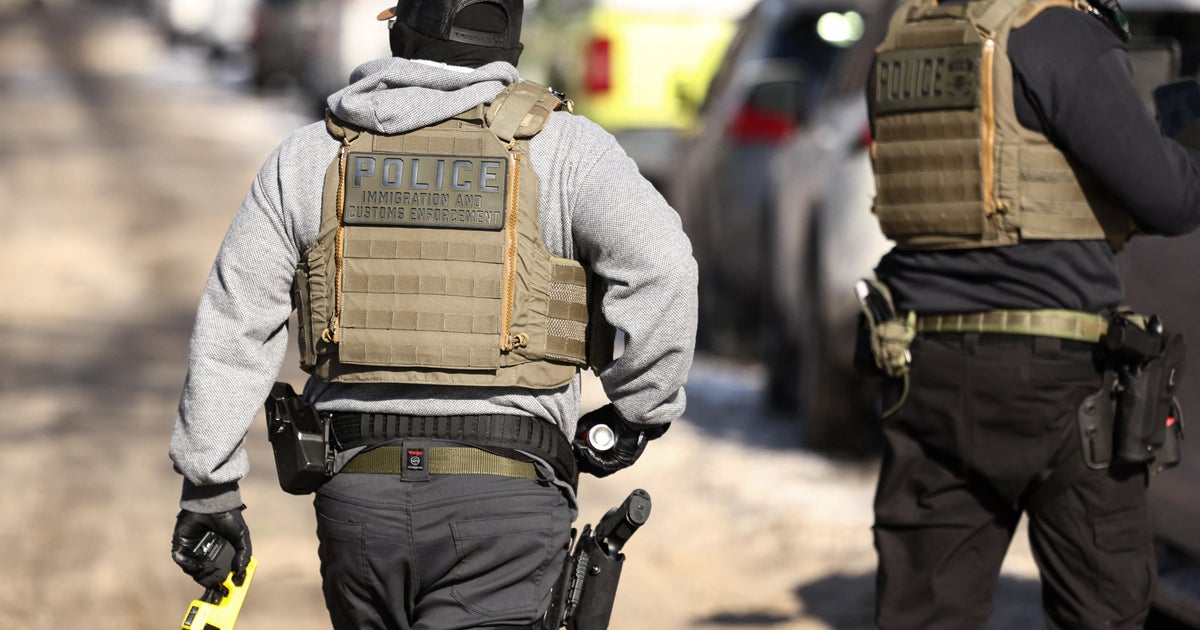
The expansion of immigration enforcement has not occurred without consequence, both for those directly affected and for the broader American public’s perception of these operations. Immigration agents have employed increasingly aggressive tactics in cities across the country, conducting operations that have raised concerns about civil liberties and the treatment of immigrant communities. In cities like Minneapolis, Los Angeles, and Chicago, Border Patrol agents – who traditionally work along the nation’s borders – have been deployed far from the border to conduct sweeping arrest operations. These operations have included targeting day laborers gathered in Home Depot parking lots looking for work and stopping individuals, including U.S. citizens, to question them about their immigration status. These visible enforcement actions, combined with growing awareness of who is actually being arrested, have shifted public opinion significantly.
According to a CBS News poll conducted last month, American support for Trump’s deportation efforts has fallen substantially from the levels seen during the 2024 presidential campaign and early months of his administration. Support dropped to 46%, down from 59% at the start of his second term – a decline of 13 percentage points in a relatively short time. Perhaps even more telling, just over 60% of those surveyed said they believe immigration agents are being “too tough” in their enforcement approach. This represents a significant shift in public sentiment and suggests that as Americans have witnessed the reality of mass deportation operations in their communities, many have become uncomfortable with the scope and methods of enforcement. The disconnect between the administration’s rhetoric about targeting dangerous criminals and the reality of who is being arrested appears to be contributing to this erosion of public support.
Questions About Accuracy and Accountability
The internal data also raises questions about the accuracy of some of the administration’s most high-profile enforcement actions. For example, Trump made the Tren de Aragua gang a centerpiece of his immigration messaging, and the administration deported more than 200 men accused of being members of this Venezuelan prison gang to a notorious prison in El Salvador. However, a CBS News and “60 Minutes” investigation found that most of these men did not have any apparent criminal record, casting doubt on whether they were actually dangerous gang members or simply immigrants from Venezuela who were labeled as such without substantial evidence. This case illustrates broader concerns about the criteria being used to categorize immigrants as threats and whether the enforcement system has adequate safeguards to prevent wrongful detention and deportation of people who don’t actually pose public safety risks.
It’s worth noting that the data in the DHS document doesn’t include arrests made by Border Patrol agents during their operations in interior cities, meaning the total number of immigration-related arrests is actually higher than the nearly 400,000 ICE arrests documented. The Department of Homeland Security, which oversees ICE, was contacted for comment on the data reported in the document, though their response was not included in the available information.
The Broader Implications for Immigration Policy
These statistics tell us something important about the gap between immigration policy rhetoric and reality. While political messaging about immigration enforcement often focuses on protecting Americans from dangerous criminals – a message that polls well and generates public support – the actual implementation of mass deportation operations necessarily sweeps up large numbers of people who don’t fit that description. The mathematics of deportation make this almost inevitable: there simply aren’t 400,000 violent criminals living illegally in the United States to arrest, so any operation attempting to generate such large numbers must by definition target people with minor offenses or no criminal history at all.
This reality creates a fundamental tension in how Americans think about immigration enforcement. Most people support removing violent criminals and gang members from the country regardless of immigration status. But the picture becomes much more complicated when enforcement operations primarily target people whose only violation was entering or remaining in the country without authorization, or those with minor criminal offenses like traffic violations. As these enforcement operations continue and their scope becomes more visible to the American public, the statistics suggest we may see continued evolution in public opinion, with potentially significant implications for the political sustainability of mass deportation operations. The data reveals that the “worst of the worst” rhetoric, while politically effective, describes only a small fraction of who is actually being arrested and deported under current immigration enforcement policies.