



Lindsey Vonn’s Courageous Battle: A Heartbreaking Olympic Journey Ends in Injury
Breaking Her Silence After the Crash
In the aftermath of one of the most devastating moments in Olympic skiing history, American legend Lindsey Vonn finally reached out to the world. On Monday, just a day after her catastrophic crash at the 2026 Winter Olympics in Milan-Cortina, Italy, the 41-year-old athlete broke her silence on social media. Her first public message came as a simple yet heartfelt response to British sports commentator Dan Walker, who had posted an emotional tribute praising her incredible resilience and wishing her a speedy recovery. “Thank you Dan,” Vonn wrote, her brief words carrying the weight of gratitude from someone facing one of the most challenging moments of her storied career. The skiing world had been holding its breath, waiting for any sign that their champion was okay, and this small message provided a glimmer of hope that the indomitable spirit that had defined Vonn’s career remained intact despite the physical setback she had just endured.
The Devastating Fall That Shocked the World
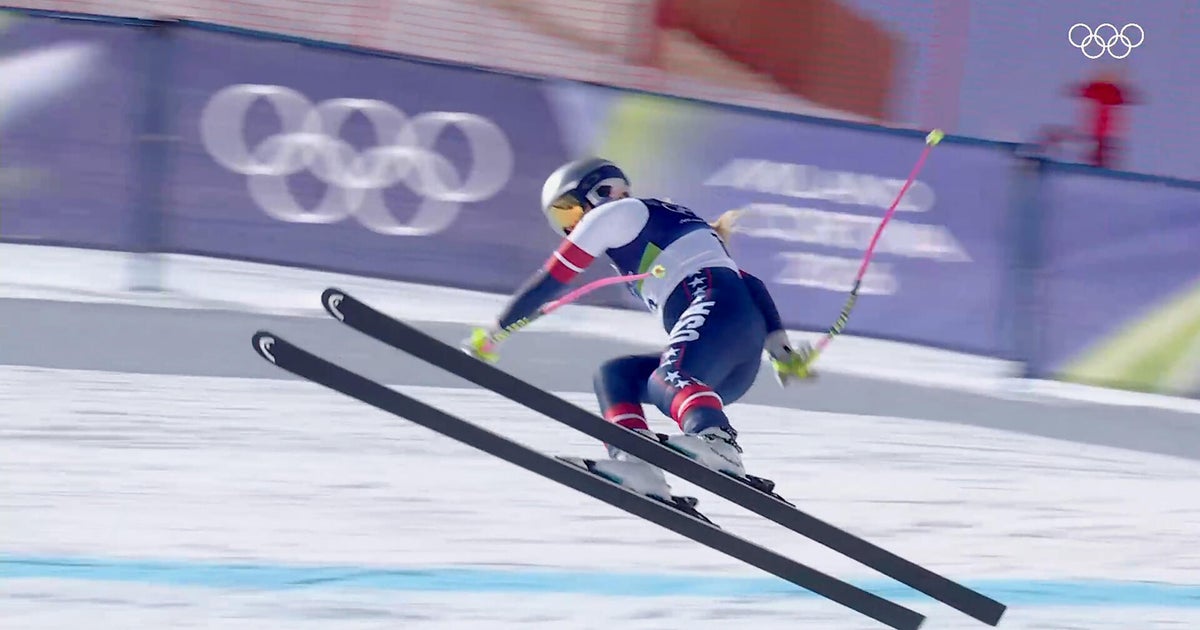
The crash itself was difficult to watch, a moment that will be remembered as one of the most heart-wrenching scenes in Olympic history. During Sunday’s women’s downhill race in Cortina, Vonn’s Olympic comeback dreams came to a sudden and brutal end just seconds after leaving the starting gate. What should have been a triumphant moment quickly turned into a nightmare as the American skier clipped a flag marking the edge of the course. The impact sent her flying sideways through the air in a terrifying trajectory that made spectators gasp. She struck her head against the hard-packed snow with a sickening force that silenced the crowd. As she lay motionless on the slope, the gravity of the situation became immediately apparent. Medical personnel rushed to her side, and while she remained conscious and responsive, she was unable to get up on her own. The image of Vonn being carefully placed on a stretcher and then airlifted from the mountainside became an instant symbol of both the incredible risks these athletes take and the cruel unpredictability of competitive skiing. The Italian hospital that received her later confirmed what everyone feared: she had suffered a fractured leg in what they described as “a nasty fall,” an understatement that barely captured the severity of the incident.
A Journey Through Medical Care
The medical response to Vonn’s injury demonstrated the sophisticated infrastructure supporting Olympic athletes, even in their darkest moments. According to the official statement released by the Italian medical facility, Vonn received immediate attention from staff of the Regional Olympic Medical Service at the crash site. Understanding the seriousness of her condition, medical professionals made the decision to airlift her directly to the Codivilla Polyclinic, a facility managed by the Local Health Authority and equipped to handle such traumatic injuries. However, after initial diagnostic tests were performed, the medical team determined that she required even more specialized care. Vonn was subsequently transferred to Ca’ Foncello Hospital in Treviso, where she was admitted under the care of a multidisciplinary medical team comprising orthopedic surgeons, trauma specialists, and rehabilitation experts. That same afternoon, she underwent orthopedic surgery to stabilize the fracture in her left leg, a procedure that marks just the beginning of what promises to be a long and challenging recovery process. The fact that she required such immediate and extensive medical intervention underscores just how serious the crash was and how fortunate she was to have access to world-class medical care in those critical first hours following the accident.
The Risky Decision That Led to Disaster
What makes Vonn’s crash even more tragic is the context surrounding her decision to compete in the first place. The skiing legend had made headlines just a week earlier when she crashed during a World Cup event in the Swiss Alps, an accident that resulted in a ruptured anterior cruciate ligament (ACL) in her left knee. For most athletes, such an injury would immediately end any hope of Olympic competition, as the ACL is one of the most critical ligaments for stability and control in skiing. Yet Vonn, displaying the determination and toughness that had defined her entire career, refused to let this setback derail her Olympic dreams. She had come out of retirement specifically to compete in the 2026 Winter Games, viewing them as one final opportunity to add to her already legendary legacy. In the days between her Swiss Alps crash and the Olympic downhill race, Vonn insisted she felt confident she could compete safely with the help of a specialized knee brace designed to provide additional support to her damaged joint. Many questioned the wisdom of this decision, but Vonn remained resolute, believing that her experience, technical skill, and sheer willpower could overcome the physical limitations she was facing. In hindsight, the risk proved too great, and the dream of Olympic glory ended not in triumph but in another devastating crash that compounded her injuries and raised serious questions about the pressures athletes face to compete even when their bodies are telling them otherwise.
The Brutal Reality of Downhill Skiing
In the wake of Vonn’s injury, U.S. Ski and Snowboard chief of sport Anouk Patty offered a sobering reminder of the incredible dangers these athletes face every time they compete. “She’ll be OK, but it’s going to be a bit of a process,” Patty said in a statement on Sunday, acknowledging both the severity of Vonn’s injuries and the long road to recovery that lay ahead. But it was Patty’s broader observation about the sport itself that resonated most powerfully with those trying to understand how such a catastrophic injury could occur at the highest level of competition. “This sport’s brutal and people need to remember when they’re watching, these athletes are throwing themselves down a mountain and going really, really fast,” she explained, her words serving as a crucial reminder that what spectators watch from the comfort of their homes or the relative safety of the sidelines involves extraordinary risk. Downhill skiing, particularly at the Olympic level, represents one of the most dangerous sports in the world. Athletes regularly reach speeds exceeding 80 miles per hour as they navigate treacherous courses filled with sharp turns, dramatic elevation changes, and obstacles that demand split-second decision-making. The margin for error is virtually non-existent, and even the slightest mistake—like clipping a course marker—can result in catastrophic consequences. Vonn’s crash serves as a stark illustration of this reality and a reminder that every run down the mountain is an act of extraordinary courage, skill, and calculated risk.
A Champion’s Uncertain Future
As Lindsey Vonn begins her recovery in an Italian hospital, the skiing world and her millions of fans around the globe are left to contemplate what comes next for one of the sport’s greatest ambassadors. At 41 years old, having already overcome numerous injuries throughout her career and having previously retired before making this comeback attempt, Vonn faces perhaps her most challenging decision yet: whether to continue fighting for a return to competitive skiing or to finally acknowledge that her body has reached its limit. Her brief social media message responding to Dan Walker’s supportive post suggests that her fighting spirit remains intact, but the physical realities of recovering from yet another significant leg injury, compounded by the existing ACL damage, present obstacles that even someone with Vonn’s legendary determination may find insurmountable. What makes this situation particularly poignant is that Vonn’s comeback was never about proving she could still compete at the highest level—her previous performances had already demonstrated that. Instead, it was about achieving a personal dream, about finishing her career on her own terms, and about inspiring a new generation of athletes with her refusal to accept limitations. Whether she ultimately returns to competition or decides that this injury marks the true end of her competitive career, Vonn’s legacy as one of skiing’s all-time greats remains secure. Her 82 World Cup victories, her Olympic gold medal, and her numerous world championship titles speak to a career of unprecedented success. But perhaps more importantly, her willingness to risk everything for one more chance at glory, her resilience in the face of repeated setbacks, and her gracious response even in the depths of disappointment demonstrate the character that made her a champion in the first place. As the skiing community rallies around her during this difficult time, one thing remains certain: whatever path Lindsey Vonn chooses moving forward, she will approach it with the same courage, determination, and grace that have defined her remarkable journey.