



The Hidden Danger in Alpine Skiing: Why Lindsey Vonn’s Skis Didn’t Release
A Horrifying Moment That Exposed a Serious Problem
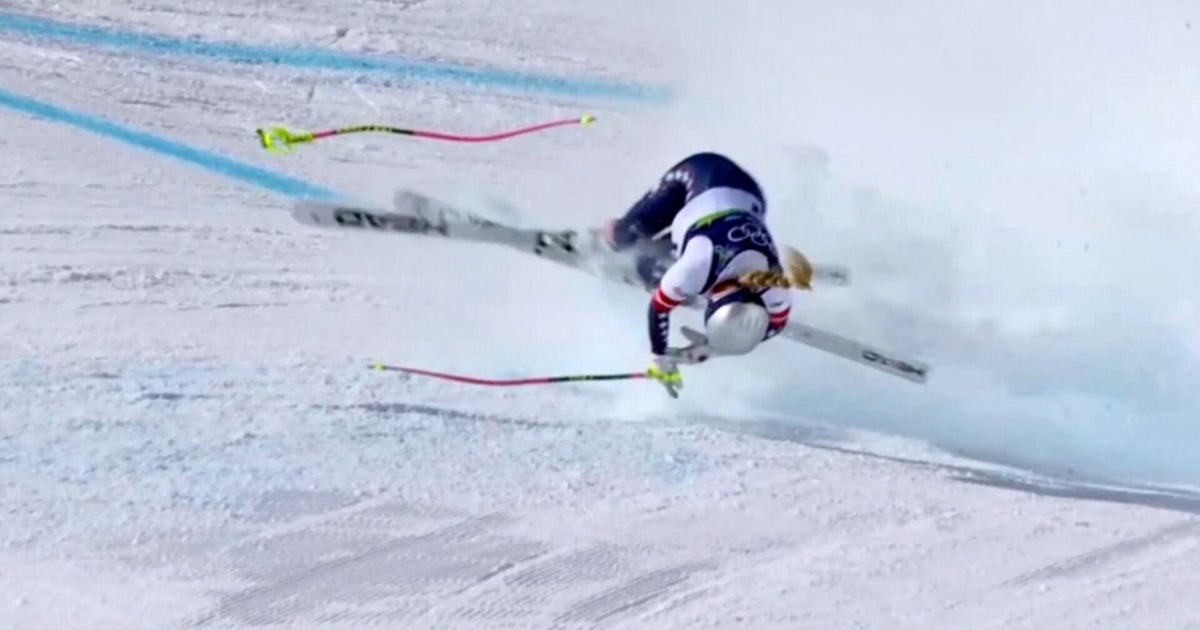
The scene at the Milan Cortina Olympics will forever be etched in the minds of skiing fans worldwide. Lindsey Vonn, one of the greatest downhill skiers in history, lay crumpled on the snow, her screams of agony echoing across the course before a helicopter whisked her away for emergency treatment. But beyond the immediate shock of the crash itself, one detail stood out to experts and raised serious questions about safety in alpine skiing: her skis never came off. Despite her violent, pinwheeling fall, Vonn’s boots remained locked into her skis, which twisted at unnatural angles as she slid to a stop. The result was a complex tibia fracture that has already required multiple surgeries, and while we can’t know for certain whether releasing skis would have prevented or lessened the injury, the incident has thrust the spotlight onto one of skiing’s oldest and most fundamental pieces of equipment—the binding system that connects boot to ski.
Despite the devastating nature of her injury, Vonn’s spirit remained unbroken. In a social media post following one of her operations, she wrote with characteristic determination: “The ride was worth the fall. When I close my eyes at night I don’t have regrets and the love I have for skiing remains. I am still looking forward to the moment when I can stand on the top of the mountain once more. And I will.” Her words reflect the passion that drives elite athletes to push boundaries, but they also underscore a troubling reality: the technology designed to keep them safe hasn’t kept pace with the sport’s evolution. Officials have revealed to the Associated Press that a “smart binding” system—one designed to automatically release skis when a racer loses control—remains in the conceptual phase after years of stalled discussions and development challenges.
Technology Frozen in Time
The basic design of ski bindings hasn’t changed significantly in half a century, a remarkable fact in an era when nearly every other aspect of athletic equipment has undergone revolutionary transformation. The mechanism remains simple: a skier steps in toe-first, then locks the heel in place by stepping down, and the boot will only release when sufficient pressure is applied in specific directions. For recreational skiers, bindings are set to release relatively easily, protecting weekend warriors from torn ligaments and broken bones. But as skill levels increase and the stakes get higher, those bindings get cranked down tighter and tighter, keeping elite racers locked onto their skis through the most aggressive turns and jarring terrain imaginable. At the Olympic and World Cup level, few people were surprised that Vonn’s skis didn’t release during her crash—that’s exactly how the system is designed to work. The real question isn’t whether they released, but whether they should have.
Sophie Goldschmidt, president and CEO of the U.S. Ski and Snowboard Association, acknowledged that tragedies like Vonn’s crash often serve as wake-up calls for the industry. “Unfortunately, sometimes it does take horrific accidents to shine even more of a light on what can be done,” she said. “It’s an area we can’t be competitive in; we’ve all got to be in it together with our different country counterparts and FIS (the International Ski and Snowboard Federation).” Her words highlight both the urgency of the situation and the complexity of addressing it—this isn’t a problem that individual teams or even countries can solve alone. It requires coordination across the entire sport, involving equipment manufacturers, governing bodies, coaches, and the athletes themselves.
The Promise of Smart Technology
Peter Gerdol, the FIS women’s race director at the Olympics and on the World Cup circuit, believes that a so-called “smart binding” system could have prevented Vonn’s broken leg. “That’s exactly what the system will be designed to do,” Gerdol told the Associated Press. “Her skis would have definitely popped off. We’ve seen a lot of other cases in which the bindings don’t open and it results in knee issues, especially when the still-attached ski acts as a lever, either on the net or on the snow or on a gate or on any other obstacle. The leg becomes blocked and the knee gives out.” This wasn’t even Vonn’s first crash of the season that raised binding concerns. Nine days before her Olympic accident, she tore the ACL in her left knee during a crash in Crans-Montana, Switzerland, where she ended up in the safety nets with her skis still stubbornly attached.
The proposed smart-binding system would borrow technology from another recent safety innovation: the air bag systems that became mandatory for skiers in speed events this season. Companies like Dainese and its sister company, D-Air Lab, spent years developing algorithms that determine exactly when to inflate air bags under skiers’ racing suits, drawing on similar systems they created for motorcycle racing. Now, in coordination with the FIS, Dainese is sharing this air bag algorithm with top binding suppliers including Look, Tyrolia, Salomon, Atomic, and Marker, so they can adapt the formula to trigger ski releases at the critical moment. The concept sounds straightforward: use sensors and sophisticated algorithms to detect when a skier has truly lost control, then automatically release the bindings before the still-attached skis can cause catastrophic injury.
However, as Marco Pastore, a Dainese representative, explains, releasing skis is potentially more dangerous than inflating an air bag, making the engineering challenge extraordinarily complex. “If you release a binding, you’ve got to be absolutely sure you do it at the right moment,” he said. Elite skiers are sometimes capable of spectacular mid-air recoveries, and they often use their skis to brake before slamming into safety fences. Release the skis at the wrong moment, and you might turn a recoverable situation into a disaster, or send a skier tumbling into barriers without any way to slow down. “For the air bag you can look at the rotations and the entire body position. But with the bindings you’ve got to examine how the feet move, what the trajectory of the skis is—plus a series of other variables.” The algorithm must be refined to near-perfection, capable of distinguishing in fractions of a second between a controlled aggressive maneuver and an actual crash situation.
The Money Problem Nobody Wants to Talk About
Beyond the technical challenges lies a more mundane but equally significant obstacle: cost. While the FIS wants to coordinate the smart-binding project, there’s considerable uncertainty about who will ultimately pay for the research, development, and implementation. “These are very costly projects and to be honest Dainese has not made much” from the air bag system, Pastore admitted. “Right now it’s costing us money. Everyone wants these great things but at the end of the day someone has to pay for it.” This financial reality has stalled progress for years. Sasha Rearick, who served as head coach of the U.S. men’s ski team from 2008 to 2018, recalls binding discussions from nearly a decade ago when he led the World Cup coaches’ work group. “The problem is that Dainese is the one who’s putting the money and all the investments,” Rearick explained. “So if they’re sharing it with the binding companies, the binding companies now need to invest heavy, and it probably costs a lot.”
Markus Waldner, the men’s World Cup and Olympics race director, acknowledged earlier this season that FIS is “working with bio-mechanists and manufacturers to refine boot and binding standards to reduce the likelihood of catastrophic edge catches at high speed.” Yet despite this work, Gerdol suggested the project could be anywhere from two to six years away from actual implementation—a timeline that seems painfully slow given the frequency of serious injuries. The disconnect between urgency and action reflects a common problem in sports safety: innovations that could save careers and prevent life-altering injuries often move at a glacial pace because of the financial investments required and the competing interests of various stakeholders.
The Current Reality on the Ground
To understand why smart bindings haven’t been prioritized, it helps to understand how the current system works at the elite level. To prevent skis from popping off during aggressive racing, ski technicians crank racers’ bindings up to settings that essentially lock them in place. Leo Mussi, the ski technician for American downhillers Bryce Bennett and Sam Morse, sets his racers’ bindings at up to 440 pounds of pressure—more than double what a store-bought binding is even capable of reaching. At these settings, the skis become nearly permanent extensions of the racer’s body, which is exactly what’s needed for the violent forces and rapid direction changes of World Cup downhill racing. But this same characteristic becomes potentially catastrophic during crashes.
Austrian racer Marco Schwarz suffered a serious knee injury in a December 2023 crash during the Bormio downhill when his skis didn’t release as he slid into the safety netting. When asked whether automatic release would have saved him from injury, he was uncertain and expressed reservations about changing the current system. “It’s tough to say,” he reflected. “The best way is to keep it simple. I don’t want to push too much into more technology.” His perspective represents a common attitude among athletes who have spent their entire lives mastering equipment that behaves in predictable ways. Any change, no matter how well-intentioned, introduces uncertainty and requires adaptation. Nina O’Brien, an American skier who endured four surgeries after suffering a gruesome compound fracture at the 2022 Beijing Olympics, said she didn’t fault any equipment issues for her crash and expressed confidence in her technician’s work. “Regardless if I’ve worn the skis that morning, clicked out and gotten a coffee, when I step back in, he checks them to make sure they’re perfect,” she said.
The history of the air bag system offers both encouragement and caution about introducing new safety technology. First tested on the World Cup circuit in 2013, the air bags only became mandatory for downhill and super-G events this season—a thirteen-year journey from concept to requirement. During that time, some skiers complained that the bags hindered their aerodynamics, were uncomfortable to wear, or could actually cause injuries themselves. Safety issues became more pressing recently when Italian skier Matteo Franzoso died following a crash in preseason training in Chile, prompting renewed urgency around protective equipment. “Unfortunately, it always takes something serious to happen for people to say, ‘No. Now we need to do something,'” Pastore observed. This season also marks the first time cut-resistant undergarments are required for all World Cup and Olympic events, another safety advancement that took years to implement despite obvious benefits.
A Comprehensive Approach to Safety
While smart-binding technology remains in development, experts like Rearick suggest there’s plenty of room for other safety advancements that could be implemented more quickly. He proposes addressing racing suits themselves as a more immediate step. “Make one suit of material for everybody that’s a little bit warmer, that’s a little bit slower, that’s cut-proof,” Rearick suggested. “That will make the sport a lot safer for everybody.” This approach acknowledges a difficult truth: part of what makes downhill skiing so dangerous is the relentless pursuit of speed. Aerodynamic suits, perfectly waxed skis, and courses designed to launch racers to ever-higher velocities have combined to push the sport to extremes that the human body—and current safety equipment—struggle to accommodate. Slowing the sport down even slightly through equipment standards could reduce the severity of crashes across the board, even if it means slightly slower race times.
The challenge facing alpine skiing mirrors dilemmas in many high-speed, high-risk sports: how to balance the pursuit of performance with the protection of athletes. Lindsey Vonn’s crash and the injuries she sustained have brought these questions into sharp focus, but they’re far from new. What makes this moment potentially different is the combination of available technology, growing awareness, and the high-profile nature of the incident. Smart bindings that can detect crashes and release automatically are no longer science fiction—the core technology exists and is being refined. The question is whether the ski industry, governing bodies, and the broader skiing community will prioritize safety enough to overcome the financial, logistical, and cultural obstacles standing in the way. As Vonn recovers and dreams of standing atop a mountain once more, the sport she loves faces a reckoning about whether it will modernize its most fundamental safety equipment or continue relying on technology that hasn’t meaningfully changed in fifty years.