

Major Developments in U.S.-Iran Ceasefire Agreement
A Fragile Peace Takes Hold in the Persian Gulf
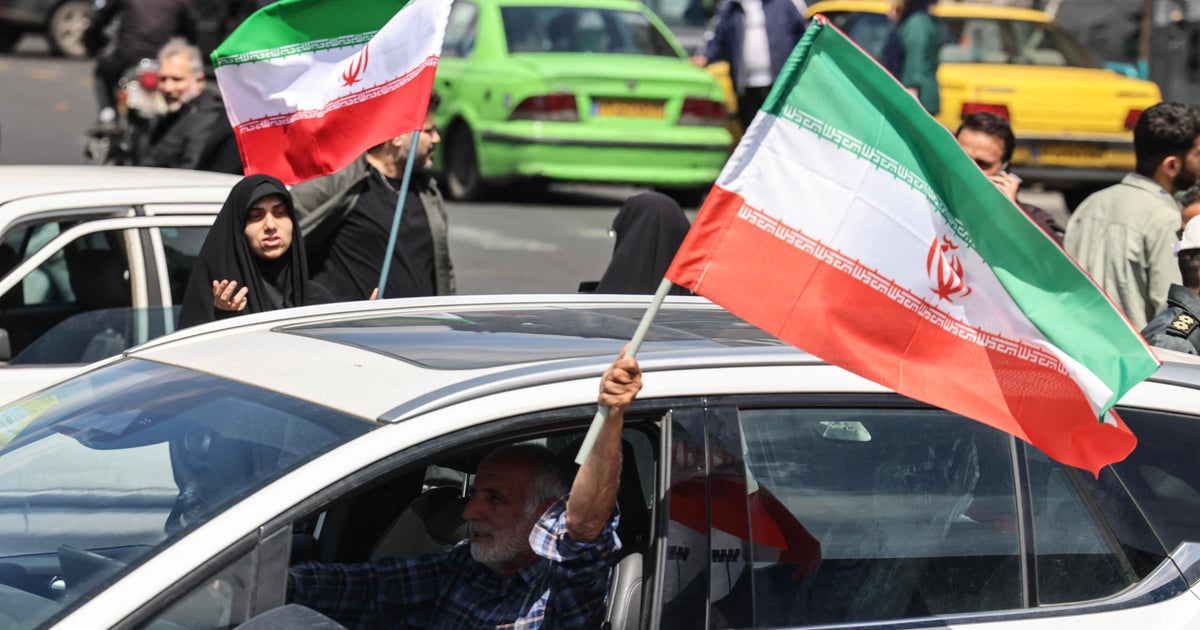
In a dramatic turn of events that has sent shockwaves through global markets and diplomatic circles, the United States and Iran have agreed to a conditional two-week ceasefire after more than five weeks of intense military conflict. President Trump announced the agreement just hours before his own deadline for Iran to make a deal or face devastating attacks on its infrastructure. The ceasefire, brokered through Pakistani intermediaries, represents what both sides are calling a significant step toward ending hostilities, though the path forward remains uncertain and fraught with complications. The announcement triggered immediate relief in financial markets, with oil prices plummeting nearly 20% and stock markets around the world soaring as investors hoped the crisis that has paralyzed global shipping and shocked the world economy might finally be coming to an end.
The ceasefire agreement, which President Trump described as a “double sided” halt to military operations, came together at the eleventh hour. Trump stated that he agreed to suspend bombing and attacks on Iran for two weeks, claiming the U.S. had “already met and exceeded all Military objectives” through what the Pentagon dubbed “Operation Epic Fury.” However, the president made clear that Iran’s compliance with specific conditions would be essential, particularly regarding the complete, immediate, and safe reopening of the Strait of Hormuz—the critical waterway through which roughly one-fifth of the world’s oil supply normally passes. Defense Secretary Pete Hegseth reinforced this message during a Pentagon briefing, declaring that Iran had “begged” for the ceasefire and that the military operation represented a decisive victory that left Iran’s capabilities severely degraded. Yet despite the triumphant tone from Washington, the situation on the ground remains tense and potentially volatile.
Conflicting Signals and Ongoing Tensions
The implementation of the ceasefire has been marked by confusion and conflicting messages from both sides, raising serious questions about whether the agreement will hold even for the two-week negotiating period. Most troubling are reports that Iran continues to assert control over the Strait of Hormuz in ways that may contradict the spirit, if not the letter, of the agreement. According to the Wall Street Journal, Iran’s navy broadcasted radio messages to ships in the region on Wednesday stating that vessels “must receive permission from Iranian Sepah navy for passing through the strait,” with warnings that ships attempting transit without authorization would “be destroyed.” This stance appears to directly contradict President Trump’s insistence that Iran had agreed to the “complete, immediate, and safe opening” of the waterway, suggesting that fundamental disagreements remain about what exactly has been agreed upon.
Despite Iran’s continued assertions of control over the strait, some limited shipping traffic has begun to resume. Maritime monitoring services reported that two vessels—a Greek-owned bulk carrier and a Liberia-flagged ship—successfully transited the waterway on Wednesday, marking the first movements since the ceasefire announcement. However, hundreds of vessels remain effectively stranded in the region, including more than 400 oil tankers and dozens of liquefied natural gas carriers that have been unable to move for weeks. Japan and South Korea both announced efforts to coordinate safe passage for their commercial vessels, with Japanese Prime Minister Sanae Takaichi personally calling Iranian President Masoud Pezeshkian to stress the importance of navigation safety. The South Korean government is working to help 26 South Korean-flagged vessels pass through the strait during the ceasefire window, though authorities have not yet lifted advisories warning ships to avoid the area due to ongoing risks.
The Terms of Engagement and What Comes Next
The basis for the ceasefire and the subsequent negotiations appears to be a 10-point proposal put forward by Iran, which Tehran is describing as a major victory and which represents a significant shift from an earlier 15-point American proposal that Iran had rejected. According to statements from Iran’s Supreme National Security Council, the Islamic Republic believes it has forced the United States to accept terms that include guarantees of non-aggression, continued Iranian control over the Strait of Hormuz, acceptance of Iranian uranium enrichment, lifting of all sanctions, payment of compensation to Iran, withdrawal of American combat forces from the region, and cessation of all regional hostilities including Israel’s war against Hezbollah in Lebanon. However, President Trump’s characterization of the agreement suggests a very different understanding of what has been agreed upon, particularly regarding Iran’s nuclear program.
In a striking statement on Wednesday, President Trump claimed that Iran would not return to enriching uranium and that the United States would work jointly with Iran to “dig up and remove” the country’s stockpile of highly enriched uranium, believed to be buried under the heavily damaged Isfahan nuclear facility following devastating strikes in June 2025. Trump asserted that this buried material has been under “very exacting satellite surveillance” and remains untouched since the attack. Notably, Iranian officials have made no public statements confirming any such commitment to abandon uranium enrichment or to participate in joint efforts to remove existing stockpiles. This represents perhaps the most significant gap between the two sides’ public descriptions of what has been agreed upon, as Iranian leaders have long insisted on their right to uranium enrichment for civilian purposes such as medical isotopes and power generation. The contradiction suggests that the two-week negotiating period will be extremely challenging, with fundamental issues still unresolved.
Military Realities and Regional Complications
While both sides have technically agreed to halt offensive operations, the military situation remains complex and fluid, with ongoing incidents threatening to undermine the fragile truce. Several explosions were reported on Iranian islands in the Persian Gulf on Wednesday, including at least three blasts near the Lavan Island Oil Refinery and additional explosions on Siri Island near the mouth of the Strait of Hormuz. The origins of these attacks remained unclear, raising questions about whether U.S. or Israeli forces might be continuing operations despite the ceasefire announcement. Additionally, Iran appeared to be launching missiles and drones at various targets in the region even after the ceasefire was announced, with the United Arab Emirates and Kuwait both reporting that their air defenses were actively responding to incoming threats. Jordan’s military confirmed it had intercepted two Iranian missiles over the past 24 hours, though it did not specify whether these were fired before or after the ceasefire took effect.
Defense Secretary Hegseth acknowledged during his Pentagon briefing that Iran retains some missile capability and could “still shoot here and there,” though he warned this would be “very, very unwise” given the degraded state of Iran’s military infrastructure. Hegseth claimed that Iran’s command and control systems have been so decimated that the country can no longer effectively coordinate operations, and more importantly, can no longer manufacture new missiles, rockets, launchers, or drones. However, he admitted that Iran likely still has weapons “buried in bunkers” that it could potentially use. This assessment paints a picture of an Iranian military that has been severely damaged but not entirely neutralized, capable of sporadic attacks but unable to sustain prolonged operations. The Islamic Revolutionary Guard Corps, Iran’s most powerful military force, issued a statement saying it would respect the ceasefire while keeping its “fingers on the trigger,” warning that any American miscalculation would be met with an even stronger response than before.
Economic Implications and International Response
The immediate global response to the ceasefire announcement highlighted just how severely the conflict had disrupted the world economy and raised the stakes for successful negotiations. Oil prices, which had skyrocketed during the weeks of conflict as the closure of the Strait of Hormuz choked off a vital artery of global energy supply, plummeted on the news, dropping below the $100 per barrel mark for the first time since the war began. U.S. West Texas Intermediate crude lost nearly 20% of its value and Brent Crude shed 16% as traders bet that shipping would resume and energy supplies would stabilize. While these prices remained well above pre-war levels, the dramatic drop reflected enormous relief that the immediate crisis might be easing. Stock markets around the world surged in response, with Asian markets leading the rally—Seoul jumped nearly 7%, Tokyo rose more than 5%, and exchanges from Mumbai to Sydney to Dubai all posted substantial gains as investors rushed back into equities they had fled during the conflict.
President Trump also announced new economic measures designed to prevent Iran from rearming, declaring that any country “supplying military weapons to Iran” would face immediate 50% tariffs on all goods exported to the United States, with no exclusions or exemptions. This appeared to be primarily aimed at Russia, which has been Iran’s major arms supplier according to international monitoring organizations. However, the practical implications of this announcement remained unclear, as existing U.S. sanctions already impose severe penalties on nations supplying weapons to Iran, and it was uncertain whether Trump’s statement represented an additional measure or whether these restrictions might be lifted as part of a comprehensive peace agreement. The president also indicated that the United States would be “talking tariff and sanctions relief with Iran” during the two-week negotiating period, suggesting that economic normalization could be a key component of any final deal, though he provided no specifics about what relief might be offered or what Iran would need to do to earn it.
The Road Ahead: Negotiations and Uncertainties
As the two-week clock begins ticking on negotiations toward a permanent peace agreement, the outlook remains deeply uncertain, with numerous obstacles and potential flashpoints that could derail the process. Vice President JD Vance, speaking from Hungary where he was traveling, characterized the agreement as a “fragile truce” and noted that different factions within Iran appeared to be sending contradictory messages, with some officials responding favorably to the deal while others were “lying about what had been accomplished militarily and the ceasefire.” This internal division within Iran could complicate negotiations, as it remains unclear whether moderates like Foreign Minister Araghchi, who confirmed Iran’s agreement to the ceasefire, truly speak for the entire regime or whether hardliners in the Revolutionary Guard and elsewhere might seek to undermine the process.
International reaction has been cautiously optimistic but measured. European Union leaders welcomed what they called “a step back from the brink,” with EU foreign policy chief Kaja Kallas saying the agreement “creates a much-needed chance to tone down threats, stop missiles, restart shipping, and create space for diplomacy.” Egypt’s foreign ministry called it “a significant step toward de-escalation,” while emphasizing the need to allow diplomacy to work. However, significant regional complications remain unresolved, particularly regarding Israel’s ongoing war against Hezbollah in Lebanon. Israeli Prime Minister Benjamin Netanyahu has made clear that while Israel will respect the U.S.-Iran ceasefire and halt attacks on Iran proper, the agreement will not affect Israel’s parallel conflict with the Iranian-backed militant group. Indeed, Israel announced it had conducted its largest strike yet against Hezbollah infrastructure on Wednesday and warned residents of southern Lebanese cities to flee, indicating no intention of slowing its offensive. Iran’s 10-point proposal included calls for cessation of all regional hostilities, including in Lebanon, but Israel has given no indication it will comply with this demand, setting up a potential point of contention that could threaten the broader peace process. The next two weeks will reveal whether this fragile moment of de-escalation can be transformed into a lasting peace or whether the fundamental disagreements between these longtime adversaries remain too deep to bridge.