


Justice After Decades: Four Men Declared Innocent in Austin’s Tragic Yogurt Shop Murders
A Long-Awaited Declaration of Innocence
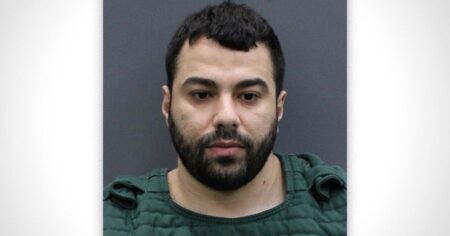
In a powerful moment of justice delayed but finally delivered, a Texas judge formally declared four men innocent on Thursday of the horrific 1991 Austin yogurt shop murders that claimed the lives of four teenage girls. State District Judge Dayna Blazey addressed a packed Austin courtroom with words that these men and their families had waited more than three decades to hear: “You are innocent.” The declaration brought an official end to a nightmare that began when Michael Scott, Forrest Welborn, Robert Springsteen, and Maurice Pierce were wrongfully accused of one of Austin’s most disturbing crimes. This case had haunted not just the accused men but an entire city that struggled to comprehend both the brutality of the crime and the decades-long failure to bring the actual perpetrator to justice.
The courtroom scene was emotional as two of the four original suspects—Michael Scott and Forrest Welborn—sat surrounded by family members, finally hearing prosecutors acknowledge a terrible mistake. Travis County First Assistant District Attorney Trudy Strassburger opened the hearing with a stark admission: “Over 25 years ago, the state prosecuted four innocent men for one of the worst crimes Austin has ever seen. We could not have been more wrong.” Robert Springsteen, who had been convicted and spent years on death row before his conviction was overturned, chose not to attend the hearing. Tragically, Maurice Pierce died in 2010, never living to see his name officially cleared. Judge Blazey emphasized that her order represented “an obligation to the rule of law and the obligation to the dignity of the individual,” acknowledging that while justice had been delayed, it was crucial to formally recognize these men’s innocence. This declaration of “actual innocence” also opens the door for the men and their families to seek financial compensation for the years stolen from them through wrongful imprisonment.
The Crime That Shook Austin
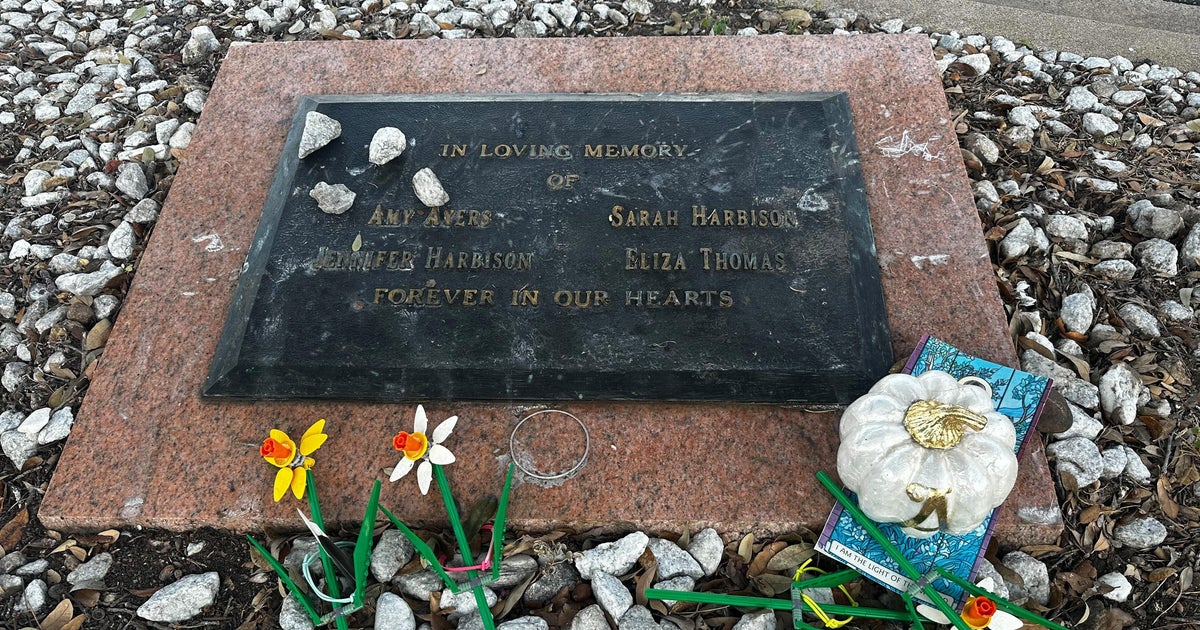
On a December night in 1991, Austin experienced one of the most shocking crimes in its history. Four young girls—Amy Ayers, 13; Eliza Thomas, 17; and sisters Jennifer and Sarah Harbison, ages 17 and 15—were working or visiting at the “I Can’t Believe It’s Yogurt” store when they became victims of unimaginable violence. The girls were bound, gagged, and shot in the head. Investigators later discovered that at least one victim had been sexually assaulted, and the perpetrator had set the yogurt shop on fire, seemingly in an attempt to destroy evidence. The fire complicated an already difficult investigation, as John Jones, the first investigator on the scene, explained to “48 Hours” correspondent Erin Moriarty: “There was smoke and soot on every surface, kind of made fingerprinting kind of difficult.”
The brutality of the crime and the young ages of the victims sent shockwaves through Austin. These weren’t just statistics; they were daughters, sisters, and friends whose lives were cut tragically short. Amy Ayers was just 13, still in the early stages of discovering who she might become. Eliza Thomas and Jennifer Harbison, both 17, were on the cusp of adulthood, with their whole futures ahead of them. Sarah Harbison, at 15, died alongside her sister in circumstances no family should ever have to imagine. The community mourned deeply, and the pressure on law enforcement to solve the case was immense. For years, investigators chased thousands of leads, following every possible thread in desperate attempts to bring someone to justice. Several false confessions emerged—a common occurrence in high-profile cases where people seek attention or are psychologically vulnerable—but none led to the real killer.
The Wrongful Convictions and Their Aftermath
In late 1999, more than eight years after the murders, investigators arrested four men in connection with the yogurt shop killings. Robert Springsteen and Michael Scott were eventually convicted, but their convictions rested largely on confessions that both men consistently maintained were coerced by police during lengthy and aggressive interrogations. The psychological pressure tactics sometimes used in interrogations can lead innocent people, particularly young or vulnerable individuals, to confess to crimes they didn’t commit—a phenomenon well-documented by psychologists and legal experts. Both Springsteen and Scott’s convictions were overturned in the mid-2000s when courts recognized problems with how the confessions had been obtained.
Forrest Welborn faced charges but was never brought to trial after two separate grand juries refused to indict him, suggesting that even at that stage, there wasn’t sufficient evidence to proceed. Maurice Pierce spent three long years in jail before charges against him were dismissed and he was released. Prosecutors initially wanted to retry Springsteen and Scott, unwilling to let go of what they believed was justice served. However, in 2009, a judge ordered all charges dismissed when new DNA testing technology—unavailable during the original 1991 investigation—revealed genetic material from another male suspect who wasn’t any of the four accused men. This DNA evidence should have ended the matter definitively, but formal declarations of innocence didn’t come until now, leaving these men in a legal and personal limbo for years. Austin criminal defense attorney Sam Bassett noted to CBS affiliate KEYE-TV that such declarations of innocence are “definitely not unprecedented but a very small percentage of convicted individuals” receive them, underscoring how significant this moment is for the wrongfully accused.
The Real Killer Emerges
After the charges were dismissed in 2009, the case went cold for years, remaining one of Austin’s most painful unsolved mysteries. The case received renewed public attention when HBO produced a documentary series exploring the unsolved crime, keeping the memory of the victims alive and maintaining pressure to find answers. Then, in September 2025, investigators made a breakthrough announcement: new evidence and fresh reviews of old evidence pointed to Robert Eugene Brashers as the actual killer. Brashers had died in 1999 during an hourslong standoff with police at a Missouri motel, where he shot himself rather than be taken into custody. Since 2018, authorities had been using advanced DNA technology to connect Brashers to multiple violent crimes, including the 1990 strangulation death of a woman in South Carolina, the 1997 rape of a 14-year-old girl in Tennessee, and the 1998 shooting of a mother and daughter in Missouri.
The connection to the Austin yogurt shop murders came when investigators reexamined a DNA sample taken from under Amy Ayers’ fingernail during the original investigation. Modern DNA analysis revealed it matched Robert Eugene Brashers from the South Carolina murder case. This physical evidence placed Brashers at the scene and in contact with at least one victim. Further investigation revealed additional compelling connections: Brashers had been arrested at a border checkpoint near El Paso just two days after the yogurt shop killings, driving a stolen car that contained a pistol matching the same caliber used to kill one of the girls in Austin. Police also noted striking similarities between Brashers’ known crimes and the yogurt shop murders—in each case, victims were tied up with their own clothing, sexually assaulted, and in some instances, crime scenes were set on fire. These signature elements created a pattern that strongly implicated Brashers as a serial violent offender whose crime spree included the Austin murders.
The Human Cost of Wrongful Conviction
District Attorney Trudy Strassburger’s statement during the hearing acknowledged a profound truth: “All four lived under the specter of the yogurt shop murders. These four never had the chance to live normal lives.” The impact of wrongful accusation and conviction extends far beyond time spent behind bars. These men lost years of their lives to incarceration, but even after their releases, they lived under the shadow of being associated with one of Austin’s most notorious crimes. Employment opportunities disappeared, relationships were damaged or destroyed, and the simple ability to move through the world without being recognized as “one of those yogurt shop guys” was impossible in their own community.
Robert Springsteen spent time on death row, living with the daily knowledge that the state intended to execute him for a crime he didn’t commit. The psychological trauma of such an experience is difficult to comprehend—the isolation, the fear, the injustice of knowing you’re innocent while the legal system marches toward ending your life. Michael Scott and the others faced their own versions of this nightmare, with Pierce spending three years in jail before being released, only to die in 2010 without ever receiving the official declaration of innocence that came this week. For Pierce’s family, this hearing represents bittersweet vindication—justice, but too late for Maurice to experience it himself. The financial compensation that may now be available to the survivors and Pierce’s family cannot restore the lost years, but it represents society’s acknowledgment that a terrible wrong was committed against these men by the very system meant to protect the innocent.
Moving Forward: Lessons and Legacy
This case represents both a failure and, ultimately, a success of the justice system. The failure is obvious: four innocent men were prosecuted, with some convicted and imprisoned, for a crime they didn’t commit while the actual perpetrator remained free to commit additional violent crimes. The success lies in the system’s eventual ability to acknowledge its mistakes, incorporate new technology and evidence, and formally declare these men innocent. The advancement of DNA technology has revolutionized criminal justice, solving cold cases and exonerating the wrongfully convicted in ways that were impossible just decades ago. The yogurt shop case demonstrates both the promise and the limitations of such technology—it eventually identified the likely real killer, but only after Brashers had died and after the wrongly accused had suffered tremendously.
For Austin, the resolution of this case brings a measure of closure to a tragedy that has haunted the city since 1991. The families of Amy Ayers, Eliza Thomas, Jennifer Harbison, and Sarah Harbison have lived with their grief for over three decades, first without answers, then with what appeared to be justice but was actually a wrongful conviction, and now finally with credible evidence pointing to who actually killed their daughters and sisters. While nothing can bring back these young women or restore the futures stolen from them, knowing the truth about who committed this terrible crime may provide some peace. The memorial tributes laid for the four girls in September 2025 demonstrate that Austin has not forgotten them, even as the city now also acknowledges the injustice done to four innocent men in their names.