


The Fall of El Mencho: Mexico’s Most Wanted Cartel Leader Killed in Military Operation
A Historic Moment in Mexico’s Drug War
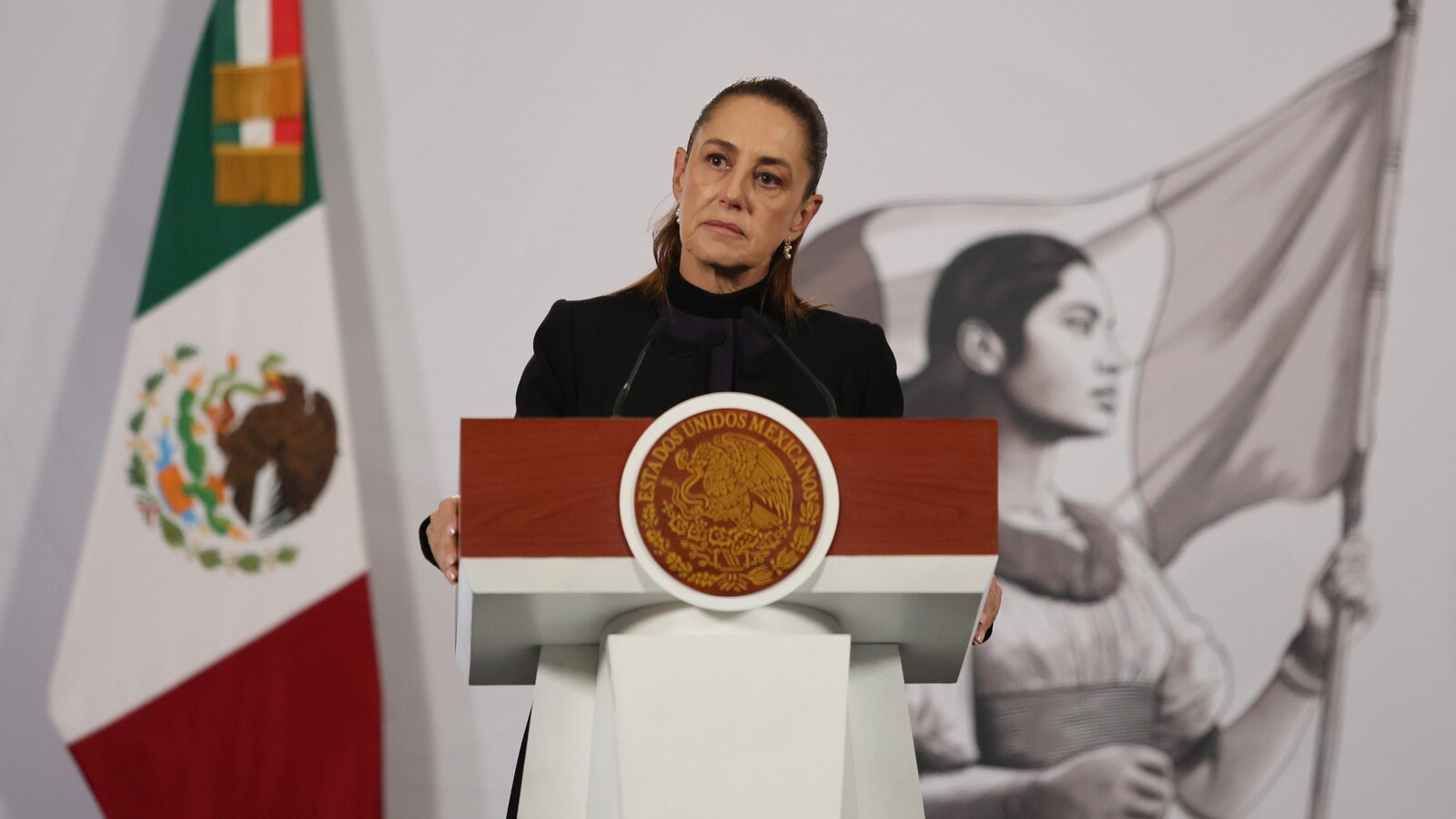
In what marks one of the most significant victories in Mexico’s ongoing battle against organized crime, the Mexican military announced the death of Nemesio Oseguera Cervantes, better known by his infamous alias “El Mencho,” the ruthless leader of the Jalisco New Generation Cartel (CJNG). The operation that ended his reign took place on Sunday, February 22, 2026, sending shockwaves through both the criminal underworld and the corridors of power in Mexico City. The following morning, President Claudia Sheinbaum addressed the nation during her daily press conference at the National Palace, confirming what many had thought impossible—that one of the world’s most wanted drug lords had finally been brought down. For years, El Mencho had been a ghost, evading capture despite massive efforts by Mexican and American law enforcement agencies. His death represents not just a tactical victory, but potentially a turning point in Mexico’s complex relationship with the cartels that have terrorized communities and corrupted institutions for decades.
The confirmation came during President Sheinbaum’s morning news conference, a daily ritual that has become a hallmark of Mexican presidential communication. Standing before the assembled press corps at the historic National Palace, Sheinbaum delivered the news that security forces had been pursuing for over a decade. The operation that led to El Mencho’s death was reportedly the culmination of months of intelligence gathering, surveillance, and coordination between various branches of Mexico’s security apparatus. While the specific details of the military engagement remain closely guarded, sources indicate that the operation involved elite units of the Mexican Army who had been tracking the cartel leader’s movements through the mountainous regions where the CJNG maintained strongholds. The success of this mission represents a rare moment of triumph in a war that has often seemed unwinnable, claiming hundreds of thousands of lives and displacing countless families across Mexico.
The Legacy of Violence: Understanding El Mencho’s Criminal Empire
To understand the significance of El Mencho’s death, one must first grasp the scope and brutality of the criminal empire he built. Nemesio Oseguera Cervantes rose from relatively humble beginnings to become perhaps the most powerful and feared drug trafficker in the Western Hemisphere. Unlike some of his predecessors who cultivated Robin Hood-like images in their communities, El Mencho ruled through pure intimidation and spectacular violence. Under his leadership, the Jalisco New Generation Cartel transformed from a regional criminal organization into a transnational powerhouse with operations spanning from South America to Europe and Asia. The CJNG’s primary business remained the trafficking of methamphetamine, fentanyl, cocaine, and heroin into the United States, but the organization diversified into virtually every profitable criminal enterprise imaginable—from human trafficking and fuel theft to extortion and kidnapping.
What set El Mencho apart from other cartel leaders was his military-style approach to criminal operations. He recruited heavily from Mexican military and police forces, offering salaries that government positions could never match. This strategy gave the CJNG a level of tactical sophistication that outmatched most rival organizations and often rivaled government forces themselves. The cartel became infamous for brazen attacks on Mexican security forces, including a 2015 incident where CJNG gunmen shot down a military helicopter with a rocket-propelled grenade, killing eight soldiers. Such audacious acts weren’t just displays of power—they were strategic communications designed to intimidate rivals and demonstrate to potential recruits and partners that the CJNG was a force capable of challenging the Mexican state itself. The cartel’s expansion was relentless and bloody, with El Mencho showing no hesitation in ordering mass killings, public displays of torture, and attacks on civilian populations to secure territory and market dominance.
The Human Cost: Communities Caught in the Crossfire
Behind the headlines about cartel warfare and drug trafficking statistics lie countless human tragedies that have reshaped Mexican society in profound and painful ways. The rise of the CJNG under El Mencho’s leadership contributed to a surge in violence that turned entire regions of Mexico into conflict zones. Families have been torn apart, with tens of thousands disappeared and hundreds of thousands displaced from their homes. In states like Jalisco, Guanajuato, Michoacán, and Colima, ordinary citizens found themselves trapped between warring criminal factions, with the CJNG often at the center of the violence. Journalists, politicians, and activists who dared to speak out against the cartel faced threats, violence, and death. The psychological toll on Mexican society has been immeasurable, creating a climate of fear where silence often seemed like the only path to survival.
The economic impact has been equally devastating. Businesses in cartel-controlled territories faced extortion rackets that forced many to close their doors. Tourism dried up in areas once celebrated for their cultural heritage and natural beauty. Young people growing up in cartel-influenced areas faced limited options—join the criminal organizations, flee to other parts of Mexico or attempt the dangerous journey north to the United States, or try to build a life in communities where violence could erupt at any moment. The education system suffered as teachers refused assignments in dangerous areas and students missed school during periods of intense violence. This generational trauma has created cycles that will take decades to heal, even if the security situation improves dramatically. The death of El Mencho cannot undo these years of suffering, but for many Mexicans, it represents at least a symbolic victory and perhaps the hope that their government can protect them from those who profit from violence and fear.
Political Implications: President Sheinbaum’s Defining Moment
For President Claudia Sheinbaum, the timing and significance of El Mencho’s death cannot be overstated. As Mexico’s first female president, Sheinbaum inherited a security situation that has challenged every Mexican administration for the past two decades. Her predecessor’s strategy of “hugs not bullets”—emphasizing social programs over confrontation with cartels—had drawn criticism from those who felt it allowed criminal organizations to grow stronger. The successful operation against El Mencho gives Sheinbaum a powerful narrative: that her government can deliver results against even the most powerful criminal actors while potentially avoiding the pitfalls of previous militarized approaches that often led to human rights violations and civilian casualties. Standing at the podium of the National Palace, Sheinbaum likely understood that this moment would define how both Mexicans and international observers view her presidency’s approach to security.
However, the path forward remains fraught with challenges. History has shown that killing or capturing cartel leaders can sometimes create more violence rather than less, as lieutenants battle for succession and rival organizations move to claim territory. The CJNG’s structure and the loyalty El Mencho commanded mean that his death could either weaken the organization significantly or simply create space for equally ruthless successors to emerge. Sheinbaum’s government will need to follow this tactical victory with strategic actions—strengthening institutions, combating corruption within law enforcement and government, addressing the social conditions that make cartel recruitment possible, and working with international partners to disrupt the financial networks that sustain these criminal enterprises. The president’s daily press conferences, where she maintains direct communication with the Mexican people, will be crucial forums for explaining her government’s comprehensive strategy and building public confidence that this victory is part of a larger plan rather than an isolated success.
Looking Ahead: Can Mexico Turn the Tide?
The death of El Mencho raises a fundamental question that has haunted Mexico for generations: can the cycle of violence ever truly be broken? Optimists point to this operation as evidence that when Mexican security forces are properly resourced, coordinated, and directed, they can achieve remarkable results against even the most powerful criminal adversaries. The successful targeting of such a high-value individual suggests improvements in intelligence gathering, inter-agency cooperation, and operational capability. If the Sheinbaum administration can build on this momentum—dismantling the CJNG’s leadership structure, seizing assets, prosecuting corrupt officials who enabled the organization, and preventing the splintering of the cartel into multiple violent factions—then perhaps this moment could mark the beginning of a genuine shift in Mexico’s security landscape.
Pessimists, however, caution against premature celebration. They note that Mexico has killed or captured numerous high-profile cartel leaders over the years—from the Arellano Félix brothers to Joaquín “El Chapo” Guzmán—yet the violence has persisted and even intensified. The fundamental problem, these critics argue, is not any individual criminal, but rather the systemic issues that make drug trafficking so profitable and cartel membership so attractive. As long as there is massive demand for illegal drugs in the United States and limited economic opportunities for young Mexicans, someone will step up to fill El Mencho’s shoes. The real test will come in the weeks and months ahead, as the situation in CJNG territories either stabilizes or descends into succession warfare. President Sheinbaum’s government faces the delicate challenge of pressing its advantage against a wounded organization while preventing the fragmentation and multiplication of threats that has followed previous decapitation strategies. The image of Sheinbaum at her press conference, announcing this historic victory, may come to represent either a turning point in Mexico’s fight against cartels or simply another chapter in an ongoing tragedy that has claimed too many lives and broken too many communities.