



The Fall of El Mencho: Mexico Captures Key Figure in Drug Lord’s Final Days
The Arrest That Sealed a Kingpin’s Fate
In a significant development following one of the most dramatic operations in Mexico’s ongoing war against drug cartels, authorities have apprehended a crucial player who inadvertently led elite forces to the nation’s most notorious criminal. Mexican defense officials announced on Sunday the arrest of Jose N., known by his street name “El Pepe,” a high-ranking operative within the powerful Jalisco New Generation Cartel (CJNG). His role in what seemed like a routine task—driving a woman to a romantic getaway—ultimately became the thread that unraveled the empire of Nemesio Oseguera, better known as “El Mencho,” one of the world’s most wanted drug traffickers. The arrest represents not just another capture in Mexico’s relentless pursuit of cartel leadership, but a closing chapter in the hunt for a man who had eluded authorities for years and whose organization had spread violence and drug trafficking across continents.
The circumstances surrounding El Pepe’s involvement read almost like fiction, yet they underscore the vulnerabilities that even the most careful criminals face. According to the defense ministry’s official statement, El Pepe was tasked with what seemed like a simple assignment: transporting Oseguera’s romantic partner to an upscale cabin in the picturesque Tapalpa municipality, located in the western state of Jalisco—the very heartland of CJNG operations. This seemingly innocuous act of facilitating a lover’s rendezvous would prove catastrophic for the cartel. Military intelligence services had been painstakingly piecing together information about Oseguera’s movements and habits, and when they caught wind of this planned meeting, they saw their opportunity. The operation that followed on February 22nd brought together Mexican elite troops with intelligence support from the United States, demonstrating the unprecedented level of international cooperation aimed at dismantling one of the hemisphere’s most dangerous criminal organizations.
The Man Behind the Cartel and His Violent Legacy
El Mencho wasn’t just another drug trafficker—he was the architect of what many security analysts considered the most dangerous and rapidly expanding criminal organization in Mexico. The Jalisco New Generation Cartel had distinguished itself through its military-style tactics, ruthless violence, and sophisticated smuggling operations that flooded American streets with methamphetamine, fentanyl, and other deadly substances. The United States government’s decision to place a $15 million bounty on Oseguera’s head spoke volumes about the threat he represented. In a 2019 interview with CBS News, a senior DEA agent stationed in Mexico didn’t mince words, declaring Oseguera “the number one priority for DEA and frankly for federal law enforcement in the United States.” This wasn’t hyperbole—the CJNG had not only established dominance across vast swaths of Mexican territory but had also built international networks reaching into Europe, Asia, and throughout the Americas.
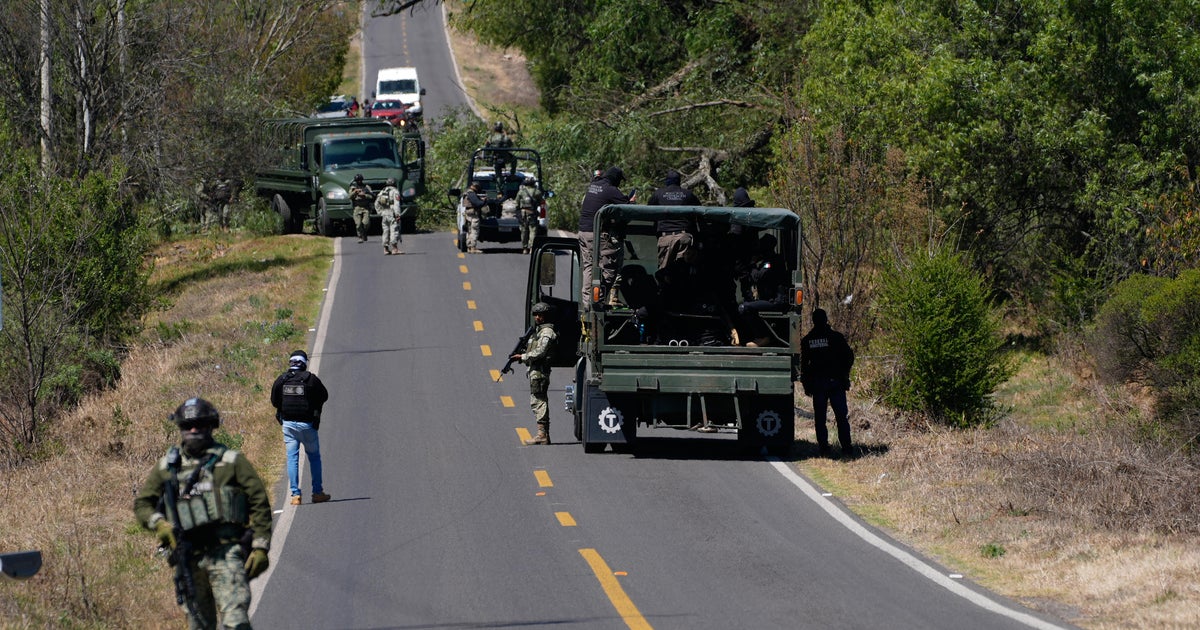
The confirmation of Oseguera’s location required an intricate intelligence operation. Mexican Defense Secretary General Ricardo Trevilla later revealed that while their own surveillance had tracked the general area, pinpointing the exact location required “very important additional information” provided by U.S. intelligence agencies. This cross-border intelligence sharing represented a level of trust and cooperation that had taken years to develop, particularly given past tensions over sovereignty concerns and occasional friction between Mexican and American law enforcement priorities. When elite Mexican troops descended on that luxury country club in Jalisco on February 22nd, they were acting on some of the best intelligence either nation had gathered on Oseguera in years. The raid itself was fierce and brief, ending with the drug lord fatally wounded—a moment Mexican and American officials had been working toward for more than a decade.
The Arrest of El Pepe and What It Reveals
When authorities finally caught up with El Pepe in the Tlajomulco municipality of Jalisco, he was more than just a driver—he was revealed to be one of CJNG’s principal logistics operators, the kind of trusted lieutenant who kept the cartel’s complex machinery running smoothly. The defense ministry’s statement noted that drugs, weapons, and a vehicle were confiscated during his arrest, standard fare in such operations but indicative of his ongoing operational role even after his boss’s death. His capture is particularly significant because it demonstrates that Mexican authorities are capitalizing on the disruption caused by Oseguera’s death, moving quickly to apprehend key figures before the organization can fully regroup and restructure its command hierarchy. In the chaotic aftermath of a major cartel leader’s demise, there’s typically a brief window when the organization is most vulnerable—loyalties are questioned, succession battles emerge, and operational security often breaks down as various factions jostle for position.
The arrest also serves a broader strategic purpose in the Mexican government’s approach to cartel disruption. By publicly connecting El Pepe to the chain of events that led to Oseguera’s death, authorities are sending a message to other cartel operatives: seemingly small roles can have catastrophic consequences, and anyone in the organization could be the weak link that brings everything crashing down. This psychological dimension of law enforcement operations is often overlooked, but it can be remarkably effective in creating paranoia and distrust within criminal organizations. El Pepe’s apparent responsibility for what should have been a routine transportation task—bringing Oseguera’s companion to their meeting place—transformed him from a logistics operator into an unwitting informant whose actions, however inadvertently, led authorities straight to their primary target.
Violence and Chaos in the Aftermath
The immediate aftermath of Oseguera’s death demonstrated both the reach and the desperation of the CJNG. In an unprecedented display of force and fury, cartel members launched coordinated attacks across 20 of Mexico’s 32 states, effectively bringing large portions of the country to a standstill. Roads were blockaded with burning vehicles, creating apocalyptic scenes in cities and towns across the nation. Businesses were torched, including establishments in Guadalajara, Mexico’s second-largest city, and even in the tourist haven of Puerto Vallarta, where international visitors found themselves trapped in hotels as violence erupted in the streets outside. These weren’t random acts of violence but calculated demonstrations meant to show that even without El Mencho, the CJNG remained a force capable of projecting power across the entire nation.
The human cost of the operation and its aftermath was staggering and sobering. More than 70 people lost their lives during the initial raid and the subsequent clashes between Mexican security forces and CJNG gunmen. Among the dead were 25 members of the Mexican National Guard, highlighting the deadly effectiveness of the cartel’s resistance and the genuine military-level threat these organizations represent. These weren’t street criminals with handguns—they were well-armed, trained fighters with access to military-grade weapons and the willingness to use them against government forces. The casualties among National Guard troops represent one of the deadliest single incidents for Mexican security forces in recent memory and underscore why authorities considered Oseguera such an urgent priority. Each of those 70-plus deaths represents a family shattered, a community traumatized, and a reminder that Mexico’s struggle against cartel violence exacts a tremendous human price that statistics can barely capture.
A Kingpin’s Final Journey and What Comes Next
In a scene that captured the complex relationship many Mexicans have with cartel figures, Oseguera was laid to rest earlier this month in a ceremony that blended the grotesque and the grandiose. His body was placed in a golden casket, surrounded by enormous flower wreaths that spoke to either genuine affection from supporters or obligatory displays from those who feared his organization even in death. The presence of a large military contingent at the funeral was telling—authorities were taking no chances that the burial might become either a flashpoint for violence or a gathering point for cartel leadership that could be exploited for intelligence or further arrests. Such funerals have historically been delicate affairs in Mexico, where drug traffickers often enjoy folk-hero status in certain communities, particularly in regions where cartels provide employment and social services that absent or corrupt governments fail to deliver.
The capture of El Pepe and the continued operations against CJNG leadership raise important questions about what comes next for both the cartel and Mexico’s security landscape. History suggests that the death of a major cartel leader rarely brings peace; more often, it triggers succession battles that can be even more violent than the period of stable leadership that preceded them. Various factions within CJNG will likely vie for control, potentially leading to internal purges and conflicts that could spill over into even greater violence for ordinary Mexicans caught in the crossfire. Additionally, rival cartels may see this moment of CJNG vulnerability as an opportunity to encroach on territories and smuggling routes that were previously contested or off-limits. Mexican and American authorities will be watching carefully to identify whoever emerges as the new leadership, knowing that the cycle will likely begin again—building intelligence, tracking movements, waiting for that one vulnerability that might bring down the next generation of cartel kingpins. The arrest of El Pepe, then, is both an ending and a beginning, closing one chapter in Mexico’s drug war while simultaneously opening another in a conflict that has already consumed countless lives and shows no signs of reaching a conclusion anytime soon.