


Michigan Temple Israel Attack: A Tragedy Rooted in Personal Anguish and International Conflict
Warning Signs Before the Attack
In the hours leading up to the devastating attack at Temple Israel in Michigan last week, critical warning signs emerged that painted a picture of a man in deep crisis. A woman identifying herself as “Fatima,” believed to be the ex-wife of the suspect Ayman Mohamad Ghazali, made an urgent 911 call to authorities in Dearborn Heights expressing grave concerns about his mental state. During the call, obtained by CBS News Detroit, she described Ghazali as “not stable” and warned that he was exhibiting suicidal behavior. Her voice carried the weight of genuine fear and concern as she explained to dispatch that Ghazali had recently experienced an unimaginable tragedy—losing two brothers in an airstrike in Lebanon during the ongoing conflict with Iran. At the time of her call, she had been helping him navigate the painful process of making funeral arrangements for his deceased siblings. According to sources within the local Lebanese-American community, what prompted her to reach out to authorities was a chilling conversation in which Ghazali asked her to take care of his children, words that carried an unmistakable finality that alarmed her enough to contact emergency services.
The Attack Unfolds at Temple Israel
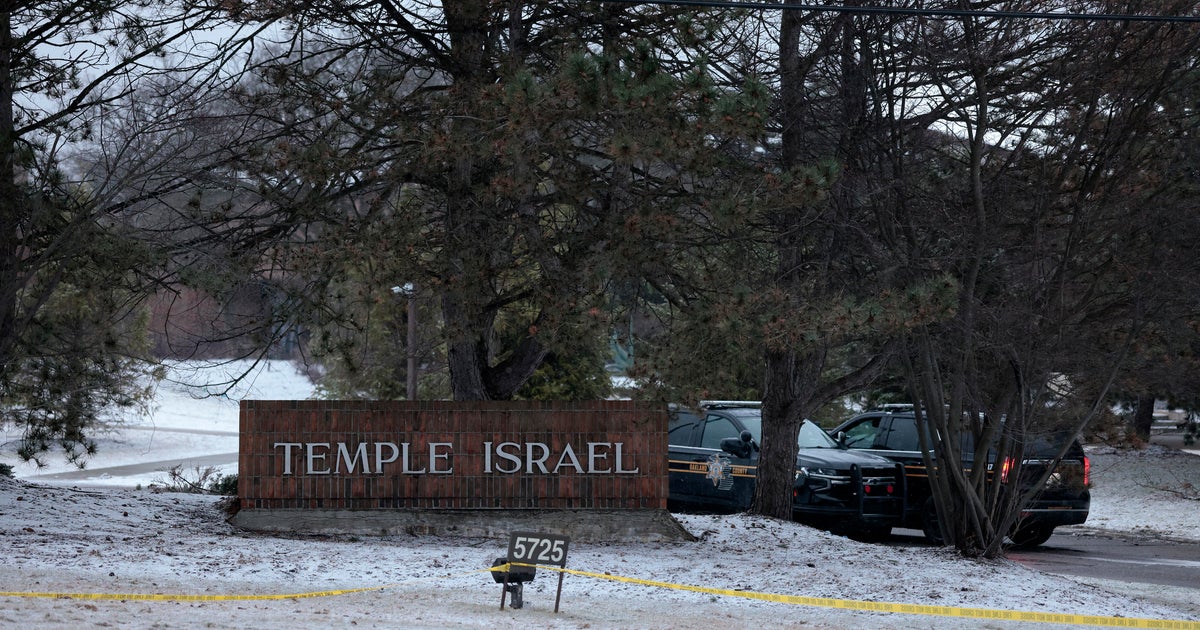
The timeline of events that unfolded at Temple Israel on March 12 reveals a deliberate but tragic sequence. Authorities have pieced together that Ghazali arrived at the synagogue sometime before 10 a.m., parking his truck in the facility’s parking lot where he remained for approximately two hours. During this extended period, he appeared to be sitting alone in his vehicle, perhaps wrestling with his thoughts or finalizing his intentions. At approximately 12:19 p.m., Ghazali made his move, ramming his truck directly into an entrance of the building, striking a security officer in the process. What followed was a violent confrontation as the suspect engaged in a gunfight with security personnel at the synagogue. According to the FBI’s account of the incident, during this exchange of gunfire, Ghazali’s truck caught fire, and the suspect ultimately died from what authorities determined was a self-inflicted gunshot wound. The timing is particularly significant because the 911 call from his ex-wife was routed to Dearborn Heights police at approximately 12:26 p.m.—just seven minutes after the attack began and while the violent confrontation was likely still underway. This heartbreaking timing suggests that even as she was trying to get him help, the tragedy was already in motion.
Protecting the Innocent: Safety Measures That Worked
Despite the violence and chaos of the attack, Temple Israel was able to confirm that all 140 students and staff members present at the facility were safe, a testament to both the building’s security measures and the quick response of security personnel. Oakland County Sheriff Michael Bouchard provided reassuring details about the facility’s layout, explaining that the children’s day care was situated in a completely different section of the building from where Ghazali had gained entry and where the confrontation took place. This physical separation undoubtedly played a crucial role in protecting the youngest and most vulnerable individuals present that day. However, the incident was not without casualties and injuries. The security guard who was struck when Ghazali rammed his truck into the entrance was transported to a local hospital for medical treatment. Additionally, the response to the attack required a massive law enforcement presence, and in the chaos that followed—particularly due to the fire that engulfed the truck—dozens of law enforcement officers required medical treatment for smoke inhalation. The fact that no children or staff members were physically harmed speaks to the effectiveness of the security protocols in place, though the psychological impact of such an event cannot be measured in the immediate aftermath.
The Suspect’s Background and Path to Citizenship
Understanding the background of Ayman Mohamad Ghazali requires looking at his journey to the United States and the life he built here over more than a decade. According to information provided by the Department of Homeland Security to CBS News, Ghazali was a Lebanese-born individual who entered the United States legally in 2011. His entry into the country was facilitated through sponsorship by his then-wife, who was a U.S. citizen at the time. This type of family-based immigration is a common and legal pathway for foreign nationals to establish residence in the United States. Ghazali went through the proper channels and processes, eventually becoming a naturalized U.S. citizen himself in 2016, five years after his initial arrival. This means he had been living in America for approximately thirteen years at the time of the attack, presumably building a life, raising children, and becoming part of his community. The transformation from a legal immigrant building an American life to someone who would perpetrate an act of violence against a house of worship speaks to the complex factors that can radicalize individuals or push them toward desperate acts, particularly when combined with personal tragedy and mental health crises.
Family Connections to Hezbollah and International Conflict
The international dimensions of this tragedy became clearer when the Israeli military released information on Sunday following the attack. In a statement posted on social media, the Israel Defense Forces revealed that one of Ghazali’s brothers, Ibrahim Muhammad Ghazali, was a Hezbollah commander who had been “eliminated” in a military strike that occurred prior to the synagogue attack in Michigan. The IDF statement specifically identified Ibrahim as being responsible for managing weapons operations for a unit within Hezbollah, an organization that is designated as a terrorist group by the United States government. This wasn’t just a peripheral family connection—sources speaking to a freelance journalist working for CBS News in Lebanon confirmed that both of Ghazali’s brothers were active members of a Hezbollah rocket unit operating in southern Lebanon. These rocket units are typically involved in launching attacks against Israel from Lebanese territory, placing them at the center of the ongoing conflict in the region. The loss of both brothers in what appears to have been targeted military strikes represents not just personal grief for Ghazali, but also a connection to the broader Israeli-Palestinian-Lebanese conflict that has claimed countless lives on all sides. This international conflict, which can seem distant and abstract to many Americans, became tragically real and immediate in a Michigan parking lot.
Understanding the Attack as Targeted Violence Against the Jewish Community
The FBI has been unequivocal in its characterization of this incident, officially describing it as a “targeted attack of violence against the Jewish community.” This designation is significant because it classifies the act not as random violence or solely as the action of a mentally disturbed individual, but as a deliberate attack motivated at least in part by the victims’ identity as Jews and the location’s identity as a Jewish institution. This characterization places the Temple Israel attack within the broader context of rising antisemitic violence in the United States and around the world. While Ghazali’s personal circumstances—the recent loss of his brothers, his apparent mental health crisis, and his suicidal state of mind—certainly played a role in the events that unfolded, the choice of target was not random. He specifically chose to drive to a synagogue, to wait in its parking lot for two hours, and then to launch his attack against that Jewish institution. The FBI’s determination acknowledges that whatever complex mixture of grief, anger, mental illness, and ideology motivated Ghazali, the result was an act of violence directed at the Jewish community. For the congregants of Temple Israel, for the parents of the 140 children who were present that day, and for Jewish communities across Michigan and the nation, this attack serves as a stark reminder of the ongoing threat of antisemitic violence. It also raises difficult questions about how communities can identify and intervene when someone is spiraling toward violence, especially when international conflicts intersect with personal tragedy and mental health crises to create a perfect storm of danger.