


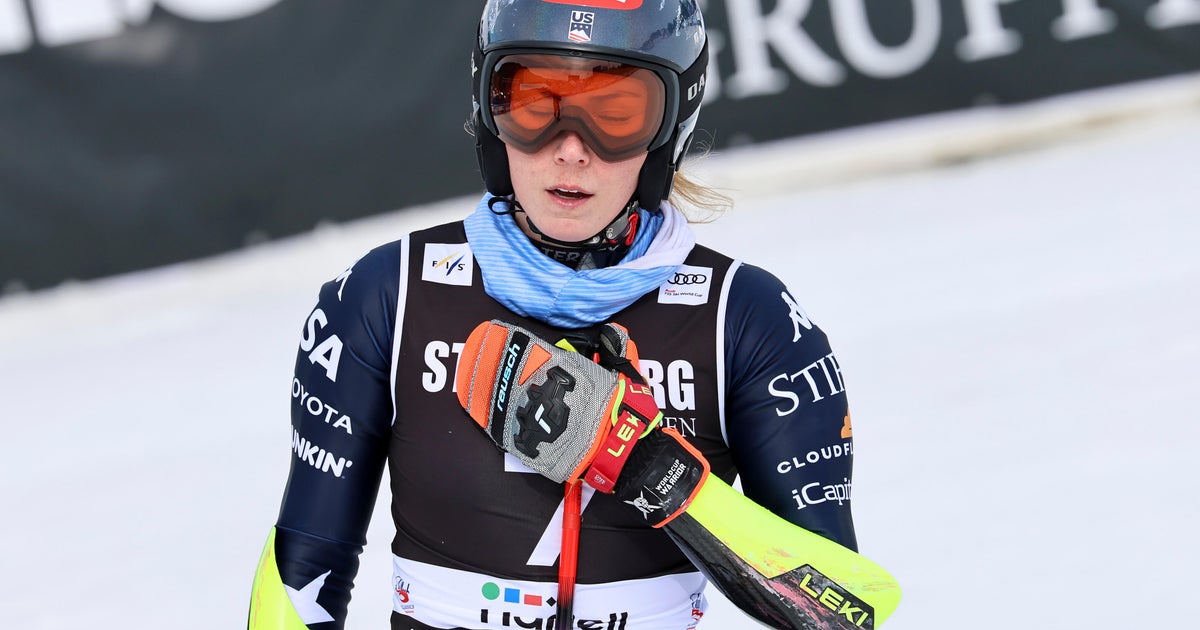

Mikaela Shiffrin Makes History with Sixth World Cup Title
A Historic Achievement in Norwegian Snow
In a moment that will be remembered in skiing history for generations to come, Mikaela Shiffrin clinched her sixth overall World Cup skiing title on a crisp Wednesday afternoon in Norway, matching a record that has stood for nearly five decades. The 30-year-old American superstar didn’t need a dramatic finish or a nail-biting final run to secure her place in the record books. Instead, she demonstrated the consistency and mental fortitude that has defined her remarkable career, needing only a top-15 finish in the season’s final giant slalom race. She achieved that benchmark before her young German challenger, Emma Aicher, even had the chance to complete her second run. With this victory, Shiffrin has now equaled the legendary Austrian downhill specialist Annemarie Moser-Pröll, who dominated women’s skiing throughout the 1970s with her six overall titles.
Standing Alongside Legends
The significance of Shiffrin’s accomplishment becomes even more apparent when examining the exclusive company she now keeps in the skiing world. Annemarie Moser-Pröll, the only other woman to achieve six overall World Cup titles, carved out her legacy during an extraordinary decade of dominance, winning five consecutive titles from 1971 to 1975, then adding a sixth championship in 1979. Shiffrin’s path to matching this record followed a slightly different trajectory but was no less impressive. She captured three consecutive titles from 2017 to 2019, demonstrating early in her career that she possessed something special. After a brief interruption, she returned to claim back-to-back championships in 2022 and 2023, and now adds the 2026 crown to her collection. Behind these two remarkable athletes sits another American legend, Lindsey Vonn, with four overall titles, while on the men’s side, Austrian Marcel Hirscher leads all skiers with eight overall championships. These statistics don’t just represent numbers on a page—they represent years of dedication, countless hours of training, and an unwavering commitment to excellence that few athletes in any sport ever achieve.
A Season of Dominance and Olympic Glory
The 2025-26 season will go down as one of the most successful campaigns in Shiffrin’s already illustrious career, marked not only by her overall World Cup title but by performances that bordered on the sublime. At the Milan Cortina Winter Olympics, she added a third Olympic gold medal to her collection with a dominant performance in the slalom event, the discipline that has long been her specialty. Her mastery of slalom was on full display throughout the entire World Cup season, as she won an astonishing nine out of ten slalom races, leaving her competitors to battle for minor placings while she stood atop the podium time and again. But Shiffrin’s greatness extends far beyond a single discipline. Her record of 110 World Cup victories across all skiing events represents a milestone that may never be matched, by either a man or a woman. To put this achievement in perspective, the legendary Swedish skier Ingemar Stenmark, long considered one of the greatest technical skiers in history, accumulated 86 wins during his stellar career in the 1970s and 1980s. Shiffrin has surpassed that mark by 24 victories, creating a gap that speaks to both her longevity and her ability to win consistently across multiple disciplines and racing conditions.
Finding Meaning Through Tragedy
Behind the statistics and the podium celebrations lies a deeply personal journey that has shaped Shiffrin into not just a champion athlete, but a resilient human being who has learned to compete and succeed while carrying the weight of profound loss. In 2020, the skiing world and Shiffrin’s personal world were shattered when her father, Jeff Shiffrin, unexpectedly passed away at the age of 65. Jeff had been more than just a parent—he was a cornerstone of Mikaela’s support system, a constant presence in her life and career. His death created a void that no amount of medals or victories could fill. When Shiffrin won her slalom gold medal at the Milan Cortina Games, it marked the first time she had stood atop an Olympic podium since her father’s death, a moment laden with emotions that only she could fully understand. In a candid conversation with CBS News last month, she opened up about the complex feelings surrounding that victory, revealing a vulnerability that fans rarely see from elite athletes. “Winning an Olympic medal without him here was terrifying to me before I knew that it was,” she admitted with striking honesty. She went on to explain that during the Beijing Olympics, where she struggled and didn’t medal in her signature events, she hadn’t yet recognized the fear that was holding her back. The Milan Cortina gold medal represented not just athletic achievement, but personal triumph over grief and the fear of succeeding without her father there to share in the joy.
The Evolution of a Champion
What makes Shiffrin’s career particularly remarkable is not just the accumulation of victories and titles, but the evolution she has undergone as both an athlete and a person. When she burst onto the World Cup scene as a teenager, she was already displaying technical prowess that reminded veterans of the sport’s greatest champions. Her slalom technique was textbook perfect, her racing mind sharp beyond her years. As she matured, she expanded her repertoire, becoming competitive in giant slalom, super-G, and even downhill events, transforming herself from a technical specialist into a complete skier capable of winning in any discipline. This versatility is part of what has allowed her to amass such an unprecedented win total. But perhaps the most significant evolution has occurred off the snow, as she has learned to navigate the pressures of being the face of American skiing, dealt with the crushing grief of losing her father, and found ways to maintain her competitive edge even as younger skiers like Emma Aicher emerge as serious challengers. Each of her Olympic experiences, she noted, has been “wildly different,” reflecting the different chapters of her life and career. The third gold medal feels different because she is different—older, more experienced, and carrying both the wisdom and the scars that come from years of competition at the highest level.
A Legacy Still Being Written
As Mikaela Shiffrin ties Annemarie Moser-Pröll’s record of six overall World Cup titles, the natural question emerges: is this the pinnacle of her career, or is there more history yet to be made? At 30 years old, she remains at an age where many skiers are still competing at the highest level, and her performance this season suggests that her skills have not diminished. The nine slalom victories out of ten races indicate that in her signature event, she remains virtually unbeatable when she’s at her best. Her 110 career World Cup wins provide a cushion that grows larger with each victory, making it increasingly unlikely that any current or future skier will approach that mark in our lifetimes. The possibility of a record-breaking seventh overall title certainly exists, though as this season showed with Emma Aicher’s challenge, younger competitors are constantly emerging and improving. Regardless of what the future holds, Shiffrin has already secured her place not just in skiing history, but in the broader conversation about the greatest athletes of our generation. Her combination of technical excellence, competitive longevity, mental toughness, and grace under pressure—both athletic and personal—sets a standard that transcends her sport. Whether she retires with six overall titles or eventually claims a seventh, her legacy is secure: a once-in-a-generation talent who pushed the boundaries of what was thought possible in alpine skiing, all while demonstrating that champions are defined not just by their victories, but by how they handle adversity and loss along the way.