

Minnesota Officials Sue Federal Government Over Blocked Shooting Investigations
A Fight for Transparency and Justice
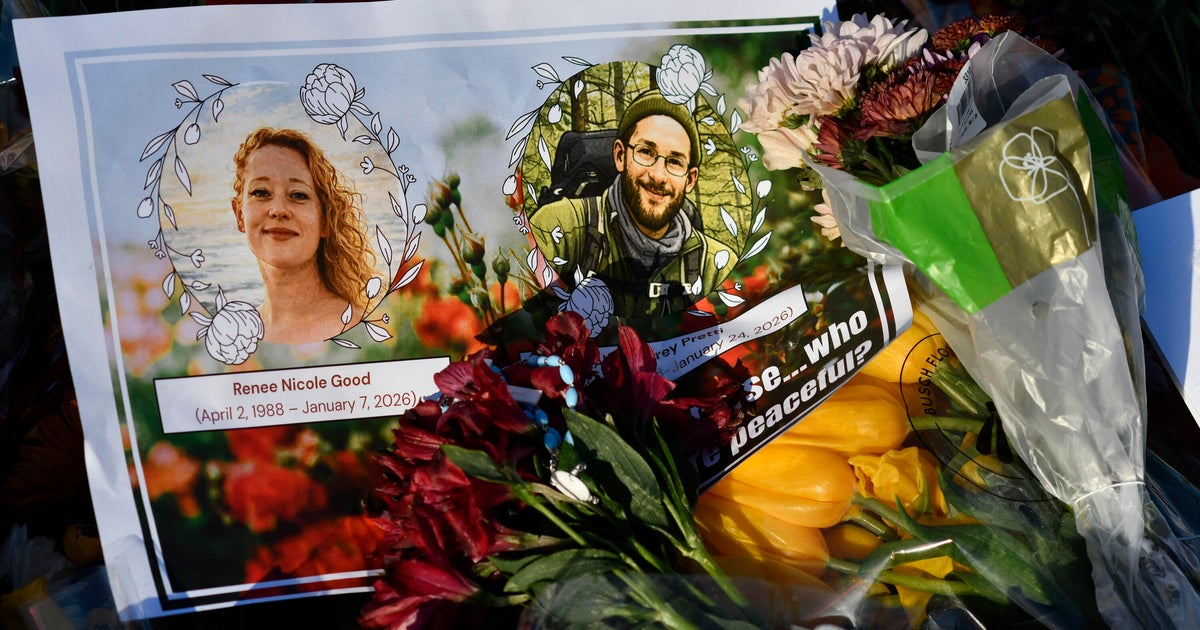
In a stunning legal move that highlights growing tensions between state and federal authorities, Minnesota officials have taken the extraordinary step of suing the federal government. On Tuesday, Attorney General Keith Ellison, Hennepin County District Attorney Mary Moriarty, and Bureau of Criminal Apprehension Superintendent Drew Evans filed a lawsuit in the U.S. District Court for the District of Columbia. Their complaint is serious and straightforward: federal agencies are systematically blocking them from investigating three shootings involving federal agents that occurred during immigration enforcement operations in Minnesota. The victims are Renee Good and Alex Pretti, both fatally shot, and Julio Cesar Sosa-Celis, who was wounded. The lawsuit names several federal entities and officials, including the Justice Department, the Department of Homeland Security, Attorney General Pam Bondi, and former DHS Secretary Kristi Noem, who oversaw the aggressive immigration crackdown in Minnesota earlier this year known as Operation Metro Surge. What makes this lawsuit particularly significant is that it represents a fundamental breakdown in the cooperative relationship that has traditionally existed between state and federal law enforcement agencies when investigating potentially criminal conduct by officers.
The Pattern of Obstruction
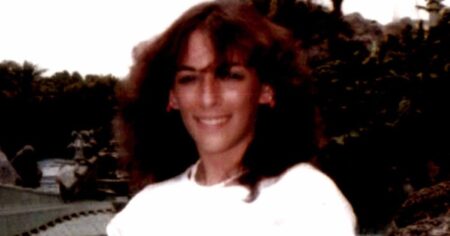
The lawsuit paints a disturbing picture of how Minnesota’s Bureau of Criminal Apprehension was repeatedly stonewalled at every turn when attempting to gather evidence in these three cases. What’s particularly troubling is that this represents a dramatic departure from standard practice. Historically, state and federal agencies have worked together on investigations involving federal officers, sharing evidence and coordinating their efforts to ensure thorough, transparent investigations. In the case of Renee Good’s death, the FBI initially seemed willing to honor this tradition. When they first began investigating her shooting, federal investigators agreed to share evidence and cooperate with the BCA as part of their parallel investigation into whether her killing was legally justified. However, something changed dramatically and abruptly on that very same day. The FBI reversed course completely, blocking BCA investigators from sitting in on crucial witness interviews and denying them access to evidence collected at the crime scene. The situation grew even more troubling from there. According to previous CBS News reporting, the federal probe was later shut down entirely, and multiple federal prosecutors resigned in protest after they were pressured to stop investigating Good’s death as a civil rights case and instead were ordered to investigate Good’s wife and treat the incident as a case of assault on a federal officer—a complete reversal of the investigative focus.
Critical Evidence Remains Out of Reach
The lawsuit details specific examples of how state investigators have been denied access to vital evidence that could help them determine what really happened in these shootings. Perhaps most symbolically troubling is the fate of Renee Good’s car, which according to the lawsuit remains wrapped in shrink-wrap inside an FBI storage facility in Brooklyn Center, Minnesota, and has never been examined or processed by state investigators. The BCA has repeatedly requested that the FBI either provide them with Good’s car or allow them to execute their search warrant on the vehicle. Each time, FBI officials have either outright refused or simply failed to respond to these requests. Recently, the FBI informed state officials that all evidence would only be turned over to the Department of Homeland Security Inspector General’s office—effectively cutting state investigators out of the process entirely. This withholding of evidence isn’t just a bureaucratic inconvenience; it represents a fundamental obstacle to justice. Without access to physical evidence, witness statements, and crime scene information, state investigators cannot fulfill their legal obligation to determine whether these shootings were justified or whether criminal charges should be brought. The car, in particular, could contain crucial forensic evidence that might corroborate or contradict federal agents’ accounts of what transpired during the deadly encounter with Good.
A Brief Window of Cooperation Slammed Shut
The shooting of Julio Cesar Sosa-Celis, a Venezuelan national who was wounded by a federal agent on January 14, initially seemed like it might be handled differently. According to the lawsuit, federal officials were at first prepared to cooperate with state investigators on this incident. The cooperation appeared genuine and substantial—BCA and FBI agents were even “paired into teams” so they could begin interviewing witnesses and canvassing the scene together. But this promising collaboration was short-lived. The lawsuit alleges that the assistant special agent in charge at the FBI’s Minnesota field office ordered the cooperation to end. Once again, state investigators found themselves shut out, able to collect only limited information while key evidence remained in federal hands. The case took another troubling turn when federal prosecutors initially filed criminal charges against Sosa-Celis himself, accusing him of attacking the federal agent who shot him. However, those charges were dismissed in February after prosecutors claimed they had discovered “newly discovered evidence” that did not support their case. This sequence of events raises obvious questions: What was this newly discovered evidence? Did it contradict the initial narrative provided by federal agents? State investigators, blocked from accessing the evidence, have no way to answer these questions or to conduct an independent assessment of what really happened.
The Alex Pretti Case and a Shift in Federal Approach
The shooting of Alex Pretti, a former ICU nurse who became the third person shot by federal agents during the Minnesota immigration crackdown, represents perhaps the most egregious example of federal obstruction. Initially, the Justice Department didn’t even open an investigation into Pretti’s death, instead allowing DHS to take the lead in investigating its own two federal agents—an obvious conflict of interest. BCA investigators were blocked from accessing the crime scene and were denied the opportunity to interview the agents involved in Pretti’s death. According to the lawsuit, to this day, “the federal government has not provided the identities of the masked federal agents who shot Mr. Pretti to the BCA.” Under mounting public pressure, the Justice Department eventually relented and Deputy Attorney General Todd Blanche announced that the probe would be handled in part by the Civil Rights Division. Several days after this announcement, state officials were told by the U.S. Attorney’s Office and local FBI that the government hoped to resume normal evidence-sharing practices for the Pretti case. But then something changed again. The Justice Department sent a lawyer from Washington, D.C., to coordinate the federal response, and according to the lawsuit, “the tone shifted.” The U.S. Attorney conveyed that evidence would only be shared in one direction: the Justice Department expected the BCA to share its evidence with federal authorities, but federal authorities had no intention of sharing their evidence with the state. This one-way street approach to evidence sharing fundamentally undermines any possibility of an independent state investigation.
Legal Arguments and What’s at Stake
After exhausting informal channels, the Hennepin County District Attorney’s Office attempted a more formal approach by issuing what are known as “Touhy” requests to DHS and the Justice Department. These requests, named after a Supreme Court case, refer to the regulatory process used to seek testimony or documents for use in litigation or investigations in which the government agency is not a party. The response was telling: the Justice Department has not responded to the requests at all, while DHS punted the request for information on the Good case back to the Justice Department and failed to respond to requests in the other two cases. The lawsuit argues that the Justice Department “has not identified any lawful basis that would justify their refusal to share evidence with Plaintiffs related to the shootings of Ms. Good, Mr. Pretti, or Mr. Sosa-Celis. Nor did DOJ provide a lawful justification for its dramatic departure from prior long-standing practice of state-federal cooperation and evidence sharing.” The complaint makes several specific legal claims: that the government violated the Administrative Procedure Act by acting in an “arbitrary and capricious” manner that is not in accordance with the law; that the federal government unlawfully withheld and unreasonably delayed agency action; and that these actions violated the 10th Amendment, which defines the limits of federal authority over states. Beyond the technical legal arguments, what’s fundamentally at stake here is accountability. When federal agents use deadly force against civilians, there must be a mechanism for independent investigation to determine whether that force was justified. By blocking state investigators from accessing evidence, the federal government is essentially investigating itself—a situation that undermines public trust and the principle that no one, not even law enforcement officers, is above the law.