
President Trump’s 2026 State of the Union Address: A Vision for America’s Golden Age
Celebrating America’s Transformation and Historic Milestones
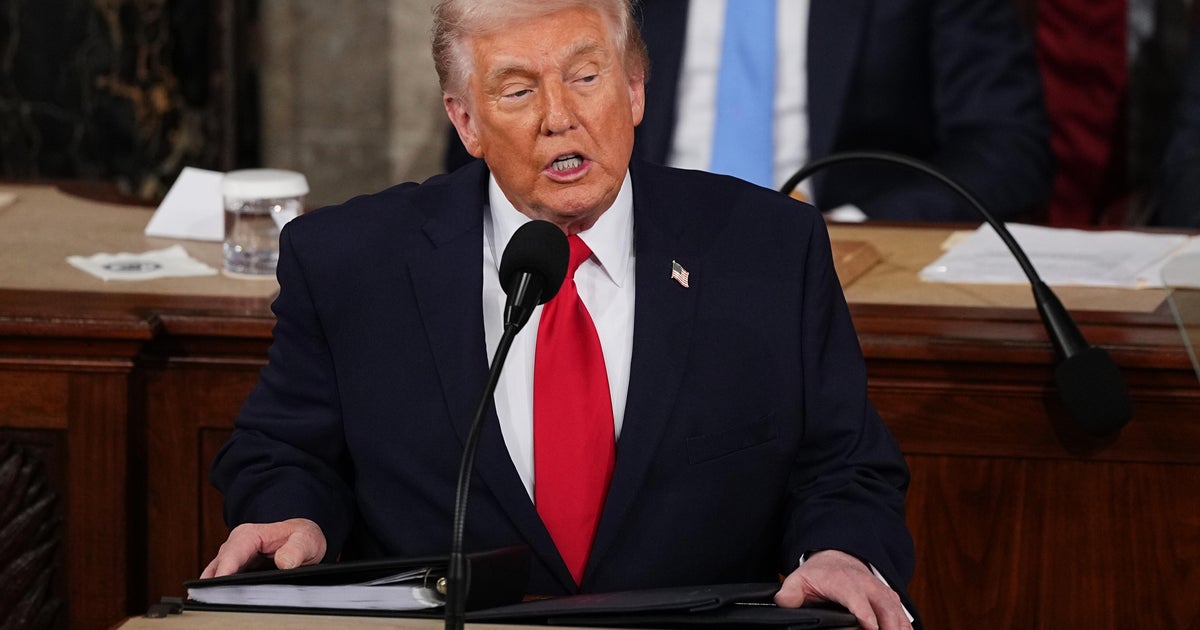
On Tuesday evening, February 24th, President Trump delivered his 2026 State of the Union address to a packed chamber, declaring that America has entered what he called “the golden age of America.” Standing before Speaker Johnson, Vice President Vance, and members of Congress, the President painted a picture of a nation transformed, announcing that the country is now “bigger, better, richer and stronger than ever before.” He framed his remarks within the context of an approaching historic milestone—the 250th anniversary of American independence this coming July 4th, describing it as an opportunity to celebrate “two and a half centuries of liberty and triumph, progress and freedom.” The President contrasted the current state of affairs with conditions just one year prior, when he says he inherited “a nation in crisis, with a stagnant economy, inflation at record levels, a wide-open border, horrendous recruitment for military and police, rampant crime at home and wars and chaos all over the world.” According to Trump, his administration has achieved “a transformation like no one has ever seen before and a turnaround for the ages,” one that ensures America will “never go back” to those challenging times. The speech was filled with specific claims of achievements and announcements of new initiatives, woven together with emotional stories from Americans whose lives have been affected by policy decisions.
Border Security and Crime Reduction: A Central Achievement
President Trump dedicated significant portions of his address to what he characterized as historic achievements in border security and crime reduction. He proudly announced that “we now have the strongest and most secure border in American history, by far,” claiming that “in the past nine months, zero illegal aliens have been admitted to the United States.” He emphasized, however, that legal immigration would continue for those “who will love our country and will work hard to maintain our country.” The President cited dramatic statistics to support his claims of success: deadly fentanyl crossing the border is down by 56% in one year, and the murder rate experienced “its single largest decline in recorded history”—the lowest number in over 125 years, dating back to 1900. Trump’s address included several emotional moments as he introduced families affected by crimes committed by individuals who entered the country illegally. These included Jacqueline Medina, whose daughter Lizbeth was murdered by a previously arrested illegal alien, and Anya Zarutska, whose daughter Iryna fled war-torn Ukraine only to be killed on a train by a repeat offender released through no-cash bail policies. The President used these stories to call for tougher legislation, demanding an end to sanctuary cities and serious penalties for officials who block the removal of criminal aliens. He also introduced the “Dalilah law,” named after a five-year-old girl severely injured when an illegal immigrant with a commercial driver’s license crashed into her car, which would bar states from granting such licenses to undocumented individuals.
Economic Achievements and Tax Relief for Working Families
The economic portion of Trump’s address highlighted what he described as unprecedented growth and prosperity. He claimed to have driven core inflation down to its lowest level in more than five years, reaching 1.7% in the last three months of 2025. Gasoline prices, which he said reached over $6 per gallon under his predecessor, have fallen to below $2.30 in most states, with some locations seeing prices as low as $1.85. The stock market, according to the President, has set 53 all-time record highs since the election, boosting pensions and retirement accounts for millions of Americans. Trump emphasized his administration’s success in attracting investment, claiming to have secured commitments for more than $18 trillion in new investment in just 12 months, compared to less than $1 trillion during the previous four-year administration. The President highlighted the tax relief his administration has provided to working families through what he called the “Big Beautiful Bill,” which eliminated taxes on tips, overtime, and Social Security benefits, while also making interest on auto loans tax deductible if the car is made in America. He introduced Megan Hemhauser, a Pennsylvania mother who homeschools her children while working as a waitress at night, explaining that she and her husband will take home more than $5,000 extra for the year due to these tax changes. Trump also discussed the “Trump Accounts”—tax-free investment accounts for American children funded initially by the U.S. Treasury and private donors like Michael and Susan Dell, who contributed $6.25 billion to fund accounts for 25 million children.
Healthcare, Prescription Drugs, and Protecting American Families
President Trump addressed healthcare costs and prescription drug prices as major areas of reform. He criticized what he called the “Unaffordable Care Act” (Obamacare), claiming it enriched big insurance companies whose stock prices soared while costs for ordinary Americans skyrocketed. His proposed solution involves stopping payments to big insurance companies and instead giving money directly to people so they can purchase their own healthcare. The President announced dramatic reductions in prescription drug costs through “most-favored nation agreements,” claiming to have taken American prescription drug prices from the highest in the world to the lowest. He introduced Catherine Rayner, who struggled with infertility and needed IVF treatments, as the first customer to benefit from these changes—she purchased a drug for under $500 that previously cost her $4,000, a savings of over $3,500. Trump called on Congress to codify this program into law to prevent future administrations from reversing these price reductions. The President also addressed concerns about energy costs potentially rising due to AI data center demand, announcing a “ratepayer protection pledge” that requires major tech companies to provide for their own power needs by building their own power plants, ensuring that electricity prices for ordinary Americans won’t increase and may actually decrease. Additionally, Trump highlighted his executive order banning large Wall Street investment firms from buying up single-family homes, which had prevented Americans like Rachel Wiggins from achieving homeownership, and called on Congress to make that ban permanent.
Military Strength, Foreign Policy Victories, and Ending Wars
In the foreign policy and national security portions of his address, President Trump proclaimed that “our country has never been stronger,” claiming to have ended eight wars during his first ten months in office. These included conflicts between Cambodia and Thailand, Pakistan and India (which he said would have resulted in nuclear war killing 35 million people), Kosovo and Serbia, Israel and Iran, Egypt and Ethiopia, Armenia and Azerbaijan, the Congo and Rwanda, and the war in Gaza. He thanked advisors Steve Witkoff and Jared Kushner for their assistance, particularly in negotiating the Gaza ceasefire that resulted in the return of all hostages, both living and dead. The President revealed what he described as “a breakthrough operation” called “Operation Midnight Hammer,” in which the United States military “obliterated Iran’s nuclear weapons program with an attack on Iranian soil” last June. He warned Iran against attempting to rebuild its weapons program and stated unequivocally: “I will never allow the world’s No. 1 sponsor of terror to have a nuclear weapon.” Trump also detailed the dramatic military operation in January that resulted in the capture of Venezuelan dictator Nicolas Maduro, describing it as “one of the most complex, spectacular feats of military competence and power in world history.” The address included moving tributes to military heroes, including awarding the Congressional Medal of Honor to Chief Warrant Officer 5 Eric Slover, who was shot four times while piloting a helicopter during the Venezuela raid but successfully completed the mission despite severe injuries, and to 100-year-old Navy Captain Royce Williams, whose heroic actions in a 1952 dogfight against seven Soviet fighter planes remained classified for over 50 years.
Protecting American Values and Looking Toward the Future
President Trump concluded his address with passionate appeals to protect American values and traditions. He called for voter ID requirements and proof of citizenship for all voters, characterizing current election procedures as enabling widespread cheating and noting that his proposed reforms poll at 89% support, including among Democrats. He addressed controversial social issues, particularly regarding children and parental rights, sharing the story of Sage Blair, a Virginia teenager whom school officials attempted to “socially transition” to a new gender without parental consent. After running away from home and being placed in an all-boys state facility by what Trump called a “left wing judge,” Sage eventually reunited with her family and now attends Liberty University on a full scholarship. The President called for immediate legislation to ban states from transitioning children against their parents’ will. In his closing remarks, Trump emphasized the connection between America’s past and future, noting that only a few human lifespans separate the Founding Fathers from today’s heroes. He celebrated American achievements across the centuries—from settling the frontier and building great cities to defeating tyranny, advancing technology, and pioneering new frontiers in space and innovation. Invoking divine providence, the President declared that “the revolution that began in 1776 has not ended” and that the “flame of liberty and independence still burns in the heart of every American patriot.” He concluded with an optimistic vision, proclaiming that America’s “future will be bigger, better, brighter, bolder, and more glorious than ever before,” ending with the traditional blessing: “God bless you and God bless America.”