
NATO’s Changing Dynamics: European Allies Step Up as U.S. Takes a Back Seat
America’s Diminished Presence at NATO Headquarters
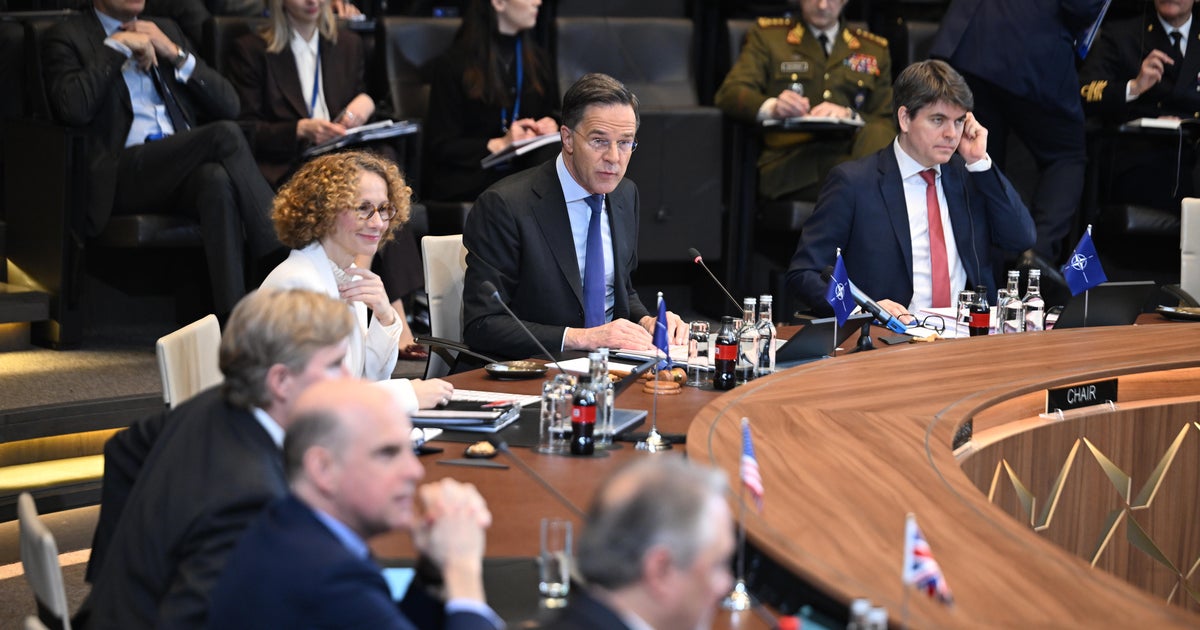
In an unusual turn of events that signals a potential shift in transatlantic relations, the United States sent a lower-ranking official to represent the country at a critical NATO defense ministers’ meeting in Brussels this week. U.S. Defense Secretary Pete Hegseth was notably absent from Thursday’s gathering, with Under Secretary of Defense Elbridge Colby attending in his place. This follows Secretary of State Marco Rubio’s decision to skip the previous NATO foreign ministers’ meeting in December, marking an unprecedented pattern where senior members of the U.S. administration have missed consecutive meetings of the North Atlantic Council at the ministerial level. Historically, such absences have been extremely rare, making the back-to-back no-shows all the more striking. The North Atlantic Council serves as NATO’s principal decision-making body, and ministerial-level attendance has traditionally been considered essential for maintaining the alliance’s cohesion and demonstrating commitment to collective security. Despite these notable absences, European allies have been remarkably diplomatic in their public responses, downplaying any suggestion that America’s reduced presence signals a weakening of its commitment to the alliance.
European Leaders Minimize Concerns Over American Absence
Rather than expressing alarm or frustration, European defense leaders adopted a notably conciliatory tone when discussing the American absence. Icelandic Foreign Minister Þorgerður Katrín Gunnarsdóttir injected some levity into the situation, remarking that Hegseth was “sadly missing a good party,” while acknowledging that ministerial attendance is always preferable but refusing to characterize the absence as a negative signal. German Defense Minister Boris Pistorius was similarly understanding, noting that “each of us has a full agenda” and that defense ministers sometimes cannot attend, framing it as simply the American defense secretary’s prerogative based on his other duties and responsibilities. This measured response from European allies reflects a delicate balancing act—they want to maintain strong transatlantic ties while also acknowledging the shifting realities of the security landscape. NATO Secretary-General Mark Rutte went even further in defending the American position, emphasizing that the United States has global responsibilities that extend far beyond Europe. He reminded reporters that American officials “have to take care of the whole world,” expressing his complete acceptance and agreement with this reality. Rutte also pointed out that successive U.S. administrations have consistently advocated for Europe and Canada to shoulder more of the defense burden for NATO territory, a message that appears to be resonating more strongly now than ever before.
Germany’s Military Transformation and Europe’s New Defense Posture
The current situation represents a dramatic departure from NATO’s founding principles. When asked about the alliance’s purpose shortly after its establishment in 1949, NATO’s first secretary-general, British general and diplomat Lord Hastings Ismay, famously replied that it was designed “to keep the Americans in, the Russians out and the Germans down.” Today, that formula is being fundamentally rewritten. Germany, once deliberately constrained in its military capabilities, is now stepping up as a leading European defense power. Following Russia’s invasion of Ukraine four years ago, Germany made a historic commitment to spend $118 billion to modernize its armed forces in the coming years, marking a complete reversal of its post-World War II reluctance to build significant military capabilities. This transformation reflects a broader European awakening to security realities, with continental allies recognizing that they can no longer rely exclusively on American protection. The emerging division of labor envisions Europe taking greater responsibility for conventional weapons and defense capabilities, while the United States continues to provide NATO’s nuclear deterrent. However, significant uncertainties remain about the Trump administration’s long-term intentions, with allies still wondering whether additional U.S. troops will be withdrawn from Europe and what other surprises might emerge from Washington.
Shifting Responsibilities in Supporting Ukraine
The changing American role is perhaps most visible in how NATO allies support Ukraine in its ongoing battle against Russian aggression. Under former President Joe Biden’s administration, the United States was the primary source of military and financial aid to Ukraine, with substantial supplies of American weapons and money flowing to Kyiv. Under President Trump, however, that support has largely dried up, forcing European allies and Canada to fill the gap by purchasing American weapons to donate to Ukraine themselves. The Ukraine Defense Contact Group, a coordination mechanism that was proudly championed by the Pentagon under the Biden administration, is now chaired by the United Kingdom and Germany rather than the United States. At Thursday’s meeting, U.K. Defense Secretary John Healey announced that Britain would provide an additional half billion pounds ($682 million) in urgent air defense equipment to Ukraine, framing it as “Britain being a force for good in the world, building a new deal for European security within NATO.” Sweden has also committed to funding the purchase of more American weapons for Ukraine, while the Netherlands announced it would send additional flight simulators to help Ukrainian fighter pilots train to fly F-16 jets. This shift represents not just a change in who pays for Ukraine’s defense, but a fundamental reordering of security leadership within the Western alliance.
Arctic Sentry: NATO’s Response to Regional Security Concerns
The one major “deliverable” from Thursday’s meeting was the formal announcement of Arctic Sentry, NATO’s new initiative ostensibly aimed at countering Russian and Chinese activities and influence in the Arctic region. However, the mission also serves a more delicate diplomatic purpose: it represents an attempt to address U.S. security concerns in the high north while simultaneously dissuading President Trump from pursuing his stated interest in seizing Greenland, a semi-autonomous territory of NATO ally Denmark. In practical terms, Arctic Sentry is essentially a rebranding exercise rather than an entirely new military operation. National drills already underway in the region—such as those conducted by Denmark and Norway—will now be brought under the NATO umbrella and overseen by the organization’s military chief, but it is not intended to be a long-term NATO operation or mission in the traditional sense. Denmark, France, and Germany have all indicated they will participate in military activities under Arctic Sentry, though specific details about their contributions remain vague. Denmark’s Defense Minister Troels Lund Poulsen characterized the mission as “very good news,” highlighting that his country had already “made two Arctic packages with money for new Arctic ships, maritime patrol aircraft and strengthened satellite capacity,” in addition to acquiring additional F-35 fighter jets for Arctic and North Atlantic operations. Finland, Sweden, and Belgium are also considering their potential roles in the initiative.
Managing Alliance Tensions and Looking Forward
The Arctic Sentry initiative takes on additional significance in light of the recent diplomatic turbulence caused by President Trump’s renewed threats to annex Greenland. These statements deeply shaken the alliance, given that NATO’s primary purpose is to defend the territory of its 32 member states, not to undermine it through internal disputes. Swedish Prime Minister Ulf Kristersson emphasized his country’s commitment, stating that “As a NATO Ally, Sweden has a responsibility to contribute to the security of the entire territory of the Alliance,” and noting that “The Arctic region is becoming increasingly important from a strategic perspective.” Significantly, it remains unclear what role, if any, the United States will actually play in Arctic Sentry. A spokesperson for U.S. Air Force General Alexus Grynkewich, NATO’s Supreme Allied Commander in Europe, confirmed that planning for the new Arctic mission was underway, calling it an “enhanced vigilance activity to even further strengthen NATO’s posture in the Arctic and High North,” but acknowledged that details would follow in due course. U.S. Ambassador to NATO Matthew Whitaker framed the situation clearly, stating that “it can’t just be more from the United States” and that NATO needs “capable allies that are ready and strong, that can bring assets to all of these areas of our collective security.” European allies and Canada are hoping that Arctic Sentry, combined with ongoing talks between the Trump administration, Denmark, and Greenland, will allow the alliance to move beyond this dispute and refocus on Europe’s most pressing security priority: Russia’s war on Ukraine. Belgian Defense Minister Theo Francken captured the prevailing mood, expressing relief that the Arctic arrangement means “we stop having some food fights over the Atlantic,” and candidly admitting that “the Greenland saga was not the best moment of NATO (over) the last 76 years—it was a crisis that was not needed.”